


What Buyers Look for When You Sell Your Business

Founders who are browsing online searching, "how to sell my business," often wonder what makes companies attractive to acquirers. Understanding buyer priorities helps founders prepare their businesses for sale and set realistic expectations about valuation and process. Buyers evaluate opportunities through lenses that differ from how founders view their own companies. What feels like a unique story to founders looks like a set of data points, risk factors, and growth indicators to buyers. Recognizing this shift in perspective helps founders present their businesses more effectively and anticipate the questions buyers will ask.
Financial Performance and Trends
Buyers start with financial analysis. Revenue growth, profit margins, and cash flow stability form the foundation of any valuation. Consistent performance over multiple years signals lower risk than volatile results, even if volatile results include occasional peaks.
Buyers scrutinize revenue quality beyond top-line numbers. Recurring revenue from long-term contracts commands premium valuations. Project-based revenue with unpredictable timing receives discounts. Customer concentration creates risk; businesses dependent on one or two large customers face valuation pressure regardless of profitability.
Adjusted EBITDA drives most valuation discussions. Buyers normalize for owner compensation, one-time expenses, and non-operating items to understand true earnings power. Founders who understand these adjustments can present their financials more effectively and anticipate buyer questions.
Customer Relationships and Retention
Buyers care deeply about customer stickiness. High retention rates suggest product or service value that competitors cannot easily replicate. Low retention signals commoditization or satisfaction problems that acquirers must solve post-transaction.
Founders searching "sell my business confidentially" sometimes hesitate to share customer details early in the process. Experienced advisors structure information release to protect confidentiality while providing enough detail for buyers to assess relationship quality.
Customer diversification matters alongside retention. Buyers prefer businesses where no single customer represents more than ten to fifteen percent of revenue. Concentration above these thresholds raises concerns about revenue vulnerability if key relationships end.
Long-term contracts, switching costs, and integration depth all increase customer stickiness that buyers value. Founders can often improve these metrics before going to market, making pre-sale preparation worthwhile.
Management Team and Key Employees
Buyers acquire teams, not just assets. Strong management that will remain post-transaction reduces integration risk and supports growth execution. Founders who have built capable teams create more attractive opportunities than those who maintain control over every decision.
Key person risk concerns buyers significantly. When critical knowledge, relationships, or capabilities reside in a single individual, that individual's departure threatens business continuity. Documenting processes, cross-training employees, and distributing responsibilities across teams all reduce key person concerns.
Founders planning to exit completely after closing face additional scrutiny. Buyers must believe the business can thrive without founder involvement. Demonstrating that operations run smoothly during founder absences builds buyer confidence.
Market Position and Growth Potential
Buyers pay premiums for market leadership. Companies with strong competitive positions, recognized brands, and defensible advantages attract more interest than undifferentiated players competing primarily on price.
Growth potential influences valuations significantly. Buyer’s model future performance and businesses with clear expansion opportunities justify higher multiples than those approaching ceiling constraints. Geographic expansion, new product development, and adjacent market entry all represent growth vectors that attract buyer interest.
Founders asking "how do I sell my business" should articulate their growth opportunities clearly. Buyers discount vague assertions about potential; they value specific, executable plans supported by evidence.
Operational Infrastructure
Behind financial results, buyers examine operational infrastructure. Clean accounting records, documented processes, modern technology systems, and regulatory compliance all reduce buyer risk. Operational messiness increases due diligence costs and raises concerns about undiscovered problems.
Before approaching buyers, founders searching "sell my business confidentially" should invest in operational cleanup. Audited or reviewed financials carry more credibility than internally prepared statements. Documented procedures demonstrate scalability. Updated technology reduces post-acquisition investment requirements.
Real estate arrangements, equipment conditions, intellectual property documentation, and environmental compliance all receive buyer attention. Addressing potential concerns proactively prevents last-minute renegotiations or deal failures.
Working With Advisors Who Understand Buyers
Preparing for buyer scrutiny requires understanding their perspective. Bainbridge brings experienced and reliable guidance to founders preparing for sale, helping present businesses in ways that highlight strengths and address buyer concerns across more than 40 industries. With 50 years of experience, Bainbridge positions founders to attract qualified buyers and maximize transaction outcomes.
Κατηγορίες
Διαβάζω περισσότερα
MBBS in Russia: A Complete Guide for Indian Students Introduction Pursuing MBBS in Russia has become one of the most preferred choices for Indian students seeking quality medical education at an affordable cost. Every year, thousands of students choose Russian medical universities because of their globally recognized degrees, advanced infrastructure, experienced faculty, and cost-effective...

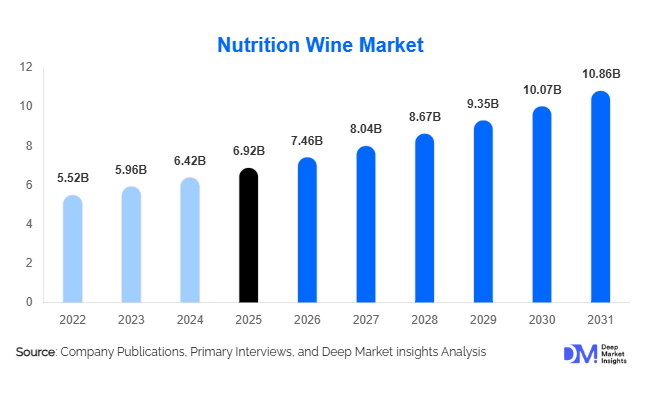
The global Nutrition Wine Market growth trajectory is accelerating, supported by technological advancements, shifting consumer preferences, and the broadening scope of industry applications. This report provides a holistic evaluation of the Nutrition Wine Market Market, analyzing major growth drivers, emerging opportunities, and potential challenges shaping the sector’s...
The beauty and personal care industry is growing rapidly across the globe, creating exciting opportunities for entrepreneurs and established businesses alike. Consumers are increasingly looking for high-quality, innovative, and personalized beauty products that meet their specific skincare and grooming needs. In this competitive environment, partnering with a reliable Private Label Skin Care...

"Lithium Iron Phosphate (LFP) Batteries Market Summary According to the latest report published by Data Bridge Market Research, the Lithium Iron Phosphate (LFP) Batteries Market The lithium iron phosphate (LFP) batteries market is expected to witness market growth at a rate of 10.1% in the forecast period of 2022 to 2029. Lithium Iron Phosphate (LFP) Batteries Market survey report is...
