


A Guide to Modern High-Speed Production Equipment
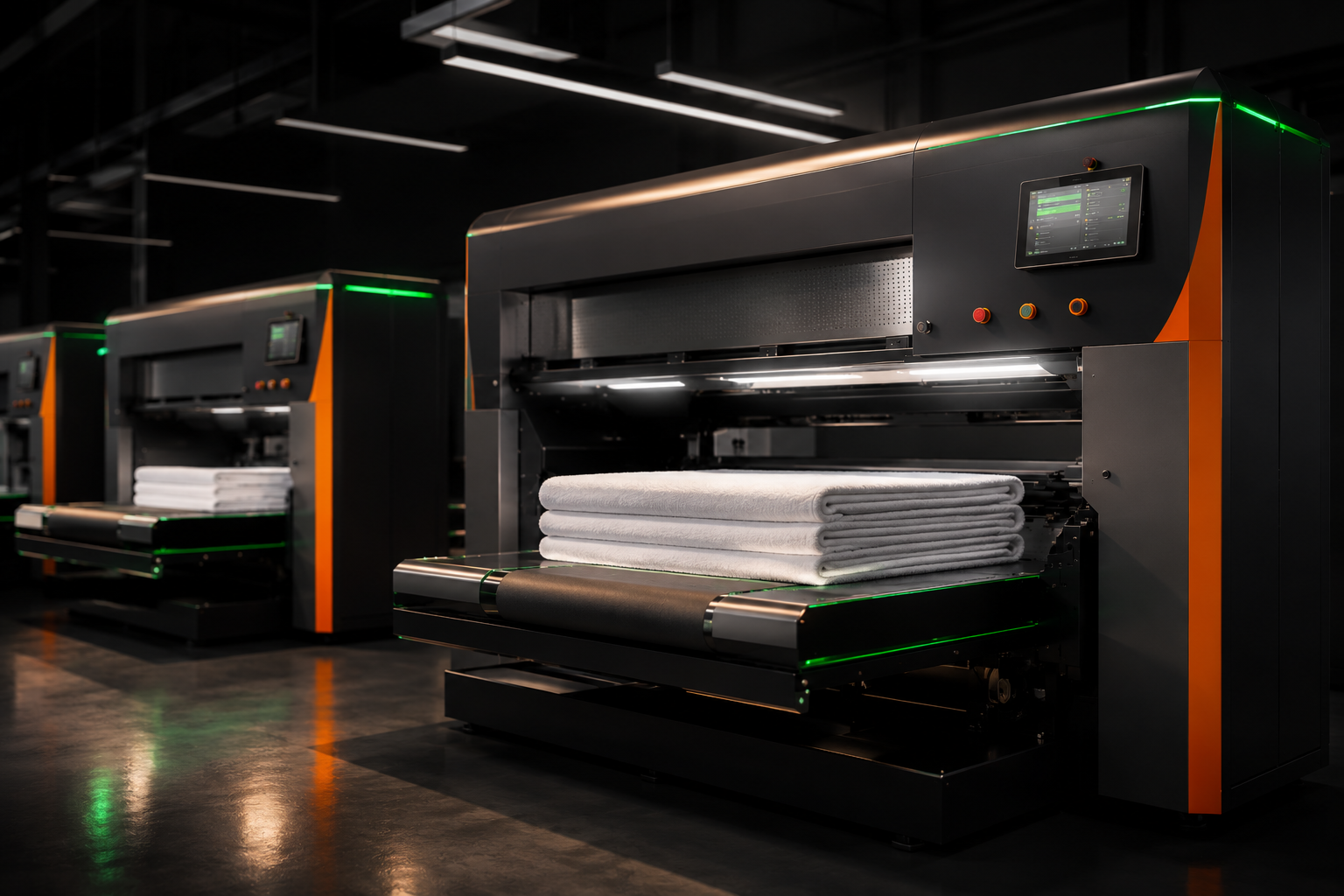
The modern industrial textile sector operates under tight margins, soaring energy costs, and a shrinking pool of skilled manual operators. To sustain commercial viability and satisfy stringent international quality guidelines, global textile manufacturers are progressively pivoting away from legacy processing benches. The complex physical architecture of terry cloth, categorized by its elevated grams per square meter metrics and high density yarn loops, demands dedicated mechanical processing. Manual slicing, alignment, and stitch feeding create significant dimensional variances, excessive fabric waste, and frequent production bottle necks. Introducing a unified mechanical ecosystem shifts the entire factory floor from a series of disjointed hand operations into an optimized, continuous production workflow.
Replacing legacy production lines with specialized infrastructure bridges the operational gap between massive raw terry fabric rolls and ready to ship commercial inventory. These integrated platforms leverage advanced electrical controls, photoelectric sensor arrays, and precision pneumatic tensioners to standardize structural metrics. By managing fabric feeds dynamically, automated equipment removes human error from the physical processing layout. This technological advancement results in lower material waste, significantly optimized floor throughput, and absolute cross product uniform consistency.
Investing in state of the art Towel Automation machines provides a distinct competitive advantage for factories striving to secure long term financial viability. These systems feature programmable intelligence and heavy duty mechanical sub assemblies to continuously track, slit, hem, and divide heavy fabrics without structural distortion. By incorporating modular length slitting mechanisms, auto cross cutters, and self regulating cross hemming systems, textile processors experience a considerable increase in operational capacity. This advanced hardware configuration enables commercial facilities to operate continuously while minimizing mechanical degradation and keeping structural failures to a minimum.
The Technical Engineering Behind High Speed Automated Length Slitting
Longitudinal fabric slitting represents the fundamental first stage of turning multi lane terry cloth webs into individually manageable products. Legacy manual slitting setups often introduce structural deviations due to fabric shifting, which causes irregular margins along the woven pile border lines. Automated length slitting systems resolve this operational vulnerability by using motorized circular knives that rotate in counter direction to the material feed layout. This method delivers a perfectly sheer, continuous cut through the non pile channels of the fabric, preventing frayed loose ends and protecting structural weave consistency.
The precision of modern slitting machinery relies heavily on optical alignment sub assemblies. Photoelectric sensors continuous scan the moving web to pinpoint the exact boundaries of the woven pile edges. When a web shift occurs during high speed material movement, the sensor array instantly transmits digital coordinates to the machine control hub. The system then automatically recalibrates the positions of the independent cutting knives on the fly without halting the feed rollers. This level of synchronization permits continuous operation at high processing speeds while ensuring cuts land precisely in the center of plain fabric strips.
Maintaining flat, stable fabric presentation across wide raw material rolls requires deep integration of advanced mechanical controls. Automated slitting machinery incorporates closed loop tension control mechanisms featuring highly sensitive electronic load cells. These components constantly monitor the exact physical pull on the material web, communicating feed metrics back to the core inverter drives. By managing the feed rates of input rollers instantly, the equipment eliminates fabric bunching, stretching, and sag. Consequently, factories achieve parallel cutting paths and highly stable processing runs across varying fabric qualities.
Mastering Precision Cross Cutting to Eliminate Material Waste
Dividing continuous, multi lane fabric strips into precise longitudinal lengths requires absolute mechanical synchronization. Terry fabric is highly susceptible to structural distortion under uneven physical strain, which makes traditional manual measurement prone to error. High speed automated cross cutting machines eliminate this vulnerability by using electronic encoders to precisely calculate fabric travel. The integrated encoders track the moving material stream down to the millimeter, making sure the heavy duty cutting blades descend only when the exact target parameters are reached.
To guarantee straight, square edges on every processed piece, automated cutting units utilize advanced pneumatic tension bars. A fraction of a second before the heavy steel blade executes its downward stroke, these pneumatic bars apply firm, even pressure across the entire fabric span. This action pulls the dense loop pile perfectly taut, completely eliminating material bow or skew during the slicing process. The resulting geometric precision simplifies subsequent edge folding processes and significantly reduces the edge trimming waste that commonly plagues manual manufacturing benches.
Modern cutting hardware also features advanced pattern recognition systems designed to counteract upstream manufacturing variations. Even if the woven pattern shifts or shrinks slightly during earlier bleaching, scouring, or dyeing processes, optical edge detection sensors spot the variation instantly. The system software calculates the variance on the fly and instructs the blade controller to adapt the cut path accordingly. This real time flexibility prevents pattern clipping errors, eliminates defective rejects, and allows the line to maintain high output metrics without manual operator adjustments.
Optimizing Quality Standards Through Automated Length Hemming
Hemming the long edges of terry products is a highly demanding mechanical sequence that heavily influences final consumer appeal. Automated length hemming systems optimize this step by integrating dual independent sewing stations that steer themselves automatically using photo electronic sensors. As the slit fabric strips advance through the machine layout, these sensors read the pile line position continuously. The independent sewing modules adjust their physical tracks in real time based on this data, ensuring the stitch line remains perfectly parallel to the border from end to end.
To create neat, uniform edges prior to stitching, automated length hemming machinery utilizes specialized mechanical folding fingers coupled with continuous low pressure air jets. These sub assemblies manipulate the raw fabric margins into an exact, multi fold profile without human touch. The dual fold structure is held firmly in place as it transitions into the heavy duty sewing heads. This design prevents fabric bunching, uneven edge widths, and missed stitches, achieving a level of structural consistency that manual operators cannot duplicate over extended shifts.
Stitch uniformity at high processing speeds requires continuous control over needle penetration force and material feed acceleration. Advanced automated hemming units employ specialized electronic inverters that maintain stable motor torque regardless of fabric thickness or pile density. This means the needle pierces through thick pile boundaries and light border strips with identical mechanical force. Additionally, built in thread break sensors monitor the yarn lines continuously, instantly halting the production cycle if a break occurs to prevent damaged products from progressing down the line.
Streamlining Production Flows via Advanced Cross Hemming Solutions
The ultimate phase of structural towel finishing involves cross hemming the raw cut ends, a process requiring complex mechanical handling. Automated cross hemming machines combine cut orientation, multi fold edge alignment, and high speed sewing into a single continuous sequence. By linking these individual operations within an automated workflow, the production floor eliminates the manual transport, sorting, and positioning steps that typically slow down factory throughput. This integration directly transforms separate, disjointed tasks into a smooth, high speed production system.
Handling the thick corners where longitudinal side hems intersect with cross cuts presents a significant challenge for conventional sewing machinery. Automated cross hemming systems overcome this issue by using programmable logic controllers to regulate pressing foot pressure dynamically. When the thick, multi layered corner sections enter the sewing zone, the machine automatically adapts its physical clearance and feeding parameters. This prevents needle breakage, skipped stitches, and material jam cycles, maintaining high aesthetic and structural standards across high volume product runs.
To ensure seamless integration with the rest of the factory floor, modern cross hemming machinery features intuitive touch screen interfaces. Manufacturing managers can quickly select preprogrammed product recipes directly from the digital console, altering length parameters, stitch configurations, and feed speeds in seconds. When switching orders from small hand towels to large beach towels, the internal control system recalibrates its folding plates and conveyor speeds automatically. This capability removes the need for physical retooling, drastically lowering machine downtime during product changeovers.
Enhancing Operational Efficiency with Specialized Blade Maintenance
The performance and precision of length slitting and cross cutting machinery depend heavily on the sharpness of their cutting edges. Because dense terry cotton loops exert significant abrasive force on steel components, blades experience steady mechanical degradation over long shifts. Dull cutting edges cause frayed threads, ragged boundaries, and irregular fabric dimensions, compromising overall product quality. Integrating specialized hemming and slitting knife sharpeners into the maintenance routine ensures cutting elements remain in optimal working condition.
Automated knife sharpening machinery is engineered to restore the precise factory bevel and cutting edge of circular and linear blades. These specialized maintenance units use high precision grinding wheels and regulated feed rates to eliminate micro fractures and metal burrs without overheating the steel substrate. Regular, automated sharpening cycles extend the overall service life of expensive cutting components and ensure consistent slicing performance. This practice reduces material resistance during high speed cutting runs, lowering stress on main drive motors and preserving clean material separation.
Adopting a systematic, machine driven approach to blade maintenance also significantly reduces unplanned factory downtime. Instead of waiting for visible cut degradation to appear, floor supervisors can execute rapid, standardized sharpening procedures based on tracked machine running hours. This predictive maintenance strategy keeps the primary towel processing line operating at maximum speed without unexpected halts caused by blade failure. Clean cutting edges also minimize fabric lint generation, keeping sensitive optical sensors and PLC modules free from dust buildup.
Maximizing Strategic ROI through Factory Automation Infrastructure
Transitioning from traditional manual sewing benches to a fully automated post weaving production line represents a significant financial step that yields substantial long term returns. One of the immediate financial advantages is the major reduction in overall material waste. Thanks to the absolute precision of electronic encoders and photoelectric sensor tracking, automated cutting and slitting lines lower fabric trim losses significantly. Over thousands of tons of processed cotton annually, this saved fabric translates directly into improved profitability for the manufacturing facility.
Furthermore, automated production layouts dramatically lower operational overhead by reducing reliance on specialized manual labor. A single automated processing line can match the volume of several manual sewing and cutting benches while requiring only a fraction of the supervisory staff. This allows factory operators to redirect human resources toward quality management and complex logistical tasks, mitigating the impact of regional labor shortages and rising minimum wage requirements. The continuous, predictable throughput of automated lines simplifies production scheduling, allowing facilities to meet strict shipping deadlines reliably.
Finally, modern automated textile machinery incorporates advanced energy management technologies that optimize power draw. Unlike legacy equipment that consumes constant electrical current, automated systems feature responsive inverters that draw maximum power only when sewing heads or cutting blades are actively engaged. This smart power distribution lowers the overall monthly electrical consumption of the factory floor. By combining lower energy costs, reduced fabric waste, and optimized throughput, advanced automation provides a clear path to maximizing return on investment for progressive textile manufacturers.
Frequently Asked Questions
How do automated machines handle different towel sizes without significant factory downtime?
Modern automated manufacturing units use advanced programmable logic controllers linked to user friendly touch screen interfaces. Floor managers simply select preprogrammed product profiles or input new dimensional recipes directly into the digital system. The machine then automatically adjusts its internal cutting blades, mechanical folding fingers, and conveyor systems to match the new specifications within moments. This digital configuration removes the need for manual tool adjustments, allowing factories to switch between hand towels, bath towels, and large sheets with minimal operational delay.
What mechanism ensures that cutting blades remain aligned during high speed operations?
Automated length slitting and cross cutting systems rely on continuous feedback loops powered by high speed photoelectric or ultrasonic edge detection sensors. These sensor arrays scan the moving fabric web in real time to trace the exact boundaries of the woven pile lines. If the terry cloth shifts or skews as it travels along the conveyor system, the sensors instantly transmit updated coordinates to the control hub. The automated guide assemblies then realign the independent cutting blades on the fly, ensuring cuts remain precise without stopping the production flow.
Can automated hemming systems manage extra thick or heavy GSM terry fabrics?
Yes, advanced automated hemming units are specifically engineered to handle high density, high GSM fabrics without stalling. They feature heavy duty structural frames and specialized electronic inverters that maintain stable motor torque regardless of material thickness. When encountering dense loop regions or thick corner sections where side and cross hems overlap, the machine automatically regulates its foot pressure and needle penetration force. This ensures consistent stitch density and prevents needle breakage or fabric jams.
How does automation help reduce overall material waste on the factory floor?
Automation minimizes fabric waste by substituting imprecise manual measurements with highly accurate electronic encoders and optical sensors. These components measure the moving fabric web down to the millimeter, ensuring cutting blades descend at the exact programmed boundaries. Additionally, pneumatic tension bars pull the material perfectly taut before cutting, eliminating curved or uneven edges. This precise physical management reduces the need for edge trimming, saving significant amounts of raw cotton fabric over high volume production runs.
Why is specialized blade sharpening equipment essential for towel automation lines?
Terry cloth is highly abrasive, causing cutting blades to experience continuous wear and minor structural degradation during long operation cycles. Dull blades lead to frayed fabric edges, pulling threads, and uneven dimensions that compromise final product quality. Specialized hemming and slitting knife sharpeners restore the exact factory edge bevel, ensuring clean cuts and reducing mechanical stress on main drive motors. Incorporating automated sharpening into regular maintenance schedules prevents unexpected production halts and extends the lifespan of expensive cutting parts.
Kategorien
Mehr lesen
A government job in the police department is a popular career choice for candidates who want to work in public service. Haryana Police recruitment provides opportunities for eligible applicants to join the department through different posts and selection procedures. Candidates searching for a Haryana Police Job should understand the complete recruitment process before applying....

Traveling with pets can feel hard, especially if you do not know the airline rules or what you need to do. The Air France Pet Policy makes it easier and smoother for you and your pet to fly together. It does not matter if you take a trip inside your country or far away to another one. If you read the pet travel rules before your trip, you will feel ready and not worry at the last part...

Dubai has long been synonymous with luxury, pushing the boundaries of what is possible in architecture, hospitality, and entertainment. It is only fitting that the city, often referred to as the playground for the affluent, offers an unparalleled standard for premium engagement services in dubai one of life’s most significant milestones: the engagement. Premium engagement...

