


How Automotive 4D Imaging Radar Is Advancing Vehicle Safety
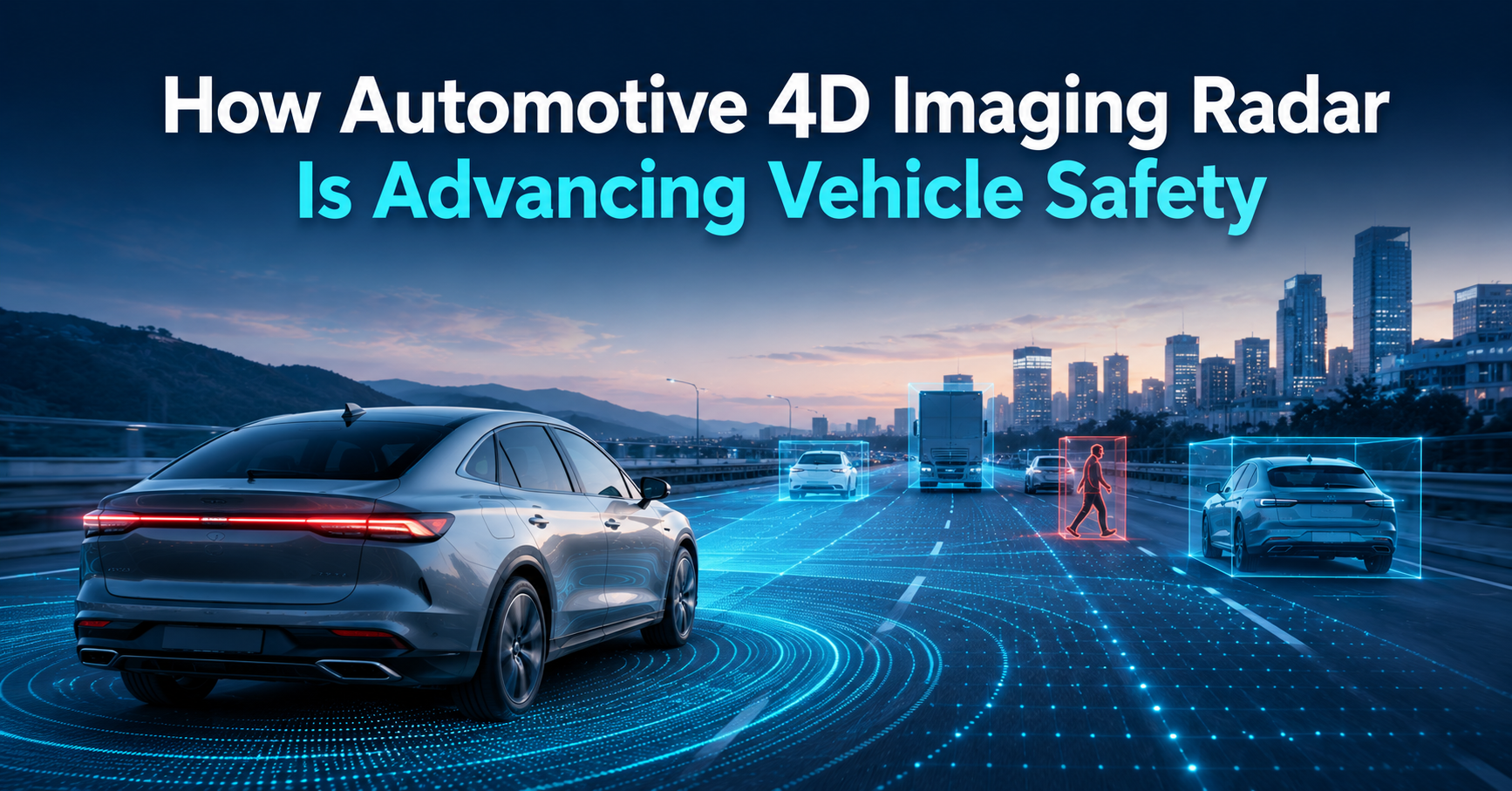
Automotive 4D imaging radar is emerging as a critical sensing technology in the evolution of modern vehicles. As automakers continue to enhance advanced driver assistance systems (ADAS) and develop higher levels of vehicle automation, the need for accurate environmental perception has become increasingly important. Unlike traditional radar systems, 4D imaging radar provides detailed information about an object's distance, speed, direction, and elevation, enabling vehicles to better understand their surroundings.
The technology is gaining attention across the automotive ecosystem because of its ability to perform reliably in challenging weather conditions such as rain, fog, snow, and low-light environments. These capabilities make 4D imaging radar an essential component in safety-focused vehicle architectures and future autonomous mobility platforms.
Understanding the Capabilities of Automotive 4D Imaging Radar
Automotive 4D imaging radar represents a significant advancement over conventional radar sensors. Traditional radar systems primarily measure range and velocity, while 4D radar adds elevation data and generates high-resolution point clouds. This additional dimension allows vehicles to identify objects more accurately and distinguish between pedestrians, cyclists, vehicles, and roadside infrastructure.
According to research on radar-based autonomous driving systems, high-resolution radar sensing can improve object detection and environmental awareness, particularly in conditions where camera-based systems may face limitations. Recent developments in radar perception algorithms are also helping improve real-time vehicle decision-making processes.
Growing Demand for ADAS Is Driving Adoption
The increasing deployment of ADAS features is one of the strongest drivers supporting automotive 4D imaging radar adoption. Functions such as adaptive cruise control, automatic emergency braking, lane-keeping assistance, and collision avoidance depend on accurate sensing technologies to operate effectively.
Automotive manufacturers are integrating multiple sensor technologies, including cameras, LiDAR, ultrasonic sensors, and radar, to create a comprehensive perception system. Within this sensor fusion approach, 4D imaging radar offers a valuable combination of range, accuracy, and all-weather reliability. As regulatory agencies continue emphasizing vehicle safety standards, demand for advanced sensing solutions is expected to increase further.
Insights from the Automotive 4D Imaging Radar industry analysis indicate that automakers and technology providers are actively investing in next-generation radar solutions to support evolving safety requirements and autonomous driving ambitions.
Why 4D Imaging Radar Offers Advantages Over Traditional Sensors
Each vehicle sensing technology has strengths and limitations. Cameras provide rich visual information but can struggle in darkness or poor weather. LiDAR delivers precise depth perception but may involve higher costs and operational complexities. Traditional radar performs well in adverse conditions but often lacks detailed object classification capabilities.
Automotive 4D imaging radar addresses many of these challenges by combining long-range detection with enhanced object resolution. The technology can identify object height, movement patterns, and spatial positioning with greater accuracy, improving the overall performance of ADAS and autonomous systems.
Research involving 4D radar point-cloud processing has demonstrated that advanced radar architectures can support highly efficient object detection while maintaining real-time performance, making them suitable for modern automotive applications.
Role in Autonomous Driving Development
The path toward autonomous driving requires vehicles to continuously monitor complex road environments. Autonomous systems must detect obstacles, predict movements, and make safe driving decisions within milliseconds. Automotive 4D imaging radar contributes significantly to these requirements by delivering reliable perception data under a wide range of operating conditions.
Vehicle manufacturers pursuing Level 2+, Level 3, and higher automation capabilities increasingly recognize the importance of sensor redundancy. Multiple sensing technologies working together create safer and more dependable systems. In this environment, 4D imaging radar serves as a complementary technology that enhances perception accuracy while reducing reliance on any single sensor.
Industry observers note that the growing emphasis on autonomous mobility, intelligent transportation systems, and connected vehicles is creating new opportunities for radar innovation. These developments are expected to strengthen the role of 4D imaging radar within future vehicle platforms.
Innovation and Competitive Developments Across the Industry
The automotive sector is witnessing significant innovation in radar hardware, semiconductor design, signal processing, and artificial intelligence. Radar manufacturers are introducing higher-resolution sensors capable of generating more detailed environmental maps while reducing power consumption and system complexity.
Advancements in machine learning are also enabling radar systems to classify objects more effectively and interpret complex traffic scenarios. These improvements support safer driving experiences while helping automakers meet evolving consumer expectations for intelligent vehicle technologies.
Collaboration among automotive OEMs, semiconductor companies, software developers, and sensor manufacturers continues to accelerate technological progress. As production volumes increase, improvements in scalability and cost efficiency may support broader deployment across both premium and mass-market vehicle segments.
The Future of Automotive 4D Imaging Radar
Automotive 4D imaging radar is positioned to become an increasingly important element of future vehicle safety and automation strategies. The technology's ability to provide high-resolution environmental perception, operate effectively in challenging conditions, and support advanced driver assistance functions aligns with the automotive industry's long-term direction.
As vehicle manufacturers continue investing in safer and more intelligent mobility solutions, 4D imaging radar is expected to play a larger role in enabling reliable perception systems. Ongoing advancements in radar imaging, artificial intelligence, and sensor integration are likely to further enhance its capabilities, supporting the next generation of connected and autonomous vehicles.
Kategorien
Mehr lesen
For students who research MBBS abroad through Education Vibes, Kyrgyz State Medical Academy often appears on the shortlist. The academy, officially named I.K. Akhunbaev Kyrgyz State Medical Academy, is based in Bishkek and traces its roots back to 1939, when the Kyrgyz State Medical Institute first opened in Frunze. The academy’s history page notes that the first graduation took...

Artificial intelligence has become a part of everyday life. What started as simple chatbots capable of answering basic questions has evolved into intelligent AI assistants that can help with work, learning, research, writing, and even personal conversations. As AI technology continues to advance, users now have access to a growing number of AI chat apps designed for different needs. Whether...

In today’s rapidly evolving education landscape, coaching institutes are no longer limited by geography. The rise of digital platforms, combined with artificial intelligence, has unlocked unprecedented opportunities for global expansion. For institutes focused on English proficiency exams, adopting advanced tools like Celpip software is becoming a strategic necessity rather than a...

¿Cómo contactar a American Airlines desde Guatemala? Cuando surge un cambio inesperado en un viaje, contar con un servicio de atención confiable puede marcar la diferencia. Muchos pasajeros buscan información sobre ¿Cómo contactar a American Airlines desde Guatemala? para resolver dudas relacionadas con vuelos, equipaje o modificaciones...

