


AI Customer Experience Trends: Pros & Cons
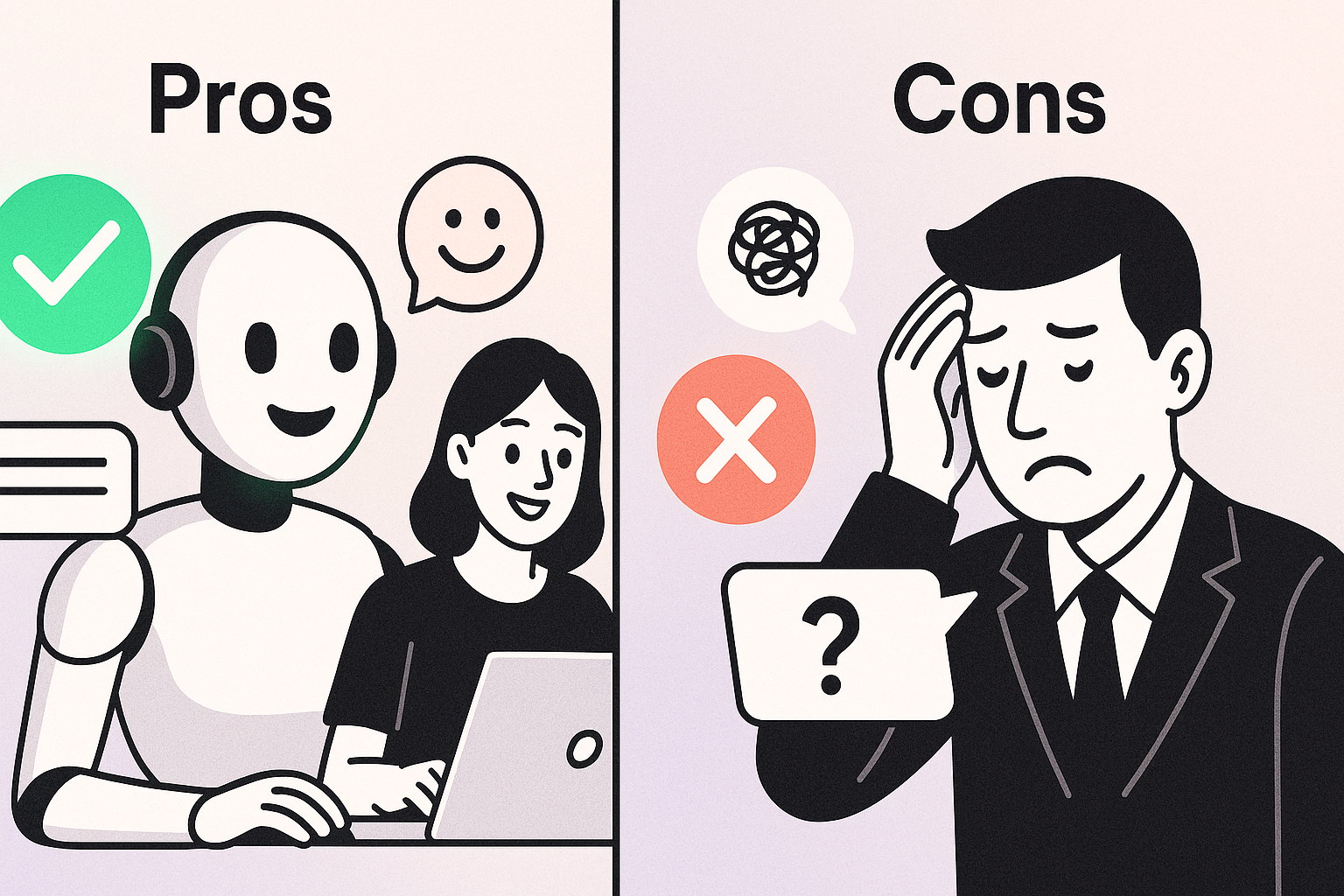
From buzzword to day-to-day reality in customer success: artificial intelligence Whether it is chatbots that answer at 2 am in the morning or predictive systems that predict what a shopper wants before the person can even ask, AI-powered customer experience is changing how brands and businesses engage with buyers. Is this change a win for customers, a win for companies, or both? For any company considering how far to lean into automation, understanding the AI customer experience trends fueling this change — and their trade-offs in practice — is vital.
What Is AI Customer Experience?
AI customer experience is basically what it seems: the application of machine learning, natural language processing, and automation tools to control and drive interactions between a business and its customers. It includes various applications such as chatbots, voice assistants, recommendation engines, and AI-enabled personalization tailored based on individual-specific behavior, including content, offers, and support. The rapid pace of adoption: Industry research indicates that the overwhelming majority of inbound support contacts are now resolved without any escalation to a human by AI agents, something that's wholly changed since just a couple of years ago.
The Pros of AI-Powered Customer Experience
Speed and Availability
AI doesn't sleep. Instant responses to frequently asked questions help customers get the answers they need any time, day or night—causing no more frustration at waiting on hold or for an email reply next business day.
Lower Operational Costs
AI powered customer experience tools dramatically reduce the cost per interaction compared to traditional human-staffed support, freeing up budget for more complex cases that genuinely need a human touch.
Personalization at Scale
AI is able to evaluate purchase history, browsing behaviors, and preferences in order to communicate recommendations and messaging specific to individuals—a feat impossible for any human team working with thousands of customers at once.
Consistency
Among the major advantages is that, unlike a human who may have a good or bad day as they attend to your needs, AI provides you with the same tone and accuracy every time, reducing variance in service.
The Cons of AI Customer Experience
The Trust Gap
Even with the benefits of efficiency, many customers are wary. Many consumers continue to claim that an actual human agent is more accurate and capable of understanding complex problems than a bot.
Loss of Empathy
Yes, AI can process language, and this brings us to the point where it fails in truly empathizing with emotions. When emotions run high—billing disputes, complaints, or service failures—a badly managed AI interaction will cause considerably more harm than slow human handling.
Over-Automation Risk
As companies force an increasing number of interactions to bots and make it difficult—if not impossible—to get in touch with a human being, customers become frustrated. Some shoppers even say they have left a brand after just one negative automated experience.
Implementation Complexity
At the end of the day, AI systems are only as good as their data and workflows. The introduction of poorly integrated AI can add more friction than it removes, particularly when the self-service content is sparse and stale.
Finding the Right Balance
The brands that are succeeding with AI customer experience trends are not doing away with humans—they avoid replacing a human agent at all times but rather employ AI to do the repetitive, fatiguing, high-volume conversations while keeping nuanced, more complex, and higher-stakes conversations the task of securing a human agent. Best performing: this hybrid model
- Automated FAQs, order tracking and troubleshooting through AI
- Have a route that is fast and tangible for simple questions to humans when necessary
- Lay a foundation of strong self-service content before stacking AI on top
- Keep tracking how accurate the AI are and how customers feel
Conclusion
While AI-powered customer experience does have clear competitive advantages — speed, low cost, and customization — it is not a panacea. The businesses that will win will be the ones that look at AI as a tool to support human service, not replace it. These companies that strike the right type of balance between automating and authentic human interactions will be in business for a real long time.
Categorías
Read More
The global Computed Tomography (CT) market continues to demonstrate strong and sustained growth momentum, supported by increasing demand for advanced diagnostic imaging, rising prevalence of chronic diseases, and rapid technological advancements in medical imaging systems. According to recent industry analysis, the CT market was valued at approximately US$ 8.0 billion in 2025 and is projected...

Are you searching for premium Management Assignment Help Australia assistance? The answer is yes—professional academic support can help students improve assignment quality, manage tight deadlines, understand complex management concepts, and achieve better academic results. Whether you need guidance with leadership theories, organizational behavior, strategic management, human resource...

Jewelry trends continue to change as couples look for designs that feel personal and different from traditional styles. One trend gaining attention is the east west engagement ring. Instead of placing the diamond vertically, this setting turns the stone horizontally across the band. The result is a fresh look that feels stylish without being too dramatic. Many people are drawn to this setting...

Many of us have had this experience: you hear about a book that promises depth, something more than surface-level inspiration. You open your laptop, type the title into a search bar, and suddenly you’re staring at ten different versions, unfamiliar websites, and a quiet question in the back of your mind: Am I even choosing the right thing? It’s fascinating to consider how something...

