Why Some Hijab Fabrics Feel Comfortable All Day While Others Don't: Understanding Breathability, Weight, and Texture
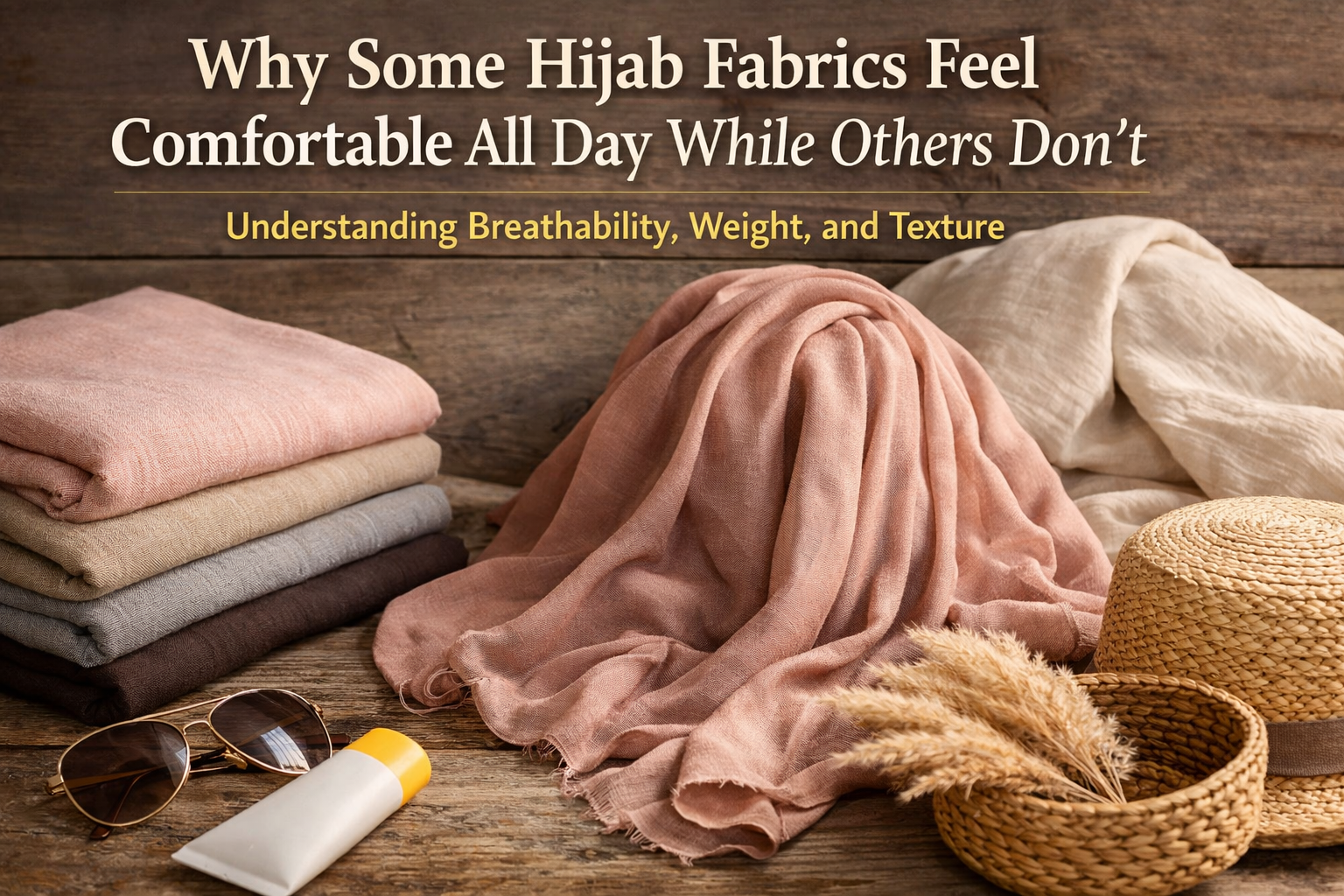
For many women, comfort is one of the most important factors when choosing a hijab. A hijab may look beautiful when first worn, but if it becomes uncomfortable after a few hours, it can affect focus, confidence, and the overall wearing experience. This is why fabric choice matters far more than many people realize.
Some hijabs remain comfortable from morning until evening, while others may feel heavy, warm, or difficult to manage after only a short period of wear. The difference is often not related to styling techniques or accessories. Instead, it comes down to the physical characteristics of the fabric itself.
Factors such as breathability, weight, texture, moisture management, and flexibility all influence how a hijab feels throughout the day. Understanding these factors can help individuals make more informed choices based on their lifestyle, environment, and daily activities.
Why Comfort Means Different Things to Different People
When discussing hijab comfort, it is important to recognize that comfort is not exactly the same for everyone.
Some people prioritize:
- Lightweight fabrics
- Breathability
- Easy styling
- Soft texture
Others may value:
- Stability
- Structure
- Coverage
- Shape retention
Because personal preferences vary, the most comfortable fabric for one person may not be ideal for another.
However, certain fabric characteristics consistently influence overall comfort.
The Importance of Breathability
Breathability refers to how easily air can pass through a fabric.
This is one of the most important factors affecting daily comfort.
A breathable fabric helps:
Improve Airflow
Allowing heat to escape more easily.
Reduce Heat Buildup
Preventing excessive warmth around the head and neck.
Support Long-Term Wear
Making the hijab feel more comfortable throughout the day.
Improve Freshness
Helping reduce discomfort during warmer conditions.
Many modern Hijabs are selected based on their ability to balance coverage with breathability.
How Fabric Weight Affects Comfort
Weight plays a significant role in how a hijab feels after several hours of wear.
Lightweight Fabrics
These materials often feel less restrictive and are popular for extended use.
Advantages include:
- Easier movement
- Reduced pressure
- Better airflow
- Comfortable layering
Heavier Fabrics
These fabrics may offer more structure but can sometimes feel warmer or bulkier.
The ideal weight often depends on personal preference and environmental conditions.
Why Texture Matters More Than People Think
Texture affects both comfort and functionality.
A fabric's surface influences:
- Skin feel
- Grip
- Styling stability
- Overall wearability
Smooth fabrics often provide an elegant appearance, while textured fabrics may offer better stability.
The right balance depends on individual needs.
Understanding the Characteristics of Chiffon
Among the most widely worn hijab materials are Chiffon Scarves.
Chiffon is known for:
Lightweight Construction
Helping reduce heaviness.
Elegant Drape
Creating flowing styles.
Breathability
Supporting airflow.
Versatility
Suitable for various occasions.
However, chiffon's smooth texture can sometimes make it more likely to shift during wear.
For this reason, many people combine chiffon with under scarves or accessories for added stability.
Why Jersey Fabrics Feel Different
Jersey Scarves offer a very different experience compared to chiffon.
Jersey fabric is typically:
- Soft
- Stretchable
- Flexible
- Comfortable for extended wear
Because of its natural elasticity, jersey often remains secure without requiring extensive pinning.
Many individuals prefer jersey for everyday activities because of its balance between comfort and practicality.
The Role of Moisture Management
Throughout the day, the body naturally produces heat and moisture.
Fabrics that manage moisture effectively often feel more comfortable.
Benefits include:
Reduced Dampness
Helping maintain freshness.
Better Temperature Control
Supporting comfort in changing conditions.
Improved Wearability
Making long-term use easier.
Enhanced Overall Experience
Reducing common discomforts.
Moisture management is especially important in warmer climates.
Why Stability Influences Comfort
Comfort is not only about softness.
A hijab that constantly shifts or requires adjustment can become distracting.
Stable fabrics often improve comfort because they:
- Stay in place longer
- Require fewer adjustments
- Maintain styling more effectively
- Reduce daily frustration
This is one reason many people choose textured fabrics for routine wear.
Understanding Crinkle Fabric
Crinkle Hijabs have become increasingly popular because of their distinctive texture.
The crinkled surface creates natural grip, which can help:
Reduce Slipping
Supporting stability.
Improve Styling Retention
Helping folds stay in place.
Minimize Adjustments
Reducing the need for frequent corrections.
Increase Practicality
Making everyday wear easier.
These characteristics make crinkle fabrics attractive for busy lifestyles.
How Climate Affects Fabric Comfort
Environmental conditions significantly influence fabric performance.
Warm Weather
Breathability becomes especially important.
Humid Conditions
Moisture management plays a larger role.
Cooler Seasons
Heavier fabrics may feel more comfortable.
Indoor Environments
Air conditioning and heating can influence fabric preference.
Choosing fabrics according to climate often improves overall comfort.
The Connection Between Styling and Comfort
Even comfortable fabrics may become uncomfortable if styled improperly.
Important considerations include:
- Excessive tightness
- Uneven wrapping
- Poor layering
- Excessive pin usage
Comfort improves when fabric properties and styling techniques work together.
Common Misconceptions About Comfortable Hijabs
Several myths exist regarding hijab comfort.
Myth 1: Thinner Fabrics Are Always More Comfortable
Comfort depends on multiple factors, not thickness alone.
Myth 2: Soft Fabrics Always Feel Better
Softness helps, but stability and breathability also matter.
Myth 3: One Fabric Suits Everyone
Personal preferences and environments vary significantly.
Understanding these misconceptions helps individuals make better choices.
Choosing Fabric Based on Lifestyle
Different lifestyles often benefit from different materials.
Students
May prioritize lightweight and breathable fabrics.
Professionals
Often prefer stability and long-wear comfort.
Travelers
May value wrinkle resistance and versatility.
Active Individuals
Typically benefit from flexible and secure fabrics.
Matching fabric characteristics to daily routines often improves satisfaction.
Frequently Asked Questions
1. What makes a hijab comfortable for all-day wear?
Breathability, weight, texture, and stability all contribute.
2. Are chiffon scarves suitable for everyday use?
Yes. Chiffon Scarves are lightweight and versatile but may require additional support.
3. Why are jersey scarves popular?
Jersey Scarves combine softness, flexibility, and stability.
4. Do crinkle hijabs slip less?
Many people find Crinkle Hijabs more stable because of their textured surface.
5. Does weather affect hijab comfort?
Yes. Temperature and humidity can significantly influence fabric performance.
6. Is lightweight fabric always the best option?
Not necessarily. Comfort depends on personal preferences and circumstances.
7. Why does fabric texture matter?
Texture affects grip, stability, and how the fabric feels against the skin.
Final Thoughts
The comfort of a hijab depends on much more than appearance. Factors such as breathability, weight, texture, stability, and moisture management all contribute to how a fabric feels throughout the day. By understanding these characteristics, individuals can make choices that better suit their daily routines and personal preferences. Whether selecting lightweight Hijabs, elegant Chiffon Scarves, supportive Jersey Scarves, or textured Crinkle Hijabs, comfort is often the result of finding the right balance between fabric performance and individual needs.
Categorias
Leia mais
تعد شركة تحول ديجيتال واحدة من أهم الجهات التي تقدم حلولًا رقمية متكاملة تساعد الشركات على النمو في العالم الرقمي، خاصة عند دمج خدماتها مع خبرات شركة سيو التي تركز على تحسين ظهور المواقع في محركات البحث. وفي السوق الخليجي بشكل عام، يبرز دور شركة سيو في البحرين كعنصر أساسي في دعم الأنشطة التجارية المحلية وتحقيق انتشار أوسع عبر الإنترنت، مما يجعل التعاون بين هذه الجهات عنصرًا مهمًا لتحقيق النجاح...

Imagine you're leading a growing enterprise in 2026. Your team has successfully adopted AI, automated workflows, and expanded digital services. Yet, one challenge remains: how do you create verifiable digital ownership, secure asset trading, and new revenue streams in an increasingly digital-first economy? This is where enterprise NFT marketplaces are making a significant impact. Gone are the...