When Is Surgery for Bowel Perforation Necessary? Signs, Treatment & Recovery
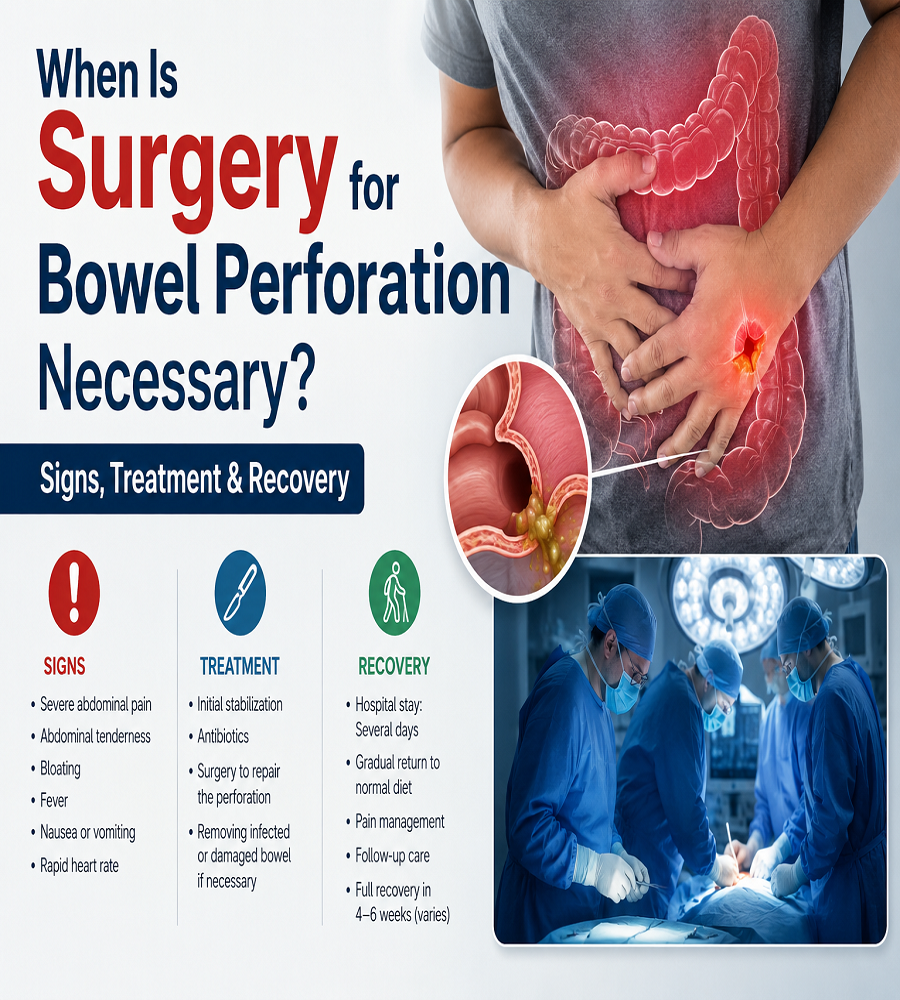
Bowel perforation is one of those medical emergencies that doctors dread and patients rarely see coming. One moment a person might be managing a stomach ache at home, and the next they are being rushed into an operating room. If you or someone close to you has been told there is a hole in the intestine, the natural first question is: does it absolutely need surgery? The honest answer is — it depends, but more often than not, yes. Understanding what bowel perforation actually means, how it presents, and what treatment looks like can make a frightening situation feel a little more manageable. For residents considering Surgery for Bowel Perforation in Jaipur, knowing what to expect before, during, and after the procedure can genuinely change outcomes.
What Exactly Is Bowel Perforation?
The bowel — which includes both the small intestine and the large intestine (colon) — is essentially a long, muscular tube responsible for digesting food, absorbing nutrients, and passing waste out of the body. When a hole or tear develops anywhere along this tube, it is called a bowel perforation.
When that happens, the contents of the intestine — which include bacteria, digestive acids, stool, and gas — leak out into the abdominal cavity. This triggers a condition called peritonitis, an infection of the lining of the abdominal wall, which can escalate into sepsis (a life-threatening, body-wide infection) within hours if left untreated.
The causes of bowel perforation are more varied than most people expect. They include peptic ulcers that erode through the stomach or duodenum wall, Crohn's disease, diverticulitis, appendicitis, trauma (such as a stab wound or car accident), swallowing a foreign object, bowel obstruction, or even as a rare complication of procedures like a colonoscopy. In some cases, colorectal cancer can cause the bowel wall to weaken and eventually rupture.
Recognizing the Warning Signs
The symptoms of bowel perforation are hard to ignore once they set in — the body sends distress signals that are difficult to dismiss as ordinary indigestion.
Sudden, Severe Abdominal Pain is almost always the first and most alarming symptom. Unlike the dull cramping of a stomach bug, the pain from perforation tends to be sharp and intense, often described as feeling like something has "burst" inside. It may start in one area and quickly spread across the entire abdomen.
A Board-Like, Rigid Abdomen is a classic clinical sign. When the abdominal muscles tighten to protect the inflamed area inside, the belly becomes visibly stiff and tender to the slightest touch. Even a gentle press causes significant pain.
Fever and Chills develop as the body begins fighting the infection spreading inside the abdomen. These may appear within hours of the initial rupture.
Nausea and Vomiting are common companions to the severe pain, as the body's instinctive response to internal distress.
Bloating and Inability to Pass Gas or Stool suggest that the intestines have stopped moving — a condition known as ileus — which commonly accompanies perforation.
Rapid Heart Rate and Low Blood Pressure in later stages signal that the infection may have entered the bloodstream, indicating septic shock.
If these signs appear together — especially the sudden severe pain combined with a hard belly — it is a medical emergency. Time is everything.
How Is Bowel Perforation Diagnosed?
When a patient arrives at the emergency department with symptoms suggesting perforation, doctors move quickly. The workup typically includes:
A plain X-ray of the abdomen, which can show free air under the diaphragm — a tell-tale sign that gas has escaped from a ruptured organ. A CT scan of the abdomen and pelvis gives a more detailed picture of where the perforation is, how much spillage has occurred, and whether there is an abscess forming. Blood tests look for elevated white blood cell counts (indicating infection), low haemoglobin, and markers of organ stress. In some unclear cases, surgeons may perform a diagnostic laparoscopy — a small camera inserted through a tiny incision — to see inside the abdomen directly.
When Is Surgery Absolutely Necessary?
This is the question most patients and families want answered directly.
Surgery is almost always required when there is confirmed free perforation — meaning a hole has opened and abdominal contents have spilled freely. It is also necessary when peritonitis is established, when there is evidence of sepsis or hemodynamic instability, when the perforation is caused by trauma, colorectal cancer, or a foreign body, and when non-surgical treatments have failed to control the problem.
The goal of emergency surgery is threefold: locate the source of the perforation, close it or remove the damaged segment of bowel, and thoroughly clean the abdominal cavity to prevent ongoing infection. Depending on how much bowel is damaged and how contaminated the cavity is, the surgeon may be able to reconnect the bowel ends immediately (primary anastomosis), or a temporary stoma (colostomy or ileostomy) may be created to divert waste while the intestine heals.
Can Some Cases Be Treated Without Surgery?
In rare, selected situations — particularly when the perforation is small, well-contained (sealed off by surrounding tissues), and the patient is stable — conservative management might be attempted. This involves hospitalisation, nothing by mouth, intravenous antibiotics, close monitoring, and in some cases, CT-guided drainage of any abscess. However, this approach carries a real risk of deterioration, and most surgeons reserve it for very specific clinical scenarios. If there is any sign of worsening, surgery becomes unavoidable.
Types of Surgical Procedures
The surgical approach depends on the location, cause, and severity of the perforation.
Open Surgery (Laparotomy) involves a large incision across the abdomen and remains the standard approach for most emergency perforations, especially when the abdomen is severely contaminated. It allows surgeons maximum visibility and access.
Laparoscopic Surgery uses small incisions and a camera, and is sometimes feasible when the perforation is found early and contamination is minimal. It offers faster recovery and less post-operative pain, but not every situation allows for it.
Omental Patch Repair is a technique used for peptic ulcer perforations where a piece of fatty tissue (the omentum) is stitched over the hole to seal it.
Bowel Resection involves removing the perforated section of intestine. If reconnection is safe, the two ends are joined. If not, a stoma is created.
Hartmann's Procedure is commonly used for perforated sigmoid colon, particularly in cancer or severe diverticulitis cases, where the diseased segment is removed and a temporary colostomy is fashioned.
Post-Surgery Recovery: What to Realistically Expect
Recovery after bowel perforation surgery is not quick, and patients should prepare themselves mentally for a process that takes weeks to months.
In the immediate post-operative period, patients stay in the intensive care unit or high-dependency unit, receiving IV fluids, antibiotics, and pain relief. A nasogastric tube may drain the stomach, and a urinary catheter monitors kidney function. Most patients remain in hospital for 7 to 14 days, though this can extend if complications arise.
Eating resumes gradually — starting with clear liquids once the bowel shows signs of activity, then soft foods, and eventually a normal diet. Rushing this process can cause nausea and further discomfort.
Wound care is important since the incisions — particularly after open surgery — need careful monitoring for signs of infection: increasing redness, swelling, warmth, or discharge.
Activity restrictions are typically advised for 6 to 8 weeks. Heavy lifting and strenuous exercise should be avoided to prevent incisional hernias, which are a known long-term complication.
If a stoma was created, the patient and their family will receive education from a stoma care nurse on how to manage it. In many cases, reversal surgery can be planned 3 to 6 months later once recovery is complete and inflammation has fully resolved.
Nutritional support is a key part of recovery, particularly if a portion of the small intestine was removed, as this can affect nutrient absorption. A dietitian's guidance becomes important here.
Potential Complications to Watch For
Even with successful surgery, bowel perforation carries risks. These include wound infection, intra-abdominal abscess formation, anastomotic leak (where the rejoined bowel segments fail to heal properly), adhesion formation leading to future bowel obstruction, incisional hernia, and prolonged ileus. Early detection through regular follow-up with the surgical team helps manage these issues before they escalate.
The Importance of Not Delaying Care
One of the most critical factors determining outcomes in bowel perforation is how quickly the patient receives treatment. Studies consistently show that delays beyond 12 to 24 hours of perforation significantly increase mortality rates. What begins as a manageable surgical case can turn into multi-organ failure if left unaddressed. Anyone experiencing sudden, severe abdominal pain that does not settle within a couple of hours — especially with a rigid belly — should go to the emergency department immediately, not wait until morning to call a doctor.
Conclusion
Bowel perforation is a serious condition that demands prompt diagnosis and, in most cases, urgent surgical intervention. Understanding the warning signs, the diagnostic process, and the different surgical options can help patients and families make informed decisions under pressure. Recovery is a genuine journey requiring patience, follow-up, and gradual return to normal activity. If you or a loved one is navigating this situation, seeking early evaluation from an experienced surgical team makes the single biggest difference in outcomes. For those looking for expert care closer to home, best hospital in Jaipur is performed by skilled gastrointestinal surgeons equipped to handle both emergency and elective cases with the urgency and precision this condition demands.
Catégories
Lire la suite
Is your business outgrowing HubSpot? Many businesses start with HubSpot because it combines website management with marketing tools. However, as your company grows, you may need greater flexibility, advanced customization, better SEO control, faster website performance, and lower long-term costs. That's where our HubSpot to WordPress Migration Services come in. At Walstar Technologies, we help...

Achieving a firmer and more defined abdominal profile is a personal goal for many individuals. While maintaining a healthy lifestyle through balanced nutrition and regular exercise contributes to overall well-being, some people experience changes in the abdominal area that cannot always be addressed through lifestyle habits alone. Factors such as significant weight changes, pregnancy, aging,...

Every McLaren is designed with one goal in mind: delivering an extraordinary driving experience. From its lightweight construction to its advanced aerodynamics and powerful engine technology, every detail is engineered for precision. Maintaining that level of performance requires more than standard automotive care. It demands expertise, attention to detail, and a proactive maintenance...