Agent Monitoring Software: Driving Better Call Center Process Management and Quality Control
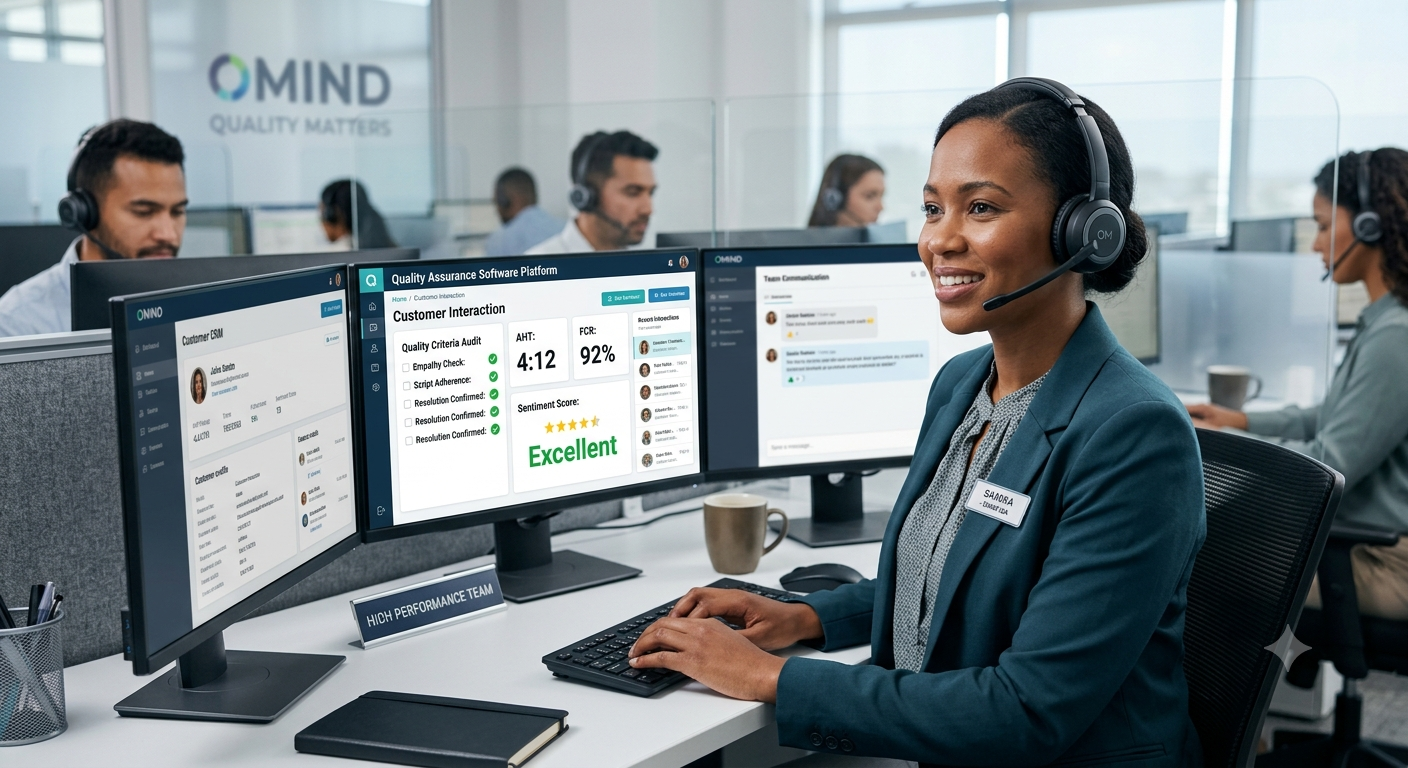
In the modern business landscape, the call center is often the heartbeat of customer experience. It is the frontline where brand promises are kept—or broken. However, managing a high-volume contact center is a complex juggling act. Supervisors must ensure that every interaction is efficient, compliant, and empathetic, all while maintaining profitability.
This is where call center agent monitoring software has evolved from a niche tool into an essential pillar of operations. By providing actionable insights into every interaction, this technology is transforming how managers approach call center process management and call center quality control.
The Evolution of Agent Monitoring
Historically, quality assurance (QA) was a manual, retrospective process. A supervisor would listen to a handful of calls per week, fill out a scorecard, and provide feedback days later. This method was not only time-consuming but also statistically insignificant—capturing only a tiny fraction of total call volume.
Today’s agent monitoring software leverages AI-driven analytics, speech-to-text transcription, and real-time sentiment analysis. It allows managers to move from "sampling" to "monitoring," providing a comprehensive view of performance that is both objective and data-driven.
Enhancing Call Center Process Management
Process management is the backbone of operational efficiency. Without a clear view of how agents navigate software, follow scripts, or adhere to compliance regulations, inefficiencies go unnoticed.
Agent monitoring software acts as a diagnostic tool for your workflows. By analyzing call paths and agent behavior, managers can identify:
-
Process Bottlenecks: Are agents spending too much time navigating between disparate screens? Monitoring data often reveals that a "slow" agent is actually struggling with an inefficient UI or outdated internal procedures.
-
Knowledge Gaps: If a large percentage of agents are asking internal support teams or supervisors for the same information repeatedly, it’s a sign that the knowledge base needs updating.
-
Compliance Adherence: For industries like banking or healthcare, mandatory disclosures are non-negotiable. Modern software can flag missed disclosures in real-time, preventing legal risk before a call even ends.
By pinpointing these friction points, leadership can streamline processes, reduce Average Handle Time (AHT), and create a smoother experience for both the employee and the customer.
Elevating Quality Control Standards
Quality control is about consistency. When a customer calls today and again next month, they expect the same level of service. Achieving this level of uniformity is impossible without systematic monitoring.
Call center quality control has shifted from a "policing" mindset to a "coaching" mindset. Here is how modern software facilitates this:
-
Objective Scoring: Software eliminates the bias that naturally occurs with human manual grading. Automated scorecards ensure that every agent is measured against the same standards of empathy, clarity, and resolution.
-
Targeted Coaching: Rather than vague "needs improvement" feedback, managers can show agents specific transcripts or audio clips of their interactions. This turns coaching sessions into evidence-based learning opportunities, which are far more effective at changing behavior.
-
Real-Time Sentiment Analysis: Some advanced platforms track sentiment in real-time. If an agent is struggling with an irate customer, a supervisor can "whisper" instructions or step in to de-escalate the situation, turning a potential churn event into a positive resolution.
The Human Element: Balancing Monitoring with Morale
Critics of agent monitoring software often cite the risk of "Big Brother" culture. It is vital for call center leaders to remember that the goal of monitoring is not to punish, but to empower.
When introducing or upgrading monitoring software, transparency is key. Agents should be involved in the process, understanding that the feedback they receive is designed to make their jobs easier. When agents see that monitoring helps them resolve calls faster and reduces the number of frustrated customers they encounter, the technology ceases to be an intrusion and becomes a support system.
The Bottom Line: Competitive Advantage
In an era where customer experience is the primary brand differentiator, you cannot manage what you cannot measure.
By integrating robust agent monitoring software into your contact center, you gain more than just data—you gain control. You move from a reactive posture, where you are constantly firefighting, to a proactive one, where you are continuously optimizing your workflows and elevating the performance of your team.
Effective call center process management and rigorous call center quality control are no longer optional—they are the hallmarks of successful organizations. By leveraging modern monitoring tools, you ensure that your agents are fully equipped to deliver excellence, one call at a time.
Categorias
Leia mais
Relationships play an important role in our lives. They shape how we connect with family, friends, partners, and even coworkers. Yet many people struggle to understand why they react a certain way in relationships. Some fear getting too close, while others worry about being abandoned. These patterns often come from something known as attachment style. Taking an attachment style quiz can help...

Dubai has firmly established itself as a global hub for luxury, innovation, and business. With its stunning skyline, world-class infrastructure, and cosmopolitan culture, the city attracts millions of visitors and hosts thousands of events each year. From high-profile corporate event management companies in dubai conferences and lavish weddings to exclusive product launches and...

The business landscape in Dubai and the wider UAE is moving at an unprecedented pace. From agile trading houses to rapidly scaling enterprises, companies face a common challenge: managing fragmented data, disconnected departments, and manual workflows that drain productivity. To stay competitive, relying on isolated spreadsheets or legacy software is no longer enough. Forward-thinking...

Beyond the basics, search engine optimisation has emerged as an essential tool for strengthening online business. As having a strong internet presence becomes ever more crucial, many marketing agencies and professionals are considering scalable service delivery models that make it easier to tackle larger SEO requirements. A promising approach that is currently very popular with marketing and...

Upgrading your property with high-end, structural stone features is the definitive way to maximize your yard’s usable space and add permanent equity to your home. Elite landscape hardscaping forms the solid, architectural framework of your entire outdoor footprint—turning sloped, muddy, or unmanageable sections of land into beautifully organized, functional luxury zones. Whether you...