


Optolong Pakistan: Premium Filters for Serious Astrophotographers
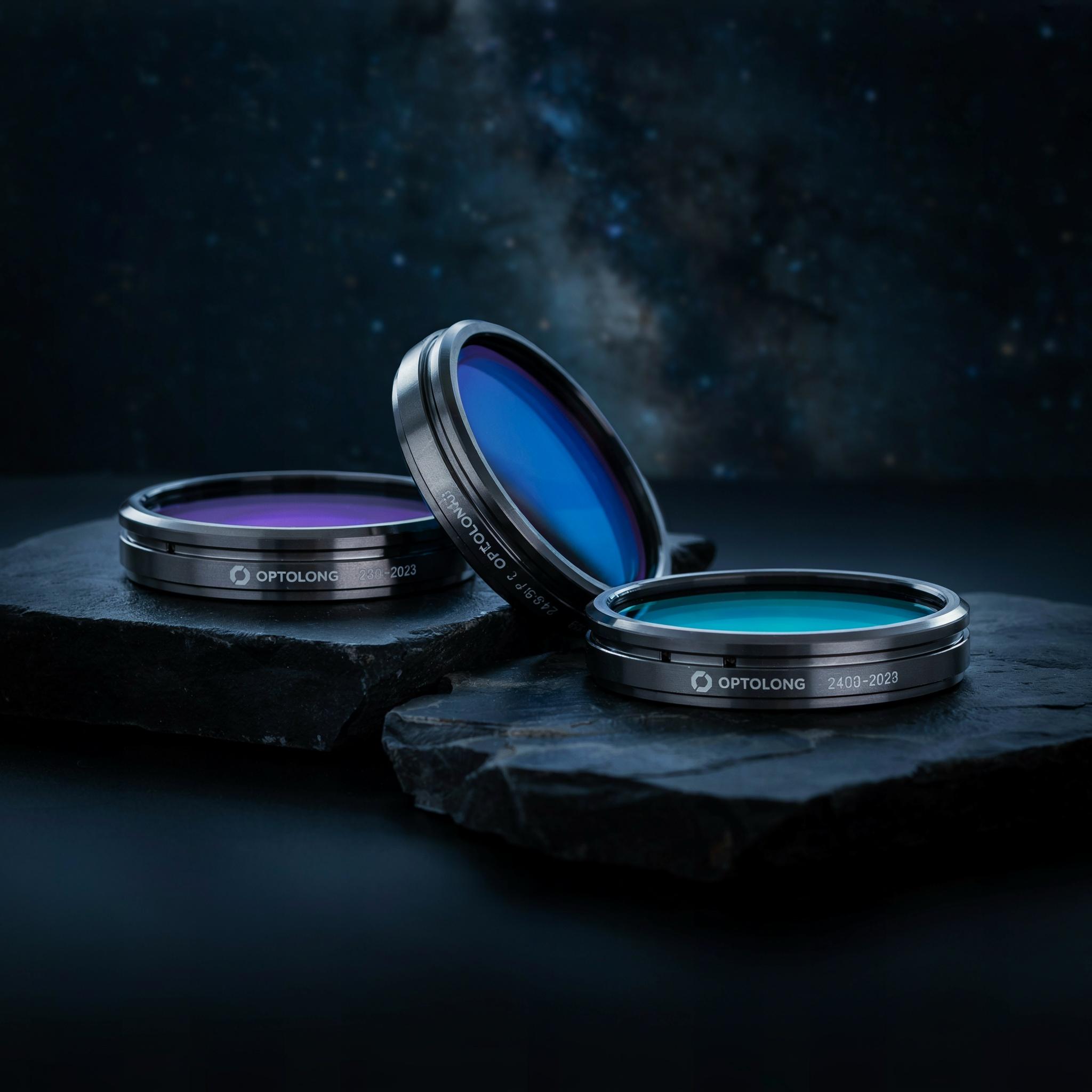
There's a moment that almost every astrophotographer in Pakistan eventually hits. You've sorted out your telescope. Your mount tracks reliably. Your camera is capable. And yet the images coming off your sensor on nights from Lahore, Karachi, or Islamabad look washed out — skies so orange-grey with light pollution that the nebulae you're trying to capture are buried beneath a gradient that no amount of post-processing fully rescues.
The answer, for astrophotographers who've pushed past that wall, is almost always filters. And the brand that keeps coming up in those conversations — the one that experienced imagers recommend with the most consistency — is Optolong.
Getting Optolong filters into Pakistan through a legitimate, warranty-backed source is what SkyDeep has made possible. Their Optolong collection gives Pakistani astrophotographers access to one of the most respected names in astronomical filtration, through an official channel that stands behind every product it sells.
Understanding What Optolong Actually Does
Optolong is a specialist manufacturer focused entirely on optical filters for astronomy and scientific imaging. Unlike brands that produce filters as a secondary product line alongside telescopes or mounts, Optolong has built its entire identity around the precision coating technology that makes a filter genuinely useful rather than merely functional.
The brand has been operating for over two decades and supplies filters to observatories, research institutions, and serious amateur astrophotographers across the world. That institutional credibility matters, because filter manufacturing is one of the areas in astronomy optics where the gap between genuine quality and imitation products is both enormous and visually invisible until you test them under the sky.
What Optolong produces — narrowband filters, broadband light pollution filters, and specialist imaging filters — directly addresses the two biggest obstacles Pakistani astrophotographers face: urban light pollution and the fundamental challenge of separating faint nebula signal from background sky noise.
SkyDeep: Pakistan's Only Authorized Optolong Dealer
Before going further into the product specifics, this point demands proper attention. SkyDeep is the sole authorized dealer of Optolong in Pakistan. That authorization is not a marketing distinction — it determines whether the filter you're buying is genuine, whether it performs to specification, and whether any warranty claim you make will actually be honoured.
Optical filters are among the most counterfeited and misrepresented products in the astronomy market. A filter that looks identical to a genuine Optolong product under normal light may have coating bandwidth specifications that are completely different from what's advertised — meaning the light pollution suppression you paid for isn't actually happening, the narrowband transmission you're counting on is off-centre, and your images suffer for reasons that are genuinely difficult to diagnose without specialized testing equipment.
SkyDeep does not sell Chinese grey-market or counterfeit products. Every Optolong filter available through them is officially sourced, authentically manufactured, and covered by manufacturer warranty. In a product category where fakes are genuinely common and the performance difference is invisible to the naked eye, buying from Pakistan's only authorized source isn't optional — it's the only way to be certain you're getting what you're paying for.
The team behind SkyDeep's astronomy equipment store has built their reputation on exactly this kind of accountability, and it's why the astronomy community here trusts them with purchases that matter.
The Optolong Filter Range: What's Available and Who It's For
Optolong's product lineup covers the spectrum of astronomical filtration needs, from entry-level broadband solutions through to the precision narrowband filters that serious deep sky imagers rely on for their best work.
Light Pollution Filters — L-Pro and L-eNhance
The L-Pro is where many Pakistani astrophotographers first encounter Optolong, and the reason is straightforward. It's a broadband light pollution filter — designed to suppress the specific wavelengths emitted by common street lighting and urban sky glow while passing the wavelengths where nebulae, galaxies, and star clusters emit most of their light.
For one-shot colour cameras — DSLRs, mirrorless cameras, or OSC astronomy cameras — imaging from cities or suburban locations, the L-Pro represents a genuinely meaningful improvement in usable data per imaging hour. Stars are tighter, gradients are flatter, and the nebula signal that was previously drowned out becomes recoverable.
The L-eNhance takes that concept further, targeting the specific Ha, OIII, and Hb emission lines that most nebulae produce while cutting broader portions of the spectrum. The result is filter that works with colour cameras to produce quasi-narrowband results — capturing emission detail that a standard broadband filter won't isolate. For imagers working under heavily light-polluted skies from Pakistan's major cities, this filter opens up nebula imaging possibilities that would otherwise require moving to genuinely dark sites.
Narrowband Filters — L-Ultimate, Ha, OIII, SII
For imagers working with monochrome cameras and a dedicated narrowband workflow, Optolong's precision narrowband filters represent the serious end of the lineup. The L-Ultimate is a dual-narrowband filter that passes only Ha and OIII wavelengths with extremely tight bandpass specifications — making it effective even under the worst light pollution conditions and particularly powerful for emission nebula imaging from urban locations.
Single narrowband filters in Ha, OIII, and SII allow experienced imagers to build the full Hubble palette — the iconic false-colour combination that reveals the gas structure of emission nebulae in extraordinary detail. These filters demand a monochrome camera and a patient, systematic imaging approach, but the results they enable are in a different category from broadband imaging entirely.
The precision of Optolong's coating technology is what makes these filters reliable. Bandpass accuracy, transmission peak alignment, and blocking quality outside the target wavelengths are all tightly controlled — which matters because a narrowband filter with even modest coating inconsistencies introduces artefacts and uneven response that compromise the image quality you're working this hard to achieve.
For anyone building a serious narrowband imaging setup, the Optolong narrowband and specialist filters at SkyDeep represent the right foundation for that work.
Clip-In and Mounted Filter Options
Optolong produces their filters in multiple mounting formats — standard threaded cells for telescope focuser trains, and clip-in versions designed to sit inside camera bodies in front of the sensor. The clip-in format is particularly popular with DSLR and mirrorless camera users who want to use the same filter across different telescope configurations without needing multiple threaded adapters.
This practical attention to how filters are actually used in the field is a consistent feature of Optolong's product design — and it extends to the quality of the filter cells themselves, which are manufactured to tight tolerances to ensure the filter sits square in the optical path rather than introducing tilt that affects image quality across the frame.
Why Light Pollution Filtration Matters Specifically in Pakistan
Pakistan's major population centres — Karachi, Lahore, Islamabad, Faisalabad — sit under varying degrees of light pollution, and that pollution profile has specific characteristics. The shift toward LED street lighting has changed the spectrum somewhat compared to older sodium vapour sources, but sky glow from urban areas remains a significant obstacle for astrophotography.
The practical consequence is that unfiltered broadband imaging from most Pakistani cities produces results that are frustrating to work with. Gradients dominate the frame. Signal-to-noise ratios are poor. And the post-processing time required to recover usable nebula detail from unfiltered data is substantial.
Optolong's filtration lineup addresses this directly. The L-Pro and L-eNhance filters improve broadband imaging under light pollution in ways that are immediately measurable in calibrated data. The narrowband lineup effectively makes light pollution almost irrelevant for emission nebula imaging — because the filter is only passing the wavelengths where the nebula emits, and the city lights don't significantly emit there.
For Pakistani astrophotographers serious about producing quality work from where they live rather than waiting for rare dark sky trips, the Optolong filter range available through SkyDeep is not a luxury — it's a fundamental part of a functional imaging setup.
Your Imaging Results Are Being Limited by Something a Filter Can Fix
If you've invested in quality optics and a capable tracking mount but your images from Pakistani skies still look compromised — flat, gradient-heavy, low contrast — the diagnostic answer is almost certainly filtration. Not more post-processing, not longer exposures, not a different telescope. A properly matched Optolong filter, sourced legitimately from an authorized dealer with real warranty protection.
The difference between imaging with and without proper light pollution filtration under Pakistani urban skies isn't subtle. It's the kind of improvement that makes previous sessions look like a different activity entirely.
Before you buy, though — get the selection right. The filter that suits a one-shot colour camera imaging broadband targets is different from what a monochrome imager needs for a narrowband Ha-OIII-SII workflow. Speak with the SkyDeep team directly and tell them what you're imaging, what camera you're using, and what your sky conditions look like. One conversation will tell you exactly which Optolong filter makes the biggest difference to your specific situation — and save you from buying the wrong one first.
The sky you're imaging under is not the obstacle you think it is. The right filter changes everything.
Frequently Asked Questions
1. Do Optolong filters actually make a measurable difference for astrophotography under Pakistani urban skies?
Yes, significantly. Optolong's broadband light pollution filters like the L-Pro and L-eNhance suppress the specific wavelengths responsible for urban sky glow while preserving nebula signal, producing cleaner data with better signal-to-noise ratios compared to unfiltered imaging from the same location. The improvement is particularly pronounced for emission nebula targets.
2. Is Optolong equipment sold through SkyDeep covered by a genuine manufacturer warranty?
Yes. SkyDeep is the only authorized Optolong dealer in Pakistan, meaning every filter they sell is officially sourced and backed by a valid manufacturer warranty. Grey-market or counterfeit filters — which are common in the astronomy market — do not carry this protection and may not perform to the specifications advertised.
3. How do I know if an Optolong filter I find elsewhere in Pakistan is genuine? Without authorized purchase documentation from an official dealer, there is no reliable way to verify filter authenticity visually. Counterfeit astronomy filters can appear identical to genuine products under normal lighting. SkyDeep's status as Pakistan's sole authorized Optolong dealer is the only guarantee of product authenticity currently available in the country.
4. Which Optolong filter is best for a DSLR or mirrorless camera user imaging from a Pakistani city?
The L-Pro is the most common starting point for DSLR and mirrorless users under moderate light pollution, offering broadband improvement without significantly affecting colour balance. The L-eNhance is a stronger option for heavily light-polluted locations, producing quasi-narrowband results with colour cameras. SkyDeep's team can advise on which suits your specific sky conditions and camera combination.
5. Can Optolong narrowband filters be used with colour astronomy cameras, or only monochrome?
Optolong produces specific dual-narrowband filters like the L-eNhance and L-Ultimate that are designed for use with one-shot colour cameras, passing Ha and OIII wavelengths while blocking broadband light. Single narrowband filters in Ha, OIII, and SII are designed for monochrome camera workflows. The right choice depends entirely on your camera type and imaging approach.
Categorias
Leia mais
The demand for premium residential properties in Bangalore has grown steadily as homebuyers seek more space, privacy, and long-term value. Among the city's most desirable residential destinations, Sarjapur Road has emerged as a preferred location for villa living. With excellent connectivity, expanding infrastructure, and a thriving social ecosystem, the area continues to attract...

Diamond jewelry has long been a symbol of love, celebration, and timeless elegance. Whether you're marking a major milestone or simply showing someone how much they mean to you, a carefully chosen diamond gift creates memories that last forever. Today, with the growing popularity of lab-grown diamonds, it has become easier than ever to find stunning, high-quality jewelry that fits every style...
Top Vedic Astrologers Globally Ranked — Astrology by Date of Birth & Vedic Birth Chart Reading Vedic astrology, also known as Jyotish Shastra, has gained worldwide recognition for its detailed and accurate approach to understanding human life through planetary influences. Unlike general horoscope readings, Vedic astrology focuses on the precise date, time, and place of birth...

