


Why Predictive Maintenance in Manufacturing Is Becoming Essential for Reducing Downtime
Every manufacturing facility has experienced it at some point.
Production is running smoothly. Orders are moving through the system. Employees are focused on meeting deadlines. Then suddenly, a critical machine stops working. What seemed like a normal day quickly turns into a costly disruption.
Operators stand idle. Maintenance teams scramble to identify the cause. Managers adjust production schedules. Customers wait longer for deliveries. What started as a minor mechanical issue can create a chain reaction that affects the entire business.
The reality is that equipment failures rarely happen without warning. Most machines provide signs of wear and declining performance long before a breakdown occurs. The challenge is recognizing those signals in time.
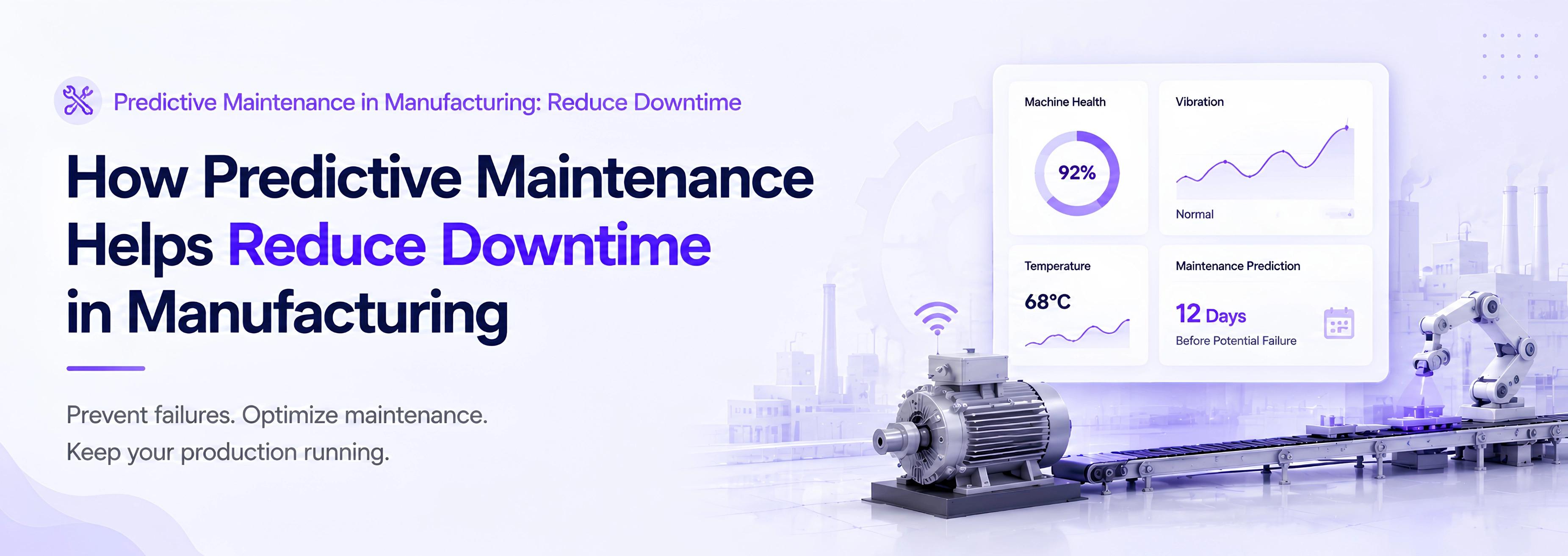
This is exactly why Predictive Maintenance in Manufacturing is gaining attention across industries. By using real-time data and intelligent monitoring systems, manufacturers can detect potential issues early and take action before failures impact production.
The Hidden Cost of Equipment Failures
Machine breakdowns are more expensive than many organizations realize. The visible repair bill is often only a small part of the overall cost.
When equipment unexpectedly goes offline, manufacturers may experience:
- Lost production hours
- Missed customer deadlines
- Higher labor expenses
- Emergency maintenance costs
- Reduced equipment efficiency
- Lower profitability
For facilities operating around the clock, even a few hours of downtime can result in significant financial losses.
As competition grows and customer expectations increase, businesses are looking for smarter ways to Reduce Downtime in Manufacturing and improve operational performance.
Understanding Maintenance Strategies
Maintenance practices have evolved significantly over the years. Most manufacturers fall into one of three categories.
Reactive Maintenance
Reactive maintenance follows a simple approach: fix equipment after it breaks.
Although this strategy requires minimal planning, it often leads to expensive repairs, production interruptions, and operational uncertainty.
Preventive Maintenance
Preventive maintenance schedules inspections and servicing at regular intervals.
This method helps reduce failures compared to reactive maintenance, but it does not always reflect the actual condition of the equipment. Machines may receive maintenance too early, too late, or unnecessarily.
Predictive Maintenance
Predictive Maintenance in Manufacturing takes a more intelligent approach. Instead of relying on fixed schedules, it continuously evaluates machine health using operational data.
Maintenance activities are performed only when indicators suggest a potential problem, allowing organizations to avoid both unexpected failures and unnecessary servicing.
What Is Predictive Maintenance in Manufacturing?
Predictive maintenance uses connected sensors, data analytics, and artificial intelligence to monitor the condition of industrial equipment.
Sensors collect information such as:
- Temperature changes
- Vibration patterns
- Motor performance
- Pressure levels
- Power consumption
- Lubrication quality
This information is analyzed continuously to identify abnormal trends. When the system detects signs of potential failure, maintenance teams receive alerts that allow them to intervene before a breakdown occurs.
Rather than reacting to problems, manufacturers gain the ability to prevent them.
How Predictive Maintenance Helps Reduce Downtime in Manufacturing
The primary objective of predictive maintenance is straightforward: identify equipment problems before they interrupt production.
Detecting Problems Early
Most mechanical failures develop gradually. Bearings wear down, motors become inefficient, and components experience increased stress over time.
Predictive monitoring systems identify these warning signs early, providing maintenance teams with valuable time to address issues before they escalate.
Scheduling Repairs More Effectively
Unexpected breakdowns often occur at the worst possible moment.
Predictive maintenance allows repairs to be planned during scheduled maintenance periods, reducing disruptions to production activities and minimizing downtime.
Improving Equipment Availability
Machines that operate under continuous monitoring are more likely to remain reliable and efficient.
As a result, manufacturers experience greater equipment availability and improved production consistency.
Reducing Emergency Maintenance
Emergency repairs are typically more expensive and disruptive than planned maintenance.
By identifying risks in advance, organizations can avoid many urgent repair situations and maintain better control over maintenance budgets.
The Role of Technology
Modern predictive maintenance relies on a combination of advanced technologies working together.
Smart Sensors
Industrial sensors serve as the foundation of predictive maintenance by collecting real-time information from equipment.
Industrial IoT
The Industrial Internet of Things (IIoT) connects machines, sensors, and software platforms, enabling continuous communication and data sharing.
Artificial Intelligence
AI algorithms analyze equipment behavior and identify patterns associated with future failures.
These systems can often recognize potential issues long before they become visible through manual inspections.
Advanced Analytics
Data analytics platforms transform complex machine data into actionable insights that maintenance teams can easily understand and use.
Together, these technologies make Predictive Maintenance in Manufacturing a practical solution for modern industrial operations.
Additional Benefits Beyond Downtime Reduction
While the ability to Reduce Downtime in Manufacturing is a major advantage, predictive maintenance creates value in several other areas as well.
Lower Operating Costs
Addressing minor issues before they become major failures often results in substantial cost savings.
Extended Asset Life
Continuous monitoring helps equipment operate under optimal conditions, reducing wear and extending service life.
Increased Productivity
Reliable equipment supports consistent production output and helps organizations achieve performance targets more efficiently.
Enhanced Workplace Safety
Preventing unexpected failures reduces safety risks associated with damaged or malfunctioning machinery.
Better Decision-Making
Access to real-time equipment data allows managers to make more informed operational and maintenance decisions.
Implementing Predictive Maintenance Successfully
Organizations interested in predictive maintenance should begin with their most important production assets.
A successful implementation typically includes:
- Identifying critical equipment
- Installing condition-monitoring sensors
- Establishing baseline performance measurements
- Monitoring equipment trends continuously
- Creating maintenance response procedures
- Tracking downtime reductions and cost savings
Starting with a focused pilot project allows manufacturers to demonstrate results while minimizing implementation complexity.
The Future of Manufacturing Maintenance
Manufacturing is becoming increasingly connected, data-driven, and intelligent. As technology continues to advance, predictive maintenance is moving from an emerging innovation to a standard operational practice.
More manufacturers are recognizing that preventing failures is far more effective than reacting to them. With greater access to sensor technology, artificial intelligence, and cloud-based analytics, predictive maintenance is becoming accessible to organizations of all sizes.
The ability to anticipate equipment issues, optimize maintenance activities, and maintain production continuity provides a significant competitive advantage in today's manufacturing environment.
Conclusion
Unexpected machine failures remain one of the biggest challenges facing manufacturers. Traditional maintenance approaches often leave organizations vulnerable to costly disruptions and production delays.
Predictive Maintenance in Manufacturing offers a proactive alternative by using real-time monitoring and intelligent analytics to detect problems before they cause equipment failures. By helping businesses Reduce Downtime in Manufacturing, improve reliability, and lower maintenance costs, predictive maintenance is reshaping the future of industrial operations.
For manufacturers seeking greater efficiency, improved productivity, and long-term operational stability, predictive maintenance has become an essential strategy rather than an optional investment.
Categorieën
Read More
Dubai's First Standalone Component-Level MacBook Repair Center You use your MacBook to drive your career — whether you are a developer, a creative professional, or a student at Dubai University. When it breaks down, it does not just inconvenience you — it stops your entire workflow. MacTech Pro is the first standalone center in Dubai, UAE that specializes in MacBook repair at the...

The Essential Hoodie with a Relaxed Fit and Modern Appeal has become a staple in contemporary wardrobes because it effortlessly blends comfort, functionality, and style. Designed for people who value versatility, this hoodie provides a loose yet structured fit that allows freedom of movement without sacrificing a polished appearance. Whether worn during a casual outing, a weekend gathering, or...

The demand for HIFU Treatment in Dubai has grown significantly as more people seek non-surgical solutions to improve skin firmness and achieve a naturally refreshed appearance. High-Intensity Focused Ultrasound (HIFU) is widely recognized for its ability to stimulate collagen production beneath the skin without requiring incisions or lengthy recovery periods. It has become a popular option...

Maintaining good health begins with preventive care, and regular health assessments play an essential role in supporting long-term wellness. Instead of waiting for symptoms to appear, many individuals are choosing proactive healthcare strategies that focus on early evaluation, personalized medical guidance, and healthy lifestyle planning. As awareness of preventive medicine continues to...

Choosing an apartment is about much more than finding a comfortable place to live. The surrounding neighborhood plays a major role in shaping your college experience, influencing everything from your daily routine and social life to dining options and weekend activities. A Student’s Guide to Baton Rouge: Restaurants, Entertainment, and Things To Do Near Redpoint explores why Baton...

