30 Minute DPF Clean Launches Advanced DPF Cleaner Additive for Diesel Efficiency

Diesel vehicle owners are always looking for smarter, more affordable ways to keep their engines running at peak performance. Soot build-up inside the Diesel Particulate Filter (DPF) is one of the most common causes of reduced power, poor fuel economy, and expensive repair bills. That's exactly why 30 Minute DPF Clean has introduced a new, professionally formulated DPF cleaner additive designed to tackle this problem head-on right from the fuel tank, without removing any components.
Whether you drive a light-duty pickup, a heavy-duty commercial truck, or anything diesel in between, maintaining a clean DPF is not optional. It's the difference between a vehicle that performs and one that doesn't. This guide walks you through everything you need to know about using a fuel-based DPF cleaning additive, why it matters, and how 30 Minute DPF Clean's solution stands apart from the rest.
What Is a DPF Cleaner Additive and How Does It Work?
A DPF cleaning additive is a specially formulated chemical solution added directly to your diesel fuel tank. As the engine runs, the additive travels through the fuel system and into the combustion process, where it chemically lowers the temperature at which soot particles burn during the filter's regeneration cycle.
Most diesel engines go through a process called active or passive regeneration, where the DPF burns off accumulated soot at high temperatures. The problem is that, over time, soot becomes harder to burn away especially if the vehicle is used mostly for short trips or city driving that doesn't allow the exhaust to reach the required temperature.
A quality fuel additive for DPF cleaning helps by:
- Lowering soot combustion temperatures so regeneration completes more efficiently
- Breaking down hardened carbon deposits that passive regeneration can't remove
- Protecting DPF ceramic cells from thermal damage during the burn-off cycle
- Extending the intervals between manual or professional DPF cleans
For diesel owners who want a proactive maintenance strategy, adding a best DPF cleaner fuel additive at regular intervals is one of the most cost-effective steps available.
If you're unsure whether your filter needs attention, read our guide on the top signs your diesel particulate filter needs cleaning to understand what warning signs to watch for before investing in any treatment.
Why Diesel Efficiency Drops Without Proper DPF Additive Maintenance
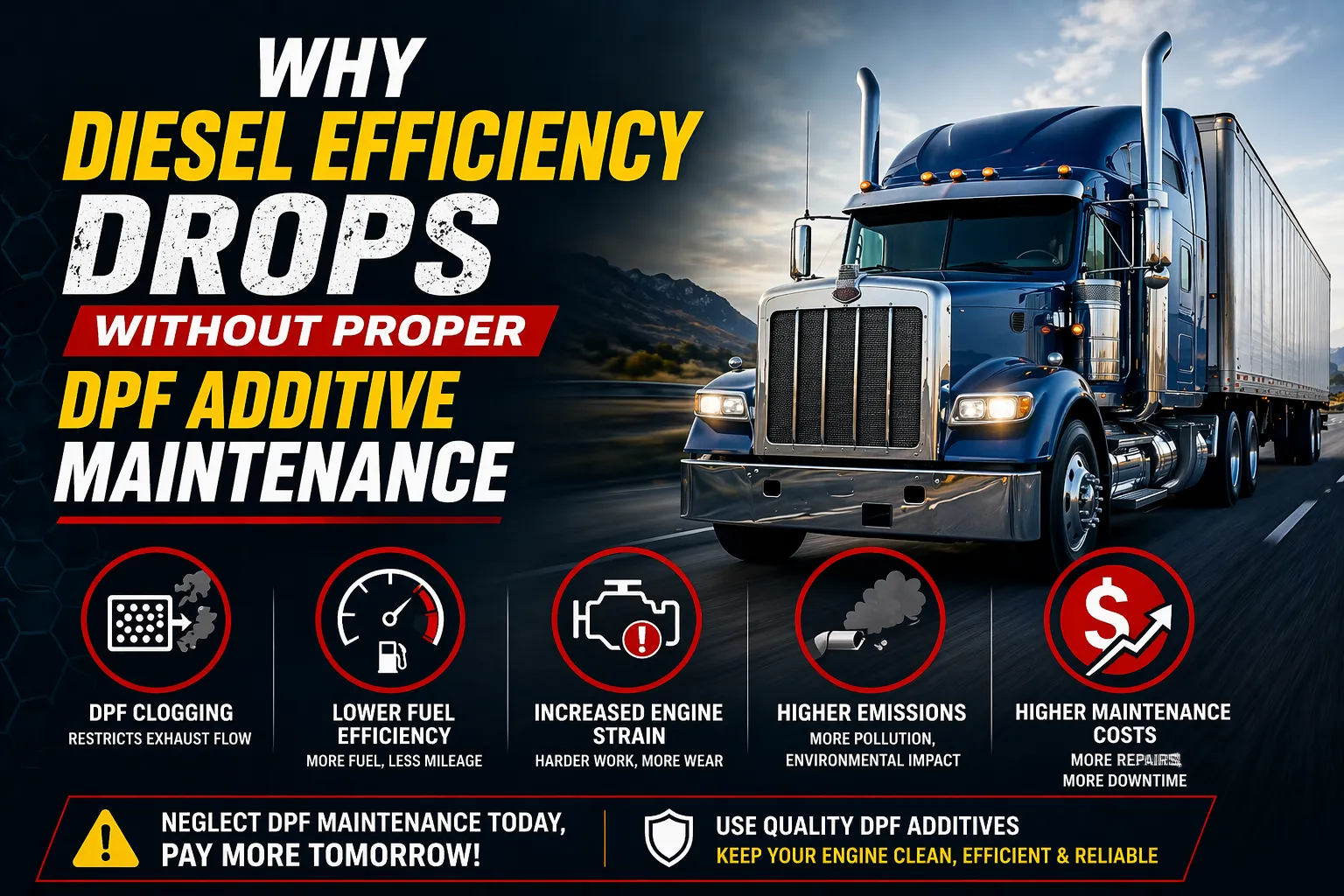
Many diesel vehicle owners don't realize how closely DPF health ties to overall fuel economy. When the DPF becomes partially or fully blocked, back-pressure builds in the exhaust system. The engine has to work harder to push exhaust gases through a restricted filter, burning more fuel in the process.
The Hidden Cost of a Neglected Filter
Research from fleet maintenance specialists shows that a DPF blocked to just 50% capacity can reduce fuel efficiency by as much as 8–12%. For commercial vehicles covering thousands of miles each month, that translates into a significant increase in operating costs. Factor in potential engine damage and replacement part costs, and the financial case for using a regular DPF additive cleaner becomes very clear.
Short-Trip Driving Makes Things Worse
Vehicles that frequently travel short distances delivery vans, local commuter trucks, or urban fleet vehicles rarely allow their DPF to reach the exhaust temperature required for passive regeneration. Soot builds up faster, DPF warning lights appear sooner, and repair intervals shrink. A consistent fuel additive routine dramatically slows this process, keeping filters cleaner for longer between professional services.
Introducing 30 Minute DPF Clean's Advanced DPF Cleaner Additive
30 Minute DPF Clean has built a reputation as a trusted, professional-grade diesel filter cleaning service. The new best DPF cleaner additive formulation extends that expertise into an easy-to-use, between-service maintenance product that diesel owners can apply themselves.
What Makes This Additive Different?
The 30 Minute DPF Clean additive is engineered with a multi-action formula that addresses both fresh soot accumulation and older, baked-on deposits. Unlike generic fuel additives that offer broad engine benefits, this product is purpose-built for DPF health targeting the specific chemistry of particulate filter regeneration.
Key Benefits at a Glance
- Fast-acting formula: begins working from the first tank it's added to
- Compatible with all diesel engines: suitable for passenger vehicles, vans, and heavy-duty commercial trucks
- No DPF removal required: treatment happens through normal engine operation
- Reduces regeneration frequency: filters stay cleaner for longer, cutting maintenance costs
- Protects DPF longevity: formulated to prevent premature filter failure
For fleet operators managing multiple vehicles, this additive offers a scalable, cost-effective way to reduce DPF-related downtime across the entire operation.
How to Use a DPF Cleaning Additive for Maximum Diesel Engine Benefits
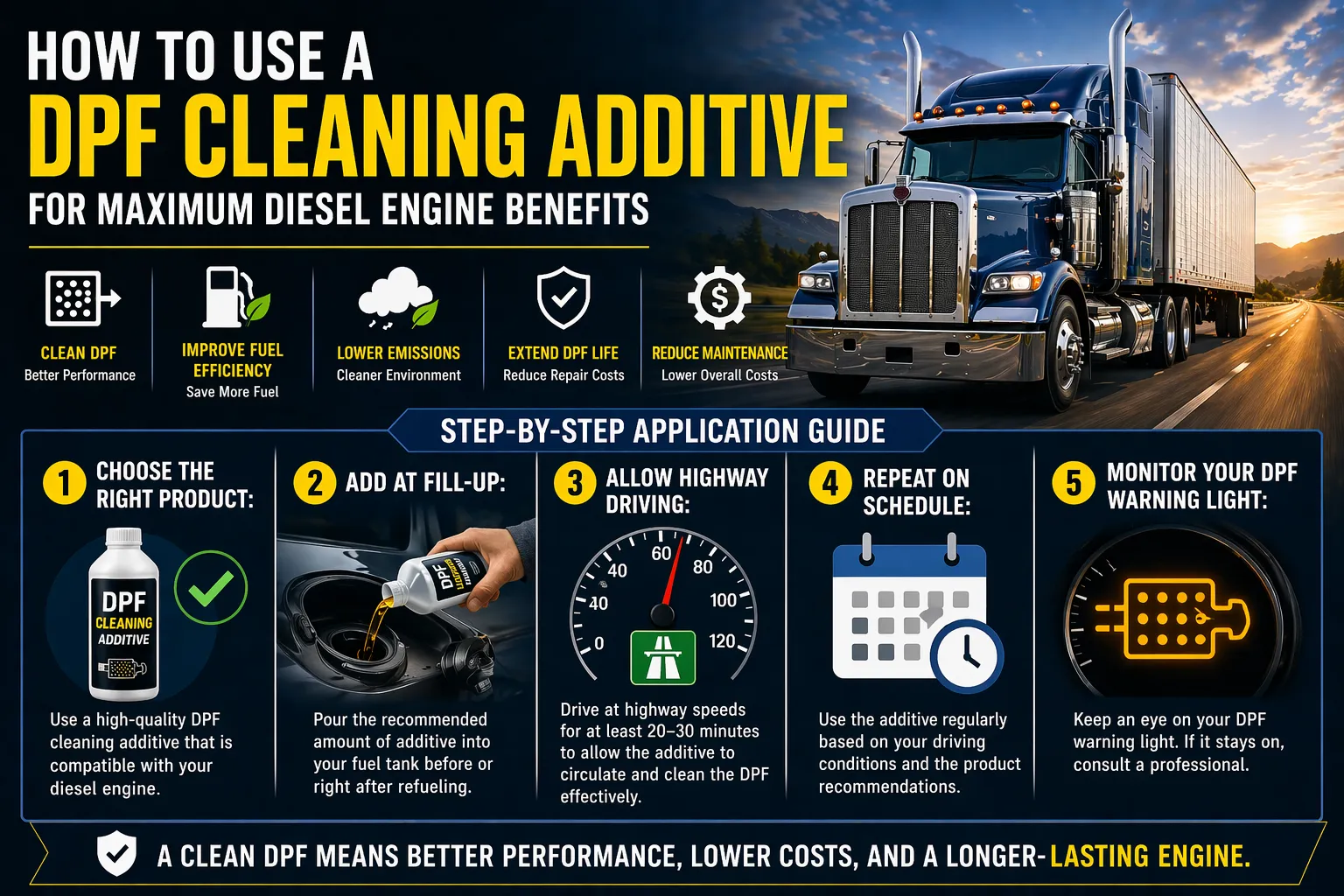
Getting the best results from any DPF additive cleaner comes down to using it correctly and consistently. Here's a straightforward approach that works for most diesel vehicles.
Step-by-Step Application Guide
- Choose the right product: Use 30 Minute DPF Clean's purpose-formulated DPF cleaner additive not a generic engine cleaner
- Add at fill-up: Pour the recommended dose directly into the fuel tank before or during refuelling so it mixes evenly
- Allow highway driving: Where possible, take a 20–30 minute run at motorway speeds after treatment to encourage passive regeneration
- Repeat on schedule: Use at every third or fourth full tank, or as directed by the product label
- Monitor your DPF warning light: If the light remains on after consistent additive use, it's time for a professional clean
When an Additive Alone Isn't Enough
A DPF cleaning additive is a preventative and maintenance tool not a miracle fix for a severely blocked filter. If your vehicle's DPF warning light is already illuminated, or if you're experiencing serious power loss and black smoke from the exhaust, professional cleaning will be necessary alongside or before additive treatment.
Wondering whether professional cleaning is the right next step? Our article on professional DPF cleaning vs. DIY methods covers the differences in depth and helps you decide which approach suits your situation best.
Who Should Be Using a DPF Additive Cleaner Regularly?
The simple answer: anyone running a modern diesel vehicle. But some operators stand to benefit more than others.
Fleet and Commercial Vehicle Operators
Downtime costs money. For haulage companies, delivery fleets, and plant hire businesses, a blocked DPF means a vehicle off the road. Regular use of the best DPF cleaner fuel additive reduces emergency callouts, lowers the frequency of scheduled professional cleans, and keeps maintenance costs predictable.
Urban and Short-Distance Diesel Drivers
City driving is the enemy of DPF health. Stop-start traffic, low-speed travel, and short engine run times prevent regeneration from completing. If you drive a diesel vehicle predominantly in town or for short journeys, a fuel-based cleaning additive is one of the most practical protective measures available.
High-Mileage Commercial Vehicles
Even vehicles that regularly hit motorway speeds accumulate soot over time. For trucks and vans approaching high mileage, maintaining DPF performance through additive treatment delays the need for costly filter replacement, a job that can run into thousands of pounds or dollars depending on the vehicle.
To put the cost savings in perspective, see our breakdown of how much DPF cleaning costs compared to full filter replacement. The numbers make a strong case for proactive maintenance.
Frequently Asked Questions About DPF Cleaner Additives
Q1: How often should I use a DPF cleaner additive?
For most diesel vehicles, adding a DPF cleaning additive every three to four full tanks of fuel is a reliable maintenance schedule. Vehicles used predominantly for short urban trips may benefit from more frequent treatment. Always follow the dosage guidance on the specific product label.
Q2: Can a DPF cleaning additive fix a completely blocked filter?
Not on its own. A fuel-based DPF additive is designed for maintenance and early-stage soot management. If the DPF is severely clogged and the warning light is already on, professional ultrasonic or pneumatic cleaning by a specialist such as 30 Minute DPF Clean will be needed to restore full function.
Q3: Is the 30 Minute DPF Clean additive safe for all diesel engines?
Yes. The formulation is compatible with all common rail diesel engines found in passenger cars, light commercial vehicles, and heavy-duty trucks. It contains no harmful solvents or compounds that could damage fuel injectors, pumps, or other sensitive components.
Q4: Will using a DPF additive cleaner void my vehicle warranty?
In most cases, no provided the additive meets relevant fuel standards (such as EN590 compliance in Europe). It's always wise to check your manufacturer's guidelines or speak with a qualified mechanic if you have concerns about warranty terms.
Q5: How long does it take to see results from a DPF cleaning additive?
Most diesel owners notice improved throttle response and smoother engine operation within one to two full tanks following the first treatment. Measurable improvements in fuel efficiency typically become apparent after two to three consistent applications, especially in vehicles that have been experiencing partial DPF blockage.
الأقسام
إقرأ المزيد
Known as the "Paradise on Earth," Jammu and Kashmir is one of India's most breathtaking travel destinations. Snow-covered mountains, peaceful lakes, colourful gardens, lush valleys, and rich cultural heritage make it a dream destination for every traveller. Choosing the right Jammu and Kashmir tour package allows you to experience the region comfortably while enjoying carefully planned...

Singapore Company Registration from India: A Smart Move for Global Expansion As Indian entrepreneurs increasingly look beyond domestic markets, Singapore company registration from India has become a popular choice for startups, IT firms, consultants, eCommerce brands, and investors. Singapore’s business-friendly policies, low corporate taxes, and strategic global position make it one of...

In today's interconnected world, protecting wealth and planning for future generations require more than traditional financial strategies. A Seychelles International Trust has become a preferred choice for individuals, families, and business owners seeking a legally recognized structure for asset protection, estate planning, and wealth preservation. With its modern trust legislation, political...

HACCP Certification services in Chicago is a globally recognized food safety system designed to identify, evaluate, and control hazards throughout the food production process. Businesses involved in food manufacturing, processing, packaging, storage, catering, and distribution across Chicago increasingly implement HACCP standards to ensure product safety and regulatory compliance....

Educational travel has become one of the most effective ways to help students learn beyond classrooms. International tours expose young minds to different cultures, modern infrastructure, historical landmarks, and global perspectives. Among the many destinations preferred for academic travel, Malaysia stands out for its perfect mix of affordability, safety, cultural richness, and educational...