Kenya’s HVAC Industry Develops Around Urban Growth and Energy Efficiency
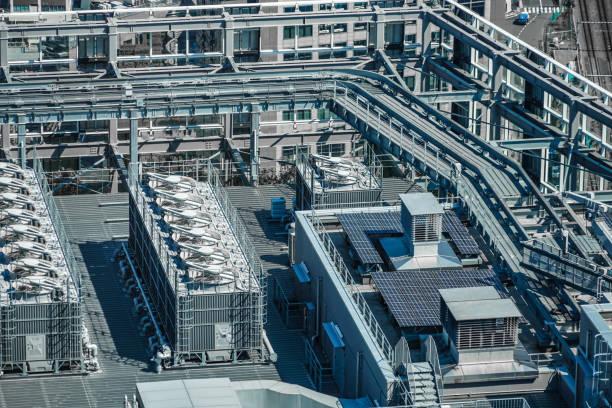
Heating, ventilation, and air-conditioning systems are becoming increasingly relevant across Kenya as urban development, commercial construction, healthcare investment, hospitality growth, and changing indoor-comfort expectations reshape building requirements. HVAC equipment supports temperature regulation, ventilation, humidity management, and indoor air quality across homes, offices, hospitals, shopping centres, hotels, factories, schools, and data-dependent facilities. Its expanding role is also increasing attention to affordability, efficiency, installation quality, and maintenance.
According to MarkNtel Advisors, Kenya’s HVAC industry was valued at approximately USD 78 million in 2025 and is projected to increase from USD 82 million in 2026 to USD 115 million by 2032. The Kenya HVAC growth outlook indicates an estimated CAGR of 5.80% during 2026–2032. Room air conditioners held nearly 48% of demand in 2026, while residential users accounted for approximately 36%.
Urban Expansion Increases Building Requirements
Kenya’s major cities are experiencing continued development across residential apartments, offices, hotels, retail spaces, hospitals, educational institutions, and mixed-use properties. Nairobi remains the country’s largest commercial centre, while Mombasa, Nakuru, Kisumu, and other urban areas are adding new buildings that require dependable ventilation and temperature-control systems.
The World Bank’s Kenya heat-risk profile highlights the importance of understanding exposure to elevated temperatures and related climate pressures. Coastal regions typically experience warm and humid conditions, while inland cities face different seasonal patterns. HVAC design must therefore reflect local temperature, humidity, building orientation, occupancy, and operating schedules rather than relying on a uniform national approach.
Urban construction also creates demand for systems capable of serving different building sizes. Room air conditioners can meet the needs of apartments and smaller businesses, while large hotels, hospitals, malls, offices, and industrial facilities may require chillers, variable refrigerant flow systems, packaged units, air-handling equipment, or centralized ventilation.
Room Air Conditioners Lead Adoption
Room air conditioners hold the largest product share because they are comparatively accessible, flexible, and straightforward to install. Split systems are particularly suitable for residential rooms, small offices, retail outlets, and hospitality spaces where centralized ductwork may be impractical or expensive.
Purchase decisions increasingly involve lifecycle considerations rather than the initial equipment price alone. Buyers must assess cooling capacity, compressor efficiency, refrigerant type, electricity consumption, installation expenses, warranties, and spare-parts availability. Oversized systems can cycle unnecessarily, while undersized equipment may operate continuously without maintaining suitable indoor conditions.
The International Energy Agency identifies air conditioning as a rapidly growing source of electricity demand in buildings. Variable-speed compressors, intelligent thermostats, occupancy sensors, and automated controls can reduce unnecessary consumption by adjusting system output according to changing indoor requirements.
Building Standards Influence HVAC Design
Kenya’s construction framework is evolving to reflect modern expectations for building safety, services, ventilation, accessibility, maintenance, and environmental performance. The National Construction Authority provides access to the National Building Code 2024, which replaced regulations dating from 1968 and establishes updated requirements across building systems and construction practices.
For HVAC planners, stronger building standards can encourage better coordination between architecture, insulation, electrical systems, ventilation, and mechanical equipment. Efficient cooling begins before equipment is installed. External shading, reflective roofing, suitable glazing, natural airflow, and insulation can reduce indoor heat gains and lower the capacity required from mechanical systems.
Energy Regulation Encourages Efficient Equipment
Electricity affordability remains an important constraint for households and smaller businesses. Systems with high operating costs may be used only intermittently, reducing comfort and limiting adoption. Energy-performance standards and clear product labels can help consumers compare equipment more effectively.
Kenya’s Energy Act provides for energy-efficiency programmes, appliance standards, labelling, building codes, energy audits, and conservation requirements. These measures create a policy foundation for improving equipment performance and reducing avoidable electricity consumption across residential, commercial, and industrial buildings.
Smart Systems Improve Operational Control
Connected HVAC technologies are becoming more relevant as property managers seek real-time monitoring, automated temperature adjustment, fault detection, and predictive maintenance. Sensors can track temperature, humidity, airflow, pressure, vibration, and electricity consumption. Facility managers can then identify inefficient operation or equipment wear before it causes a major failure.
Hospitals, hotels, offices, data centres, and industrial facilities particularly benefit from centralized control because their cooling and ventilation requirements change throughout the day. Smart systems can coordinate multiple zones, respond to occupancy, and generate maintenance records that support longer equipment life.
Sustainable Cooling Shapes Future Development
Refrigerant leakage and electricity consumption determine much of an HVAC system’s environmental impact. The UN Environment Programme promotes efficient equipment, lower-impact refrigerants, better buildings, and integrated cooling policies. These priorities are increasingly relevant as African countries expand cooling access across buildings, healthcare, and agricultural cold chains.
Kenya’s HVAC landscape will therefore develop through urbanization, infrastructure investment, efficiency regulation, smart-building adoption, and professional servicing. Long-term progress will depend on appropriately sized equipment, climate-responsive construction, qualified technicians, and reliable maintenance. Combining these elements can improve indoor comfort and air quality while limiting unnecessary electricity use and environmental pressure.
Categories
Read More
In today's digital world, a website is one of the most important tools for any business. Whether you own a small startup, an online store, or an established company, your website helps customers learn about your products and services. However, building a professional website requires the right expertise. With many agencies and freelancers offering website development services in Pakistan,...

Table of Contents Summary Key Takeaways Introduction La Roche Posay Is Now Officially Available in India Official LRP vs Grey Market Imports What Makes Anthelios Sunscreens Different? Official La Roche Posay Price Comparison Comparison Table Top 4 Best Alternatives of La Roche Posay Sunscreen in India Dermacy Broad Spectrum Mineral Sunscreen SPF 70 PA++++ Dermacy Invisible...

Manufacturing has entered a new era where speed, precision, and quality are expected to work together seamlessly. Companies are constantly searching for ways to improve efficiency while maintaining the highest standards of production. Among the technologies driving this transformation, AI visual inspection has emerged as a powerful tool that is reshaping how businesses approach quality control...

Anxiety is a natural response to stress, but when fear, worry, or panic become persistent and interfere with daily life, it may indicate an anxiety disorder. Millions of people worldwide experience anxiety disorders, making them one of the most common mental health conditions. Understanding what are the 6 types of anxiety disorders can help you recognize symptoms early and seek appropriate...