LoRa to RS485/232 Converter: Features, Benefits, and Applications
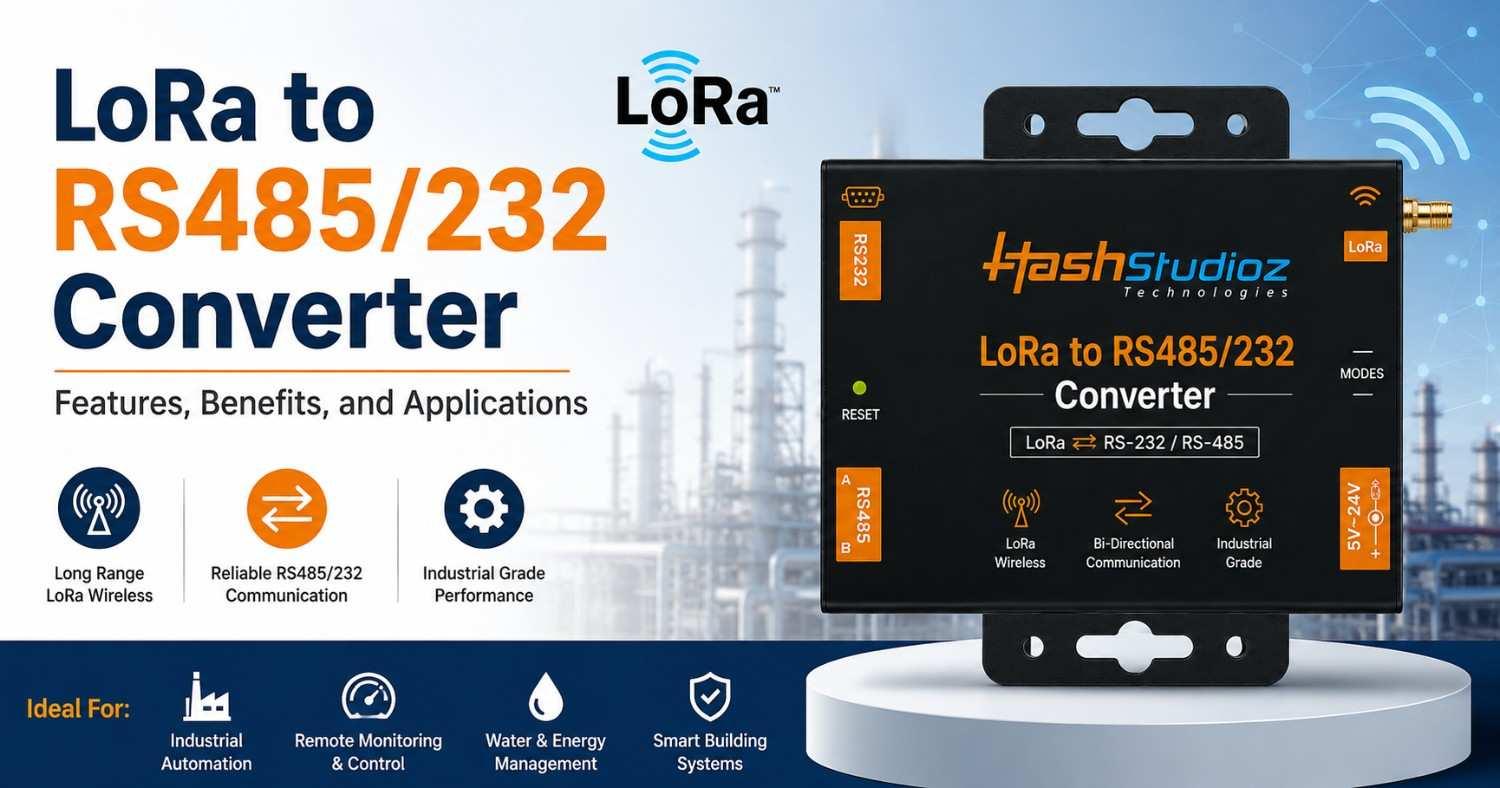
Industrial automation is evolving rapidly as organizations adopt Industrial Internet of Things (IIoT) technologies to improve productivity, reduce operational costs, and enable real-time monitoring. However, many industries still rely on legacy devices that communicate using RS485 and RS232 serial interfaces. Replacing these devices with modern wireless equipment can be expensive and disruptive.
A LoRa to RS485/232 Converter provides an ideal solution by bridging traditional serial communication with long-range LoRa wireless technology. It allows industries to connect existing PLCs, sensors, energy meters, RTUs, and controllers to remote monitoring systems without installing costly communication cables.
What is a LoRa to RS485/232 Converter?
A LoRa to RS485/232 Converter is an industrial communication device that converts data transmitted through RS485 or RS232 serial interfaces into LoRa wireless signals and vice versa.
Instead of running long communication cables between devices, the converter enables wireless communication over several kilometers using LoRa technology while maintaining compatibility with existing serial equipment.
It acts as a communication bridge between:
-
PLCs
-
Industrial sensors
-
Energy meters
-
SCADA systems
-
RTUs
-
Environmental monitoring devices
-
Modbus equipment
This makes it possible to modernize industrial infrastructure without replacing legacy hardware.
Understanding the Communication Technologies
What is LoRa?
LoRa (Long Range) is a low-power wireless communication technology designed specifically for IoT applications requiring:
-
Long communication range
-
Low power consumption
-
Reliable data transmission
-
Minimal infrastructure
-
Operation in remote locations
Unlike Wi-Fi or Bluetooth, LoRa is optimized for transmitting small packets of data over several kilometers while consuming very little energy.
What is RS485?
RS485 is one of the most widely used industrial communication standards.
It supports:
-
Multi-drop communication
-
Long cable distances
-
Noise immunity
-
Reliable industrial networking
Typical devices include:
-
PLCs
-
VFDs
-
Industrial controllers
-
Temperature controllers
-
Energy meters
-
HMI systems
What is RS232?
RS232 is a point-to-point serial communication protocol commonly used in:
-
Laboratory equipment
-
Barcode scanners
-
GPS receivers
-
CNC machines
-
Industrial instruments
-
Diagnostic equipment
Although RS232 is older than RS485, many industries still operate thousands of RS232-based devices.
How Does a LoRa to RS485/232 Converter Work?
The converter receives serial data from an RS485 or RS232 device.
The process follows these steps:
Step 1
A PLC or sensor sends serial data through RS485 or RS232.
↓
Step 2
The converter receives the serial data.
↓
Step 3
It converts the serial information into LoRa packets.
↓
Step 4
The packets are transmitted wirelessly over long distances.
↓
Step 5
A second LoRa converter receives the wireless packets.
↓
Step 6
The received data is converted back into RS485 or RS232 format.
↓
Step 7
The destination device receives the original serial data.
This process happens continuously, allowing real-time wireless communication.
Key Features of LoRa to RS485/232 Converters
1. Long Communication Distance
One of the biggest advantages is wireless communication over several kilometers.
Typical coverage includes:
-
Urban areas: 2–5 km
-
Industrial plants: 1–3 km
-
Open fields: up to 10–15 km (depending on antenna, environment, and regulations)
2. Dual Serial Interface Support
Many industrial converters support both:
-
RS485
-
RS232
This increases compatibility with various industrial devices.
3. Low Power Consumption
LoRa technology consumes significantly less power than:
-
Wi-Fi
-
Cellular communication
-
Zigbee (in many long-range scenarios)
This makes it ideal for battery-powered installations.
4. High Noise Immunity
Industrial environments contain:
-
Motors
-
High-voltage equipment
-
Electromagnetic interference
-
Heavy machinery
LoRa communication remains reliable under these challenging conditions.
5. Easy Installation
No long communication cables are required.
Installation involves:
-
Connecting the serial device
-
Configuring communication settings
-
Installing antennas
-
Pairing the converters
This reduces deployment time.
6. Multiple Protocol Support
Many converters support:
-
Modbus RTU
-
Transparent Serial Transmission
-
Custom Serial Protocols
-
ASCII communication
This ensures compatibility with existing industrial systems.
7. Industrial-Grade Design
Industrial converters typically feature:
-
Wide operating temperature
-
DIN rail mounting
-
Metal enclosure
-
Surge protection
-
Reverse polarity protection
-
Industrial power input
Benefits of Using a LoRa to RS485/232 Converter
Eliminates Expensive Cabling
Running communication cables across factories or outdoor facilities is expensive.
Wireless LoRa communication significantly reduces:
-
Installation costs
-
Cable maintenance
-
Labor expenses
-
Infrastructure complexity
Modernizes Legacy Equipment
Industries often use equipment that is still operational but lacks wireless connectivity.
A LoRa converter enables:
-
Remote access
-
Real-time monitoring
-
IoT integration
without replacing existing devices.
Supports Remote Monitoring
Operators can monitor equipment located:
-
Underground
-
On rooftops
-
Across farms
-
Along pipelines
-
At water treatment facilities
-
In remote substations
Improves Operational Efficiency
Wireless monitoring enables:
-
Predictive maintenance
-
Faster troubleshooting
-
Reduced downtime
-
Improved asset utilization
Scalable Network Expansion
Additional devices can be integrated without laying new communication cables.
This makes network expansion more cost-effective.
Reduced Maintenance Costs
Wireless systems reduce:
-
Cable failures
-
Connector corrosion
-
Physical damage
-
Repair time
Applications of LoRa to RS485/232 Converters
Industrial Automation
Factories use LoRa converters to connect:
-
PLCs
-
Industrial sensors
-
VFDs
-
HMIs
-
Production machines
without installing additional wiring.
Smart Agriculture
Agricultural applications include:
-
Soil moisture sensors
-
Weather stations
-
Irrigation controllers
-
Pump automation
-
Water level monitoring
Smart Energy Management
Energy monitoring systems use LoRa converters for:
-
Smart meters
-
Power analyzers
-
Energy monitoring gateways
-
Solar plants
-
Wind farms
Water and Wastewater Management
Applications include:
-
Pump stations
-
Water quality sensors
-
Flow meters
-
Reservoir monitoring
-
Sewage treatment plants
Oil and Gas
Remote assets require reliable long-range communication.
Typical deployments include:
-
Pipeline monitoring
-
Tank level measurement
-
Pressure monitoring
-
Remote valve control
Building Automation
Commercial buildings use LoRa converters for:
-
HVAC systems
-
Lighting control
-
Elevator monitoring
-
Fire alarm systems
-
Utility metering
Smart Cities
Municipal applications include:
-
Street lighting
-
Parking systems
-
Environmental sensors
-
Traffic monitoring
-
Water distribution
Renewable Energy
LoRa converters connect:
-
Solar inverters
-
Battery systems
-
Charge controllers
-
Remote monitoring equipment
Why Choose LoRa Instead of Wi-Fi or Cellular?
|
Feature |
LoRa |
Wi-Fi |
Cellular |
|
Communication Range |
Very Long |
Short |
Very Long |
|
Power Consumption |
Very Low |
High |
High |
|
Infrastructure Cost |
Low |
Medium |
High |
|
Subscription Fees |
No |
No |
Yes |
|
Ideal for Remote Areas |
Yes |
No |
Yes |
|
Battery-Friendly |
Excellent |
Poor |
Moderate |
For industrial telemetry and low-bandwidth applications, LoRa provides an excellent balance of range, efficiency, and cost.
Things to Consider Before Choosing a LoRa to RS485/232 Converter
When selecting a converter, evaluate:
-
RS485 and/or RS232 compatibility
-
Supported baud rates
-
LoRa frequency band (regional compliance)
-
Transmission range
-
Antenna options
-
Modbus RTU support
-
Power supply requirements
-
Operating temperature
-
Enclosure rating (IP protection if required)
-
Configuration software
-
Security features (encryption, authentication)
Choosing a rugged, industrial-grade converter ensures reliable performance in demanding environments.
Future of LoRa in Industrial IoT
As Industry 4.0 adoption continues to grow, LoRa technology is expected to play an increasingly important role in industrial communication. Its combination of long-range connectivity, low power consumption, and cost-effectiveness makes it ideal for expanding IoT networks without major infrastructure changes.
Future trends include:
-
AI-powered predictive maintenance
-
Smart manufacturing
-
Remote asset management
-
Digital twins
-
Smart utility infrastructure
-
Edge computing integration
-
Large-scale sensor deployments
LoRa to RS485/232 Converters will remain a key technology for connecting legacy serial devices to these next-generation industrial systems.
Conclusion
A LoRa to RS485/232 Converter is a practical and cost-effective solution for extending the life of existing industrial equipment while enabling modern wireless connectivity. By bridging RS485 and RS232 serial devices with long-range LoRa communication, organizations can eliminate expensive cabling, simplify deployments, and gain real-time visibility into critical operations.
Whether deployed in manufacturing plants, agriculture, utilities, energy systems, or smart city projects, these converters help create scalable, reliable, and efficient Industrial IoT networks. For organizations looking to modernize their infrastructure without replacing proven legacy equipment, investing in a LoRa to RS485/232 Converter is a smart step toward a more connected and future-ready operation.
Categories
Read More
Custom Mylar Bags have become one of the most trusted packaging solutions for businesses across multiple industries. Their strong barrier protection, attractive appearance, and flexible customization options make them an excellent choice for packaging products that require freshness, durability, and professional presentation. From food manufacturers and cosmetic brands to herbal products and...

The Autonomous Parking System Market in Japan features a moderately consolidated competitive landscape where domestic OEMs and global ADAS suppliers compete on AI integration, sensor performance, and software-defined mobility ecosystems. The Japan Autonomous Parking System Market was valued at USD 0.66 billion in 2025 and is projected to reach USD 1.46 billion by 2033, reflecting a...

Rhude delivers bold luxury streetwear with exceptional quality. This label combines comfort and style seamlessly. Fans enjoy its fresh designs and reliable fits. Rhude appeals to those seeking premium casual pieces. Many wear it daily for its versatile appeal. 1. The Beginnings of Rhude Rhude emerged from Los Angeles. Rhuigi Villaseñor founded this label. He drew inspiration from global...
Enhancing body contours has become one of the most sought-after goals in cosmetic surgery, especially among individuals who want fuller, more proportionate curves without relying on implants. Brazilian Butt Lift in Islamabad has become a preferred option for many patients because it uses the body's own fat to reshape and enhance the buttocks while simultaneously improving other areas through...

very single time you step up to the fabrication bench or strike an arc overhead, you are entering a war zone. The enemy? White-hot molten slag flying at thousands of degrees, unpredictable grinding sparks, and intense thermal radiation. If you are standing there relying on a standard cloth apron, an unprotected shirt, or low-grade workwear to shield your vital organs, you are making a...