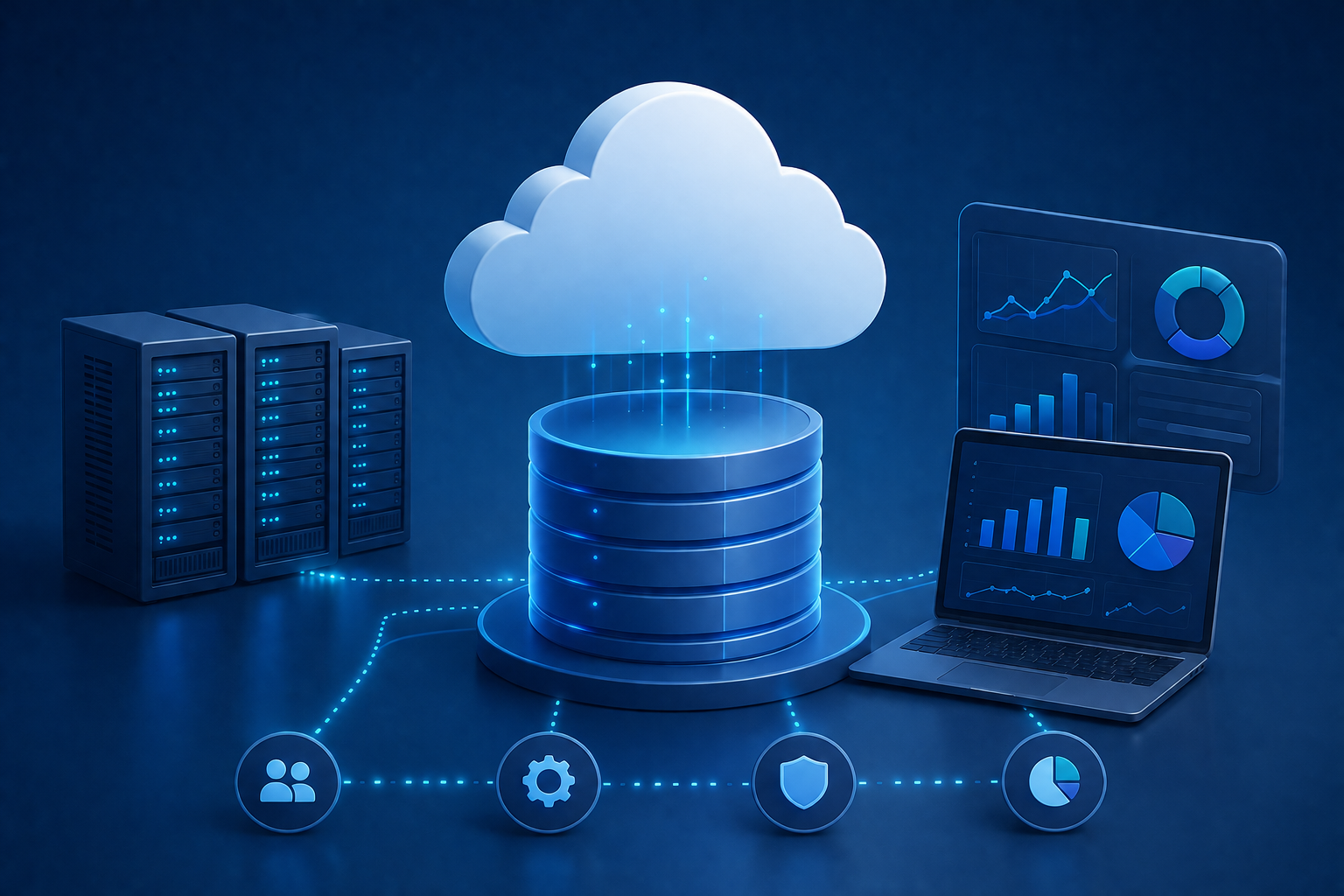
Not long ago, businesses relied heavily on physical servers, expensive storage systems, and complex IT infrastructures to manage their data. Expanding storage meant purchasing new hardware, maintaining dedicated server rooms, and investing significant time and money in upgrades. Today, that landscape has changed dramatically. Cloud technology has revolutionized how organizations store, process, and analyze data, making enterprise-grade capabilities accessible to businesses of all sizes. This transformation has been accelerated by forward-thinking thought leadership in AI and innovation, which explores how intelligent technologies and cloud-native strategies are helping organizations unlock the full value of their data.
Cloud computing has become much more than a storage solution. It is now the foundation for advanced analytics, artificial intelligence, business intelligence, machine learning, and real-time decision-making. In this article, we'll explore how cloud technology transformed data storage and analytics, why organizations are embracing it faster than ever, and what the future holds for cloud-powered data management.
The Evolution of Data Storage
To appreciate the impact of cloud technology, it's important to understand how data storage has evolved over the years.
Initially, businesses stored data on local computers and physical servers. As organizations grew, they invested in dedicated data centers that housed expensive storage hardware.
While these systems offered control, they also introduced several challenges:
- High infrastructure costs
- Limited storage capacity
- Complex maintenance
- Slow scalability
- Disaster recovery concerns
- Hardware failures
Managing enterprise data became increasingly difficult as digital transformation accelerated and data volumes exploded.
Organizations needed a more flexible solution.
The Rise of Cloud Technology
Cloud computing introduced an entirely different approach to storing and managing data.
Instead of purchasing physical infrastructure, businesses could rent computing resources from cloud providers whenever needed.
This shift completely changed IT operations.
Cloud platforms offered:
- Virtually unlimited storage
- On-demand computing resources
- Global accessibility
- Built-in redundancy
- Automatic maintenance
- Pay-as-you-go pricing
Businesses no longer had to worry about installing servers or predicting future storage requirements years in advance.
The cloud handled it all.
From Physical Infrastructure to Virtual Resources
One of the biggest transformations brought by cloud technology is virtualization.
Traditional infrastructure required dedicated hardware for every application or database.
Cloud environments virtualize computing resources, allowing multiple workloads to share infrastructure efficiently.
This results in:
Better resource utilization
Lower operational costs
Improved scalability
Greater flexibility
Organizations can deploy new environments within minutes instead of waiting weeks for hardware installation.
Unlimited Scalability Changes Everything
Perhaps the greatest advantage of cloud technology is scalability.
Businesses no longer need to estimate future storage requirements.
As data grows, cloud storage expands automatically.
Whether an organization stores a few terabytes or several petabytes, the cloud adjusts accordingly.
This flexibility is particularly valuable for industries experiencing rapid growth or seasonal demand fluctuations.
Retail companies during holiday sales.
Streaming platforms during major events.
Healthcare organizations managing medical records.
Financial institutions processing millions of transactions.
Cloud infrastructure adapts seamlessly.
Faster Access to Data
Data is only valuable if users can access it quickly.
Cloud technology significantly improves accessibility by allowing authorized users to connect from anywhere.
Whether employees work from headquarters, remote offices, or home, cloud platforms provide secure access to the same datasets.
This accessibility has become increasingly important as remote and hybrid work models continue expanding.
Collaboration becomes easier because everyone works from a centralized source of truth.
Cloud Technology and Modern Analytics
Storing data is only one part of the equation.
Organizations also need to analyze it quickly.
Cloud technology has transformed analytics by providing enormous computing power capable of processing massive datasets within seconds.
Instead of waiting hours for reports, businesses can generate dashboards almost instantly.
This enables:
Interactive reporting
Business intelligence
Predictive analytics
Operational monitoring
Customer behavior analysis
Faster analytics means faster business decisions.
Real-Time Analytics Becomes Reality
Traditional reporting often relied on overnight batch processing.
By the time reports were available, opportunities may already have disappeared.
Cloud platforms support real-time data streaming and analytics.
Businesses can monitor operations continuously and respond immediately.
Examples include:
Banks identifying fraudulent transactions instantly.
Manufacturers detecting equipment failures before production stops.
Retailers adjusting prices dynamically based on demand.
Healthcare providers monitoring patient conditions in real time.
Real-time analytics has fundamentally changed decision-making.
Supporting Artificial Intelligence and Machine Learning
Artificial intelligence depends on massive datasets and significant computing power.
Cloud technology provides both.
Organizations can train machine learning models using enormous amounts of information without purchasing specialized hardware.
Cloud platforms support:
Image recognition
Natural language processing
Recommendation engines
Fraud detection
Demand forecasting
Customer segmentation
The combination of scalable infrastructure and AI capabilities enables organizations to innovate faster.
Cloud Data Warehouses Drive Business Intelligence
Modern cloud data warehouses have become essential components of enterprise analytics.
Unlike traditional databases, cloud data warehouses are optimized for analytical workloads.
They allow organizations to:
Store structured data
Run complex SQL queries
Build dashboards
Generate executive reports
Support thousands of simultaneous users
Business intelligence tools integrate directly with cloud warehouses to deliver meaningful insights across organizations.
Improved Collaboration Across Departments
Cloud technology has broken down traditional data silos.
Marketing, finance, operations, sales, and executive teams can all access the same centralized information.
This creates:
Better collaboration
Consistent reporting
Faster communication
Improved decision-making
Everyone works with identical datasets, reducing conflicting reports and confusion.
Cost Savings Through Cloud Adoption
One major reason organizations adopt cloud technology is financial efficiency.
Traditional infrastructure requires:
Large capital investments
Hardware upgrades
Maintenance contracts
Cooling systems
Physical security
Dedicated IT staff
Cloud providers eliminate much of this overhead.
Businesses pay only for the storage and computing resources they actually use.
This operational expense model offers greater financial flexibility.
Enhanced Security and Compliance
Many organizations initially worried about storing sensitive information in the cloud.
Today, cloud security has become one of the strongest reasons for adoption.
Leading cloud providers invest billions in security technologies.
Features include:
Data encryption
Identity management
Role-based access controls
Threat detection
Continuous monitoring
Compliance certifications
Automatic backups
These capabilities often exceed what organizations can implement internally.
Disaster Recovery Made Simpler
Hardware failures, natural disasters, and cyberattacks can severely impact business operations.
Traditional recovery methods often required duplicate data centers and expensive backup infrastructure.
Cloud technology simplifies disaster recovery through:
Automatic replication
Geographic redundancy
Continuous backups
Rapid recovery
Businesses can restore critical systems much faster while minimizing downtime.
Supporting Big Data Initiatives
Organizations now collect information from websites, mobile applications, IoT devices, sensors, social media, and connected products.
Managing these enormous datasets requires flexible infrastructure.
Cloud technology enables businesses to process big data efficiently without worrying about storage limitations.
Large-scale analytics becomes practical for organizations of every size.
Industry Transformation Through Cloud Analytics
Every industry has experienced significant changes because of cloud technology.
Healthcare
Hospitals analyze patient records, medical imaging, and research data to improve diagnosis and treatment planning.
Cloud analytics supports better patient outcomes while maintaining regulatory compliance.
Financial Services
Banks process millions of daily transactions while detecting fraudulent activities using advanced analytics.
Risk assessment becomes faster and more accurate.
Retail
Retailers personalize customer experiences using purchasing history, browsing behavior, and inventory analytics.
This leads to improved customer satisfaction and increased revenue.
Manufacturing
Manufacturers monitor equipment performance using IoT sensors connected to cloud analytics platforms.
Predictive maintenance reduces downtime and operational costs.
Education
Educational institutions analyze student performance data to improve learning experiences and optimize resource allocation.
Cloud technology supports digital classrooms and online education platforms.
Challenges Organizations Must Address
Although cloud technology offers remarkable benefits, organizations should carefully manage several challenges.
Data migration requires proper planning to avoid disruption.
Security policies must evolve alongside cloud adoption.
Organizations should monitor cloud spending to prevent unnecessary costs.
Data governance frameworks should ensure quality, consistency, and compliance.
Employee training remains essential for successful implementation.
With proper planning, these challenges become manageable.
Best Practices for Successful Cloud Adoption
Organizations can maximize the benefits of cloud technology by following several proven practices.
Develop a clear cloud strategy aligned with business objectives.
Choose scalable cloud services that support future growth.
Implement strong governance and security policies from the beginning.
Automate repetitive operational tasks whenever possible.
Monitor infrastructure usage continuously to optimize costs.
Invest in employee training and cloud expertise.
Review system performance regularly and adjust resources as business needs evolve.
These practices help organizations build resilient, future-ready cloud environments.
The Future of Cloud Data Storage and Analytics
Cloud technology continues evolving rapidly.
Several emerging trends will shape the next generation of cloud analytics.
Artificial intelligence will automate infrastructure optimization.
Serverless computing will reduce operational complexity even further.
Real-time analytics will become standard across industries.
Multi-cloud and hybrid cloud strategies will provide greater flexibility.
Edge computing will complement cloud analytics by processing data closer to its source.
Advanced automation will simplify data management while improving performance.
As these innovations mature, cloud platforms will become even more intelligent, efficient, and accessible.
Why Cloud Technology Is the Foundation of Digital Transformation
Digital transformation depends on fast, reliable, and scalable access to data.
Cloud technology provides exactly that.
It enables organizations to modernize legacy systems, improve operational efficiency, support innovation, and deliver better customer experiences.
More importantly, it creates an environment where businesses can continuously adapt to changing market conditions without being constrained by outdated infrastructure.
Whether supporting artificial intelligence, business intelligence, machine learning, or real-time analytics, cloud technology serves as the backbone of modern enterprise data strategies.
Cloud technology has fundamentally transformed how organizations store, manage, and analyze data. By replacing expensive physical infrastructure with flexible, scalable, and intelligent cloud platforms, businesses have gained unprecedented access to powerful analytics capabilities that were once available only to large enterprises.
From enabling real-time decision-making and supporting advanced AI applications to improving collaboration, reducing operational costs, and strengthening data security, cloud technology has become the driving force behind modern digital transformation. It empowers organizations to handle growing data volumes with confidence while delivering the speed and agility required in today's competitive business landscape.
As cloud platforms continue to evolve with innovations in automation, artificial intelligence, and scalable analytics, their role will only become more significant. Organizations that embrace cloud-first data strategies today will be better equipped to innovate, respond to changing customer demands, and maintain a competitive advantage in the increasingly data-driven future.