


Why Choose a CBRN Filtration System?
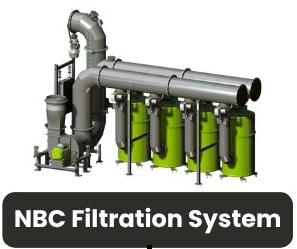
A border security command centre receives an alert about a suspected airborne chemical release near its operational zone. While standard office buildings in the surrounding area shut down their ventilation systems, the command centre continues functioning without interruption. Its protected air handling system automatically filters incoming air, removes hazardous contaminants, and maintains positive internal pressure. This difference highlights why a CBRN Filtration System cannot be compared directly with conventional air filtration. Although both clean the air, they are engineered for entirely different objectives.
Why the Difference Matters
Conventional air filtration is designed to improve indoor air quality by removing dust, pollen, and common airborne pollutants. It supports occupant comfort, equipment protection, and general health in commercial and industrial buildings.
A CBRN Filtration System, however, is engineered for high-risk environments where airborne contamination may result from chemical warfare agents, biological hazards, radioactive particles, or toxic industrial releases. These systems are built to protect personnel and maintain critical operations during emergency conditions, making them an essential component of defence infrastructure, emergency shelters, nuclear facilities, and strategic industrial sites.
Understanding these differences is crucial when selecting an air protection solution for critical facilities.
What Is a CBRN Filtration System?
A CBRN filtration system is a specialized protective ventilation solution designed to prevent hazardous airborne contaminants from entering occupied spaces.
Unlike a standard HVAC filtration unit, an nbc filter system integrates multiple filtration stages, activated carbon technology, environmental monitoring, and positive pressure operation to maintain a safe indoor environment during contamination events.
Its purpose extends beyond air quality improvement—it is engineered for life safety and operational continuity.
CBRN Filtration System vs Conventional Air Filtration
How a CBRN Filtration System Works Differently
The primary distinction lies in the types of contaminants each system is designed to handle.
Conventional air filters primarily remove dust, fibres, pollen, and ordinary particulate matter. They are generally not intended to remove toxic gases or chemical warfare agents.
A CBRN filtration system uses a multi-stage protection approach.
- Pre-filters remove larger airborne particles and protect downstream filtration components.
- HEPA filters capture radioactive dust, biological aerosols, spores, bacteria, and other microscopic contaminants with extremely high efficiency.
- Activated carbon filters adsorb hazardous chemical vapours, toxic industrial chemicals, and chemical warfare agents that particulate filters cannot remove.
The system also maintains positive pressure within the protected facility, preventing contaminated outside air from entering through small structural openings.
Modern environmental control systems continuously monitor airflow, pressure, and filtration performance, ensuring reliable protection under emergency operating conditions.
Key Features That Set CBRN Systems Apart
Compared with conventional air filtration, CBRN systems offer several advanced engineering features.
These include:
- High-efficiency HEPA filtration
- Activated carbon filtration for toxic gas adsorption
- Protection against biological contaminants
- Radioactive particle filtration
- Positive pressure ventilation
- Corrosion-resistant construction
- Continuous air monitoring compatibility
- Modular system configurations
- Low maintenance requirements with scheduled servicing
- Long operational service life
- Energy-efficient airflow management
- Reliable emergency operation
These features enable the system to perform effectively in environments where conventional filtration technology would be insufficient.
Typical Applications
Conventional air filtration is commonly used in offices, hospitals, commercial buildings, residential properties, and manufacturing facilities where routine indoor air quality management is the primary objective.
A CBRN Filtration System is designed for environments where contamination protection is mission-critical.
Typical applications include:
- Military shelters
- Defence installations
- Command and control centres
- Ammunition storage facilities
- Nuclear power plants
- Chemical processing plants
- Petrochemical facilities
- Government security buildings
- Underground bunkers
- Emergency shelters
- Strategic infrastructure
- Data centres supporting critical operations
- High-security industrial facilities
Demand for NBC filter for bunker systems continues to grow as organizations strengthen emergency preparedness and infrastructure resilience.
Engineering Factors to Consider Before Selection
Selecting between conventional filtration and CBRN protection depends entirely on operational requirements.
Facilities should begin with a comprehensive threat assessment to determine the likelihood of chemical, biological, radiological, or nuclear exposure.
Engineers must evaluate airflow capacity, contaminant protection levels, filtration efficiency, shelter occupancy, facility size, environmental conditions, installation complexity, monitoring systems, maintenance planning, and lifecycle operating costs.
Although procurement teams often search for NBC air filtration system price or Nbc filtration system in faridabad price, system selection should always be based on engineering performance, compliance requirements, and long-term operational reliability rather than initial purchase cost.
For readers seeking a deeper understanding of system architecture, filtration technologies, and contamination protection strategies, this technical guide on CBRN Filtration System provides valuable engineering insights.
Choosing the Right Manufacturer
The quality of a CBRN filtration system depends heavily on the technical expertise of the manufacturer.
Buyers should evaluate:
- Experience in defence and industrial engineering
- Manufacturing capabilities
- Product testing and validation procedures
- Compliance with recognized engineering standards
- Customization capabilities
- Technical documentation quality
- Installation and commissioning support
- Preventive maintenance services
- Availability of replacement filters
- Long-term engineering support
Organizations researching the Top cbrn filtration system manufacturers in india or the Top NBC filtration system manufacturers in india should prioritize engineering experience, quality assurance, and proven system performance over catalogue specifications.
Common Mistakes to Avoid
One of the most common mistakes is assuming that a conventional HVAC filter provides adequate protection against CBRN threats. Standard filtration systems are not designed to remove hazardous gases or maintain positive pressure.
Other mistakes include selecting systems without a formal threat assessment, ignoring airflow calculations, underestimating filtration requirements, choosing equipment solely on cost, neglecting compliance standards, overlooking maintenance planning, delaying filter replacement, failing to account for future expansion, and commissioning systems without comprehensive testing.
Routine inspections and periodic performance verification remain essential for ensuring dependable operation.
Conclusion
Although both technologies clean the air, a CBRN Filtration System and a conventional air filtration system serve fundamentally different purposes. Conventional filters improve everyday indoor air quality, while CBRN systems are engineered to protect people and critical operations during chemical, biological, radiological, and nuclear emergencies.
For military facilities, government buildings, industrial plants, emergency shelters, and strategic infrastructure, selecting the appropriate protection system requires careful threat assessment, engineering expertise, regulatory compliance, and long-term maintenance planning. Investing in a properly engineered CBRN Filtration System provides the contamination protection, operational reliability, and infrastructure resilience necessary to safeguard occupants when airborne hazards pose the greatest risk.
Categorie
Leggi tutto
A cleaner home begins with a simple decision to sort waste before it reaches the trash. By understanding recycling drop off locations and choosing practical recycling solutions, you can reduce clutter, protect useful materials, and make daily disposal less stressful. Recycling does not have to feel technical or time-consuming. With a few clear habits, every household can turn ordinary waste...
Clean water is something that is often overlooked or taken for granted. In most Australia households when people turn on the tap they expect to be supplied with good quality and safe water every time. Yet, water quality may vary from one location to another. Stainless Steel Water Filters come in handy in this case. They give individuals the assurance and peace of mind that the water they...

