Why Precision Is Important in Surgical Instrument Selection
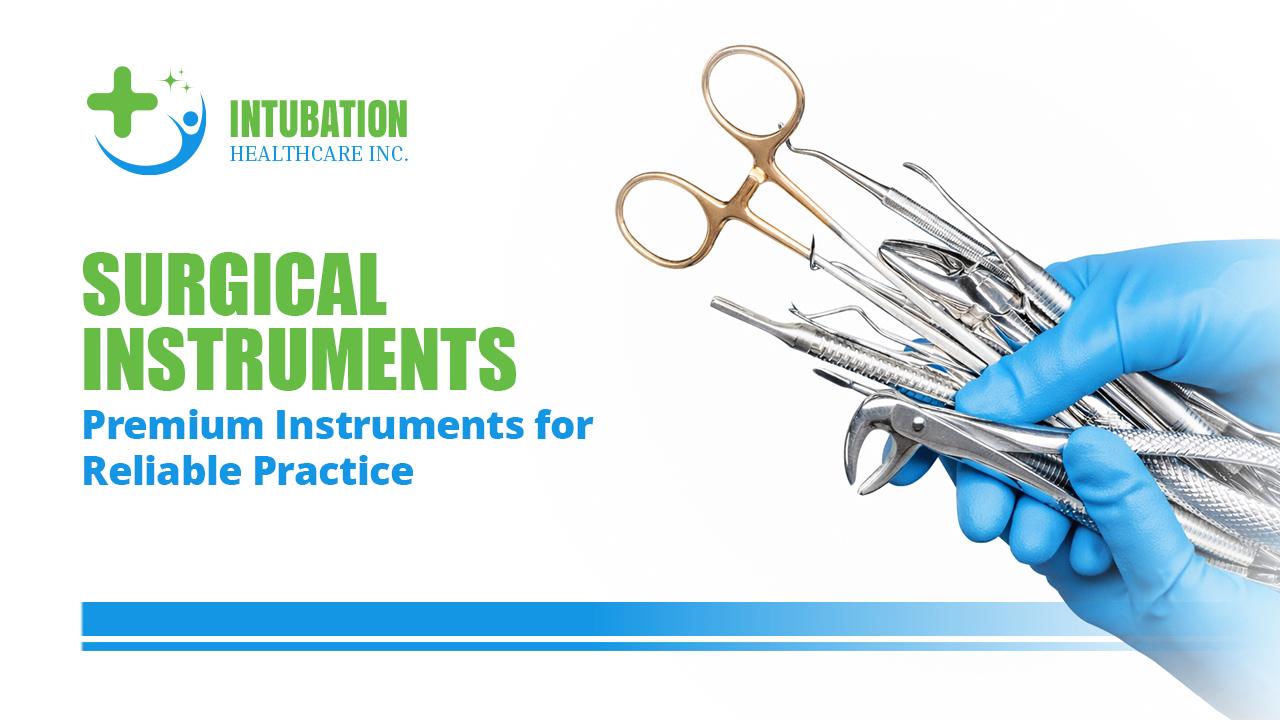
Every surgical instrument is designed to perform a particular function. Some instruments cut tissue, while others grasp, clamp, retract, dissect, probe, suction, or hold needles. Although two instruments may appear similar, small differences in their size, curvature, tip design, jaw pattern, weight, or locking mechanism can significantly change how they perform.
For this reason, precision surgical instrument selection is an important part of clinical preparation and medical equipment procurement.
Selecting an instrument is not simply a matter of choosing a forceps, scissor, clamp, or retractor from a catalog. Healthcare professionals and purchasing teams must determine whether the instrument’s exact design is appropriate for the intended procedure, anatomy, tissue type, clinician preference, reprocessing method, and working environment.
A properly selected instrument can support controlled movements, predictable handling, efficient workflow, and consistent clinical technique. An unsuitable instrument may be difficult to position, provide insufficient control, or require the user to compensate for limitations in its design.
What Does Precision Mean in Surgical Instruments?
Precision in surgical instrumentation refers to how accurately an instrument is designed, manufactured, selected, and used for its intended task.
Depending on the type of instrument, precision may involve:
- Accurate tip or jaw alignment
- Consistent cutting-edge contact
- Appropriate tip dimensions
- Smooth joint movement
- Reliable ratchet engagement
- Balanced weight and handle design
- Controlled spring tension
- Suitable curvature and working length
- Secure needle or tissue grip
- Stable retraction
- Correct sizing for the operative area
- Predictable mechanical feedback
Precision does not necessarily mean that the smallest or most delicate instrument is always the best choice. It means choosing a tool whose specifications closely match the clinical task.
A fine ophthalmic forceps may be highly precise for delicate eye surgery but unsuitable for handling heavier tissue. Similarly, a strong general surgery clamp may perform effectively in its intended application but lack the delicacy required for microsurgical work.
The correct instrument is therefore the one that provides the required level of control without being unnecessarily large, small, heavy, sharp, or aggressive for the procedure.
Why Surgical Instrument Selection Matters
Clinical procedures are completed through a combination of professional judgment, training, technique, teamwork, and suitable equipment. Instruments form the physical connection between the clinician’s hand and the target tissue, suture, dressing, needle, implant, or medical device.
An instrument that does not correspond to the intended application may affect:
- Visibility within the surgical field
- Access to the target area
- Tissue-handling control
- Cutting consistency
- Needle placement
- Clamping stability
- Hand comfort
- Instrument changes during the procedure
- Tray organization
- Reprocessing requirements
- Long-term procurement costs
Patient safety is influenced by interconnected clinical, organizational, technological, and workflow factors. The World Health Organization emphasizes a systems-based approach in which safe procedures, reliable processes, competent teams, and suitable working environments operate together. Instrument selection should be viewed as one component of that broader safety system.
1. Precision Supports Controlled Tissue Handling
Different tissues require different handling characteristics. An instrument designed for firm grasping may be unsuitable for delicate tissue, while an extremely fine instrument may not provide enough holding strength for a heavier structure.
Surgical forceps can differ in:
- Tip width
- Tooth pattern
- Serration design
- Jaw length
- Handle shape
- Spring tension
- Overall length
- Straight or curved configuration
Tissue forceps, dressing forceps, dissecting forceps, ophthalmic forceps, and plastic surgery forceps are not interchangeable simply because they belong to the same general instrument family.
Selecting an appropriate forceps can support secure handling while allowing the clinician to use the amount of pressure required for the task. The goal is not always the strongest possible grip. It is a controlled and task-appropriate grip.
When buyers shop surgical instruments online, they should examine tip configuration, teeth, serrations, dimensions, curvature, and intended use rather than relying only on the product name.
2. Accurate Cutting Depends on Scissor Design
Surgical scissors are manufactured in different patterns because cutting requirements vary by material, tissue type, depth, visibility, and procedural specialty.
Selection factors can include:
- Straight or curved blades
- Sharp or blunt tips
- Fine or heavy blades
- Blade length
- Overall instrument length
- Standard or micro pattern
- Tissue or suture application
- Delicate or heavy-duty construction
A curved scissor may support access or visualization in one procedure, while a straight pattern may provide better control in another. Fine ophthalmic scissors are designed for highly delicate work, whereas heavier surgical scissors may be needed for denser tissue or materials.
Intubation Healthcare offers instrument categories that include general surgical scissors and specialized ophthalmic scissors designed around different cutting applications.
When selecting or planning to buy surgical scissors, healthcare buyers should compare the blade pattern with the exact material or tissue the instrument is intended to cut. Using an instrument outside its intended function can reduce performance and shorten its useful service life.
3. Jaw Alignment Affects Grasping and Clamping
Forceps, clamps, needle holders, and other jawed instruments rely on accurate alignment.
When the jaws close, their working surfaces should meet according to the intended design. Poor alignment may lead to an uneven grip, inconsistent pressure, or difficulty holding the target securely.
Precision is particularly important for:
- Hemostatic forceps
- Artery forceps
- Needle holders
- Tissue forceps
- Dressing forceps
- Towel clamps
- Intestinal clamps
- Ophthalmic forceps
- Microsurgical instruments
For ratcheted instruments, the locking mechanism should also engage smoothly and consistently. An instrument that is too stiff, too loose, worn, or incorrectly sized can affect handling.
Purchasing teams should not evaluate surgical clamps or forceps only by their basic pattern. They should also review jaw length, serration type, curvature, overall dimensions, ratchet design, and intended clinical use.
4. Correct Needle Holder Selection Supports Suturing Control
Needle holders are designed to hold and guide surgical needles during suturing. The size and design of the needle holder should correspond to the needle, suture technique, procedural depth, and tissue involved.
Important selection considerations include:
- Jaw size
- Jaw surface or insert
- Instrument length
- Handle pattern
- Locking mechanism
- Straight or curved design
- Needle size compatibility
- Required level of delicacy
A needle holder that is too large for a fine needle may reduce control. One that is too delicate for a heavier needle may not provide adequate grip or may experience unnecessary wear.
Precision surgical instrument selection helps ensure that the relationship between the needle and holder is appropriate. Buyers comparing needle holders for sale should therefore consider the intended needle and procedure instead of choosing solely by price or overall length.
5. Instrument Size Influences Access and Visibility
Instrument length and working-end dimensions affect how easily a clinician can reach and visualize the procedural area.
A longer instrument may be required for deep access, but unnecessary length can make handling less convenient in a superficial procedure. A short instrument may provide close control but fail to reach a deeper target comfortably.
The same principle applies to tip size. A narrow working end may be appropriate in a confined or delicate field, while a broader instrument may provide better strength or surface contact in another application.
Before ordering an instrument, consider:
- Procedural depth
- Incision or access size
- Available working space
- Target anatomy
- Required line of sight
- Clinician hand position
- Use with other instruments
- Open, endoscopic, or microsurgical approach
Exact product dimensions are therefore an important part of medical instrument procurement. Clear measurements help healthcare professionals compare similar instrument patterns and select the most appropriate configuration.
6. Curvature and Tip Geometry Affect Instrument Function
Small changes in an instrument’s working end can alter how it approaches tissue or fits within the surgical field.
Common design variations include:
- Straight
- Slightly curved
- Strongly curved
- Angled
- Bayonet-shaped
- Blunt
- Sharp
- Rounded
- Toothed
- Serrated
- Fenestrated
These features are functional rather than decorative.
For example, a curved instrument may follow anatomical contours or help preserve visibility. A bayonet-style instrument can keep the user’s hand outside the direct line of sight. Toothed forceps may provide a different type of grip from smooth or serrated forceps.
Precision selection requires understanding why each design feature exists and whether it is suitable for the intended procedure.
7. Specialty Procedures Require Specialty Instruments
General surgical instruments remain essential, but many specialties require tools with more specific dimensions and working characteristics.
Ophthalmic Instruments
Eye surgery frequently involves small anatomical structures and limited working spaces. Ophthalmic scissors, forceps, retractors, cannulas, and other eye surgery instruments may require fine tips, lightweight handling, and highly accurate alignment.
Intubation Healthcare’s ophthalmic collections include specialized scissors, forceps, cannulas, retractors, and surgical kits intended for precision-focused eye care applications.
Plastic Surgery Instruments
Aesthetic and reconstructive procedures may require careful dissection, tissue positioning, retraction, contouring, and suturing. Relevant instruments can include fine scissors, forceps, dissectors, retractors, needle holders, markers, and liposuction cannulas.
The site’s plastic surgery collection includes forceps, scissors, needle holders, retractors, dissectors, and cannulas for different procedural requirements.
Anesthesia and Intubation Instruments
Airway management tools must be selected according to the intended procedure, patient considerations, device compatibility, clinician training, and institutional protocols.
The correct type and size of laryngoscope component, forceps, airway accessory, or related instrument may affect access, visualization, and handling. These products should always be selected and used by appropriately trained professionals according to applicable instructions.
Dental and Oral Surgery Instruments
Dental procedures may require specialized elevators, forceps, curettes, probes, retractors, scissors, and needle holders. Working-end shape and size are especially important because oral procedures often take place in confined spaces.
Microsurgical Instruments
Microsurgical tools require precise tips, stable alignment, controlled tension, and lightweight handling. Even minor damage or deformation can affect their intended function, making inspection and protective storage particularly important.
8. Ergonomics Contribute to Precision
An instrument can have an appropriately designed working end but still be difficult to use when its handle, balance, or resistance is unsuitable.
Ergonomic considerations include:
- Handle size
- Finger-ring dimensions
- Instrument weight
- Surface texture
- Spring resistance
- Joint smoothness
- Balance between handle and working end
- Hand orientation during the procedure
- Expected duration of use
Comfort should not be treated as a purely personal preference. Unnecessary hand strain or awkward positioning can make controlled movement more difficult, especially during repetitive or lengthy tasks.
Ergonomic professional surgical instruments can support stable handling, but the ideal design may vary between clinicians and procedures. Facilities may benefit from involving end users when evaluating unfamiliar patterns or replacing frequently used instruments.
9. Material Quality Supports Consistent Performance
Many reusable surgical instruments are manufactured from stainless steel because it can provide strength, corrosion resistance, and compatibility with specified reprocessing procedures.
However, the term “stainless steel” does not by itself confirm that every instrument has identical properties. Performance can also depend on:
- Steel composition
- Heat treatment
- Surface finishing
- Joint construction
- Cutting-edge preparation
- Tip alignment
- Manufacturing tolerances
- Maintenance practices
- Exposure to incompatible chemicals
- Water quality during reprocessing
Healthcare buyers looking for stainless steel surgical instruments for sale should evaluate the complete product specification, intended use, supplier information, and care requirements.
Material selection may also differ for specialized instruments or components. The appropriate choice depends on the instrument’s function and the manufacturer’s instructions.
10. Reprocessing Compatibility Is Part of Instrument Selection
Reusable instruments must be compatible with the healthcare facility’s validated cleaning, disinfection, sterilization, drying, inspection, and storage processes.
The CDC states that cleaning must occur before sterilization or high-level disinfection because retained debris can interfere with effective processing. It also recommends cleaning devices as soon as practical after use because dried material becomes more difficult to remove.
Before purchasing reusable surgical tools, facilities should consider:
- Manufacturer’s reprocessing instructions
- Instrument material
- Hinges, lumens, serrations, or concealed surfaces
- Cleaning equipment compatibility
- Sterilization method compatibility
- Required disassembly
- Drying requirements
- Lubrication instructions
- Inspection criteria
- Protective storage needs
An instrument that cannot be reliably incorporated into a facility’s reprocessing system may create operational challenges, even when its clinical design appears suitable.
11. Precision Selection Can Improve Workflow Consistency
Instrument selection affects more than the individual clinician. It also influences the work of procurement teams, sterile processing departments, operating room staff, educators, and inventory managers.
Standardizing suitable instrument patterns can help facilities:
- Assemble procedure trays consistently
- Reduce unnecessary instrument substitutions
- Improve stock identification
- Simplify recurring purchasing
- Train staff on inspection requirements
- Monitor repair and replacement needs
- Avoid excessive duplication
- Maintain appropriate specialty sets
This does not mean every tray must be identical. Different procedures and clinicians may require different tools. The objective is to ensure that each variation has a clear clinical purpose.
A detailed instrument list containing the pattern, size, curvature, tip style, manufacturer or supplier reference, and quantity can improve procurement accuracy.
How to Select the Right Surgical Instrument
Healthcare professionals and purchasing teams can use the following process when comparing surgical instruments.
1. Define the Exact Clinical Task
Determine whether the instrument will cut, grasp, dissect, clamp, retract, probe, suction, suture, or manipulate tissue or another material.
2. Identify the Tissue or Material
Consider whether the target is delicate tissue, dense tissue, a suture, dressing material, needle, bone, vessel, tube, or another medical device.
3. Review the Instrument Pattern
Compare tip geometry, teeth, serrations, blade design, jaw style, curvature, handle configuration, and locking mechanism.
4. Confirm the Required Size
Review the complete instrument length as well as working-end dimensions. Do not assume that two instruments with similar names have the same measurements.
5. Consider Procedural Access
Assess depth, visibility, working space, anatomical location, and interaction with other instruments.
6. Evaluate Material and Construction
Review the stated material, finish, joint design, reusable or single-use status, and any specialty components.
7. Check Reprocessing Requirements
Confirm that the instrument is compatible with the facility’s validated procedures and follow the manufacturer’s instructions for use.
8. Consider Clinician Handling
Where appropriate, obtain feedback from the professionals who will use the instrument regularly.
9. Assess Supplier Information
Choose a surgical instruments supplier that provides clear product names, specifications, dimensions, categories, ordering information, and customer support.
10. Compare Long-Term Value
Consider expected use, durability, maintenance, repair, replacement frequency, and workflow requirements—not only the initial purchase price.
Common Surgical Instrument Selection Mistakes
Choosing by Name Alone
Several instruments may share a general name while having different tips, sizes, curves, or intended uses.
Selecting the Lowest Price Without Reviewing Specifications
Purchase price is only one factor. An unsuitable product can create replacement costs, tray inconsistencies, and workflow disruption.
Ignoring Dimensions
Product images do not reliably communicate scale. Always review the stated measurements.
Treating Similar Instruments as Interchangeable
Tissue forceps, dressing forceps, hemostats, needle holders, and specialty forceps have distinct functions.
Overlooking Reprocessing Requirements
Reusable status does not mean compatibility with every chemical, cleaner, washer, sterilizer, or process.
Failing to Inspect Instruments Regularly
Even a correctly selected instrument should be removed from service when it becomes damaged, misaligned, corroded, loose, blunt, or otherwise unable to perform its intended function.
What to Look for When Buying Surgical Instruments Online
When planning to buy surgical instruments online, look for product listings that clearly provide:
- Instrument name and pattern
- Intended application
- Overall length
- Tip or jaw configuration
- Straight or curved design
- Material
- Reusable or single-use status
- Available size options
- Product photographs
- Care or handling information
- Supplier contact details
Clear information allows buyers to compare products more accurately and reduces the risk of ordering an instrument that does not match the intended task.
Intubation Healthcare provides online collections for general surgical instruments, ophthalmic tools, plastic surgery equipment, anesthesia products, dental products, electrosurgical accessories, and student practice kits.
Why Choose Intubation Healthcare?
Intubation Healthcare Inc. supplies medical and surgical instruments for hospitals, clinics, operating rooms, private practices, educational environments, and other professional settings.
The available selection includes:
- Surgical scissors
- Surgical forceps
- Tissue and dressing forceps
- Hemostatic and artery forceps
- Surgical clamps
- Needle holders
- Retractors
- Dissecting instruments
- Ophthalmic instruments
- Plastic surgery instruments
- Anesthesia and airway products
- Dental instruments
- Electrosurgical accessories
- Surgical instrument sets
- Student practice kits
Healthcare professionals can browse individual products and specialty collections to compare the pattern, size, design, and application required for their work.
When purchasing from an online medical equipment supplier, review each product description carefully and confirm that the selected instrument is appropriate for the intended professional application.
Conclusion
Precision is important in surgical instrument selection because every element of an instrument’s design influences its function.
Tip geometry affects tissue contact. Blade design affects cutting. Jaw alignment affects grip. Instrument length affects access. Curvature affects positioning and visibility. Handle design affects control. Material and construction affect durability and reprocessing requirements.
The most expensive, strongest, or smallest instrument is not automatically the most appropriate. The best choice is the instrument that closely matches the procedure, tissue, working space, clinical technique, and facility requirements.
By carefully evaluating specifications and purchasing from a dependable surgical instrument supplier, healthcare organizations can build instrument inventories that support controlled performance, consistent tray preparation, and long-term operational value.
Explore Intubation Healthcare’s collection to shop surgical instruments, buy surgical forceps, order surgical scissors, compare specialty instruments, and purchase surgical instrument sets online for professional clinical and educational requirements.
Frequently Asked Questions
Why is precision important in surgical instruments?
Precision supports accurate instrument positioning, controlled handling, predictable cutting or grasping, and appropriate interaction with tissue, sutures, needles, and other materials.
What factors should be considered when selecting a surgical instrument?
Important factors include intended use, instrument pattern, size, curvature, tip design, jaw alignment, material, ergonomics, reprocessing compatibility, and clinician preference.
Does instrument size affect surgical performance?
Yes. Instrument size affects reach, access, visibility, leverage, and handling. The appropriate size depends on procedural depth, anatomy, working space, and the instrument’s intended function.
What are precision surgical instruments made from?
Many reusable instruments are made from stainless steel, although materials can vary according to the instrument and application. Buyers should review product specifications and the manufacturer’s instructions.
How do I choose the right surgical forceps?
Consider the target tissue or material, required grip, tip width, teeth or serrations, length, curvature, spring tension, and intended specialty.
What should I check before buying surgical instruments online?
Review the product name, dimensions, working-end design, material, intended use, reusable or single-use status, available sizes, reprocessing information, and supplier support.
Where can I buy professional surgical instruments online?
Intubation Healthcare offers general and specialty surgical instruments for hospitals, clinics, surgical centers, medical professionals, and educational users. Browse the relevant product collection and verify that each instrument matches your intended application before ordering.
Kategorien
Mehr lesen
Living with chronic pain can make even the simplest daily activities challenging. At Interventional Pain & Spine, patients receive personalized Pain Management treatments designed to address the root cause of discomfort rather than simply masking symptoms. Whether you are suffering from chronic back pain, neck pain, sciatica, spinal conditions, joint pain, or nerve-related disorders, our...

As winter fades and warmer days arrive, many households begin thinking about refreshing their living spaces. Spring offers the perfect opportunity to remove the dirt, dust, and clutter that build up during the colder months. While regular cleaning helps maintain a tidy home, deep cleaning goes much further by reaching hidden areas that often go unnoticed. For many Australian households, Spring...

Most commercial siding projects pair naturally with gutter replacement for a complete exterior transformation. Coordinated gutter installation around siding work ensures clean transitions and proper water management. Derheim Commercial offers commercial siding and gutters integration in Ardmore OK, delivering coordinated exterior improvement for businesses . For integrated siding and...

The South Korea Childrenswear Market continues to evolve as parents increasingly prioritize premium-quality apparel that combines comfort, durability, and contemporary design. Rising awareness of fabric quality, child safety, and sustainable manufacturing is encouraging brands to introduce innovative clothing collections across babywear, casual wear, school apparel, outerwear, and...