The Engineering of Home Preservation: Understanding the Thermodynamic and Preservation Systems of Modern Refrigeration
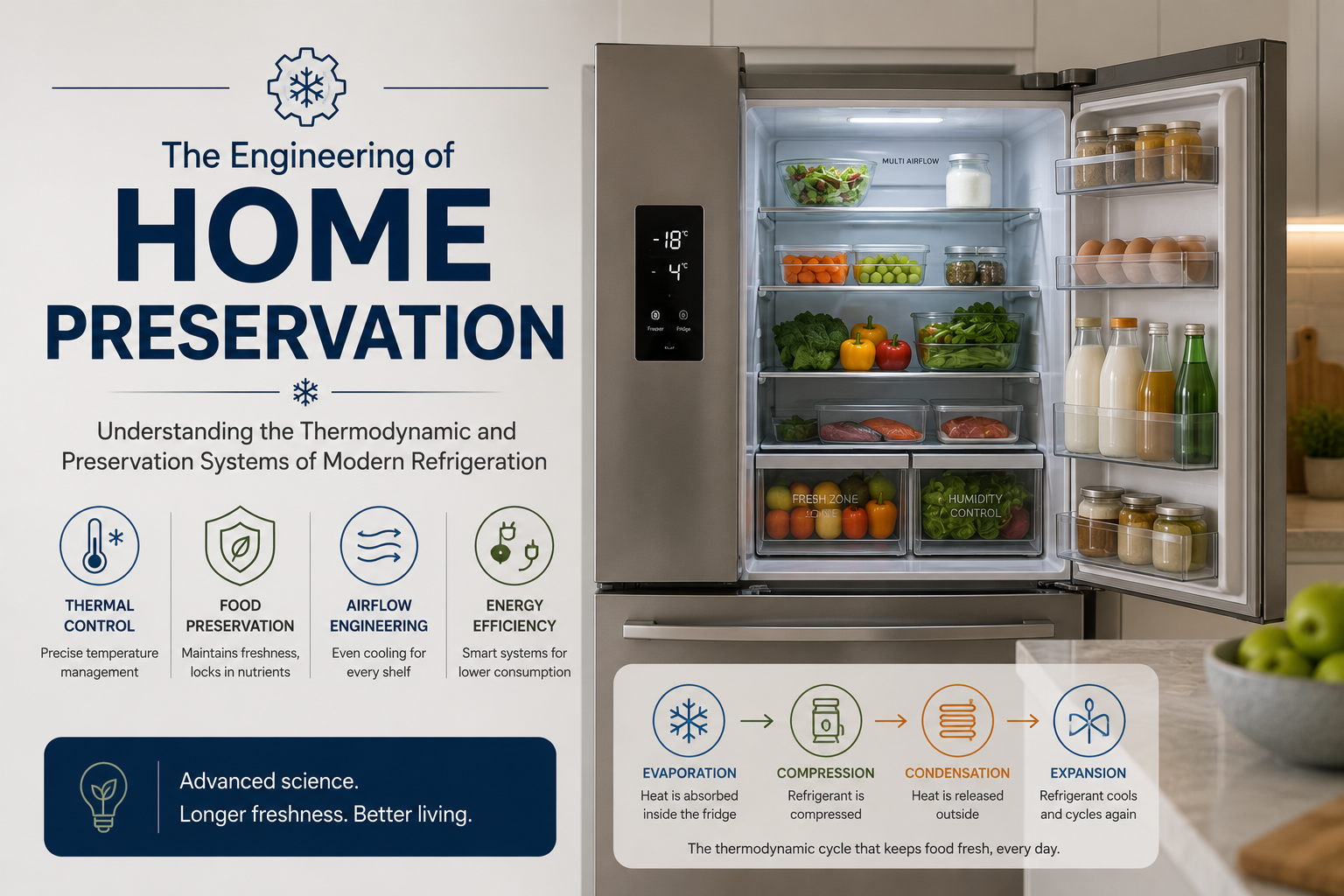
In modern residential architecture and household management, refrigeration is the cornerstone of food preservation, safety, and waste reduction. Structurally, a refrigerator is much more than a cold storage box; it is an engineered thermodynamic system designed to continuously extract heat, control moisture vapor, and inhibit microbial growth. For households aiming to integrate these advanced preservation technologies into their daily routine, comparing specifications and sourcing verified home appliances online in Pakistan is the most reliable method to evaluate compressor types, storage capacities, and energy efficiency ratings before purchasing.
Thermodynamic Fundamentals: How Heat is Extracted
A refrigerator does not physically "create" cold; instead, it systematically removes heat from its internal cabinet and expels it into the surrounding room. This process operates as a closed-loop thermodynamic cycle relying on four key components:
- The Compressor: The mechanical pump that compresses low-pressure refrigerant gas into a high-pressure, high-temperature gas.
- The Condenser Coils: Located on the exterior of the unit, these coils allow the hot gas to release its heat into the room air, condensing the refrigerant into a high-pressure liquid.
- The Expansion Valve: A narrow restriction point that drops the pressure of the liquid refrigerant rapidly, causing it to cool significantly as it enters the low-pressure zone.
- The Evaporator Coils: Located inside the freezer compartment, these coils absorb heat from the food and air inside the refrigerator, causing the cold liquid refrigerant to vaporize back into a low-pressure gas before returning to the compressor.
By continuously cycling the refrigerant through these physical state changes, the system maintains a stable, low-temperature environment inside the cabinet.
Direct Cool vs. No-Frost: Structural and Mechanical Differences
When selecting a refrigeration system, understanding the mechanical distinction between Direct Cool and No-Frost technology is crucial for optimizing food storage and maintenance routines.
Direct Cool Systems
Direct cool refrigerators rely on natural convection currents to circulate cold air. The cooling coils are embedded directly into the freezer walls, meaning the interior surfaces become extremely cold. Moisture in the air naturally condenses and freezes directly onto these cold surfaces, leading to physical frost buildup over time. This design requires manual defrosting by shutting down the system periodically to melt the accumulated ice. Direct cool models are highly energy-efficient and excellent for localized cooling but require routine manual maintenance.
No-Frost Systems
No-frost refrigerators utilize a hidden evaporator coil paired with an electric fan mechanism to actively circulate cold, dry air throughout the compartments. This continuous air circulation prevents humidity from settling on internal walls or food packaging, completely eliminating frost buildup.
Additionally, these systems integrate an automated defrost cycle:
- The Defrost Timer: Every few hours, a mechanical or digital timer temporarily pauses the cooling cycle.
- The Heating Element: A small electric heater located next to the evaporator coils turns on to melt any frost that has accumulated on the hidden coils.
- The Drain Channel: The melted water flows down a dedicated tube into an external pan situated above the warm compressor, where it safely evaporates into the room.
Inverter Compressor Technology: Gradual Energy Management
Traditional refrigerators use standard single-speed compressors that operate on an on/off cycle. When the internal sensor detects a temperature rise, the compressor starts abruptly and runs at 100% capacity until the cabinet is cooled, after which it shuts down completely. This constant cycling results in high electrical surges, increased noise levels, and minor temperature fluctuations.
Modern inverter refrigerators resolve these performance challenges through variable-speed operation:
- Dynamic Speed Adjustment: Rather than shutting down, an inverter compressor runs continuously at varying speeds. If the doors remain closed, it slows down to a minimal, energy-saving speed to maintain the temperature.
- Voltage Stability: Designed to operate smoothly across fluctuating input voltages, inverter compressors are highly resilient against power surges.
- Reduced Friction Wear: By avoiding frequent start-up cycles, mechanical stress on internal bearings and pistons is minimized, which significantly extends the compressor's operational lifespan.
This constant, low-power operation reduces overall energy consumption by up to 30% to 40% compared to conventional conventional compressors.
Structural Preservation Zones: Humidity and Temperature Partitioning
Not all foods require the same storage conditions. Leafy greens lose water rapidly and wilt in dry air, while meats require temperatures close to freezing to prevent bacterial colonization. Modern preservation systems utilize physical zoning to accommodate these diverse requirements:
- The Crisper Drawer (High Humidity): This compartment isolates fruits and vegetables from the main dry airflow of the refrigerator. Closing the drawer’s humidity vents traps moisture vapor, preventing delicate greens from drying out.
- The Chiller Compartment (Near-Freezing): Positioned closest to the cold air inlets, this zone maintains a temperature of approximately 0°C to 2°C, making it ideal for short-term meat and dairy storage without solid freezing.
- Dual Evaporator Systems: High-end models feature independent cooling loops for the freezer and fresh-food compartments. This structural separation prevents dry, freezing air from dehydrating fresh produce and eliminates odor transfer between compartments.
System Configurations for Modern Kitchens
Choosing the correct structural layout depends on your household size, kitchen layout, and daily meal preparation habits.
|
Configuration |
Primary Mechanical Advantage |
Ideal Use Case |
|
Top Mount (Double Door) |
Highly efficient thermodynamic flow; natural cold air descent. |
Standard residential kitchens seeking maximum energy efficiency. |
|
Side-by-Side |
Vertical split design; narrow door swings require less clearance space. |
Kitchens with tight walking clearances requiring organized eye-level storage. |
|
Bottom Freezer |
Places frequently accessed fresh food at eye level, reducing physical bending. |
Homes prioritising ergonomic access to fresh produce and dairy. |
Frequently Asked Questions
1. Why does the exterior of a refrigerator occasionally feel warm?
The condenser coils, which release the heat extracted from the interior of the cabinet, are often built into the side walls of modern refrigerators. It is completely normal for these side panels to feel warm to the touch, especially during hot weather or when the system is cooling a newly loaded batch of groceries.
2. How often should a refrigerator's condenser coils be cleaned?
To maintain optimal heat transfer and compressor efficiency, condenser coils should be vacuumed or dusted at least once every six months. Accumulations of dust, lint, and pet hair act as an thermal insulator, forcing the compressor to work harder and consume more power.
3. What causes condensation or water pooling at the bottom of the cabinet?
Water pooling is usually caused by a clogged defrost drain tube. If dust, food particles, or mold block this narrow channel, the condensation water from the defrost cycle cannot drain out of the unit, causing it to overflow and run down into the bottom of the fresh-food compartment.
4. Why is direct cool technology still popular despite the need for manual defrosting?
Direct cool refrigerators remain highly popular because they are incredibly energy-efficient, simpler to manufacture (resulting in lower initial costs), and do not rely on fans, which makes them completely silent. They also preserve moisture exceptionally well in the fresh-food compartment.
5. What is the impact of placing hot food directly into the refrigerator?
Placing hot food inside raises the temperature of the entire cabinet, forcing the compressor to run at maximum speed to restore the cool environment. This temporary temperature rise can also compromise the safety of nearby perishable foods by allowing brief bacterial activity.
Final Thoughts
For households in Punjab looking to upgrade their kitchen, visiting physical showrooms or browsing certified kitchen appliances in Lahore offers a great opportunity to explore the latest cooling configurations firsthand. Partnering with an authorized retailer ensures you receive genuine products, verified manufacturer warranties, and reliable delivery, providing a solid foundation for a highly efficient, modern kitchen.
Catégories
Lire la suite
Manufacturing efficiency in plastics fabrication rarely happens by accident. The market was worth US$ 1.86 Billion in 2025 and is forecast to reach US$ 2.51 Billion by 2034, at a CAGR of 3.39% across 2026–2034. It happens through carefully engineered chemistry, a reality reflected clearly in the growth of the Polymer Processing Aid Market across packaging, construction, and electrical...

The USA Waterproof Tapes Market is growing due to rising demand from the construction, automotive, packaging, and healthcare sectors. These tapes are used for sealing, bonding, and preventing water leakage. Growing infrastructure projects and the need for durable adhesive solutions are supporting market growth. Product innovation and increasing use in industrial applications are expected to...

The healthcare and life sciences landscape is undergoing a revolution, and biophotonics is at its core. By merging light-based technologies with biology, biophotonics enables precision diagnostics, advanced imaging, and innovative therapeutic techniques. The biophotonics market is expanding rapidly, driven by rising demand for non-invasive healthcare solutions,...

Busy lifestyles are changing how people buy and store food. Consumers want products that are safe, convenient, and long-lasting without refrigeration. The Retort Packaging Market is projected to grow from US$ 22.32 billion in 2025 to US$ 37.11 billion by 2034, registering a CAGR of 5.81% during the forecast period 2026–2034. What Is Retort Packaging? Retort packaging is a form of flexible...