FRCEM SBA Practice Questions to Boost Exam Success
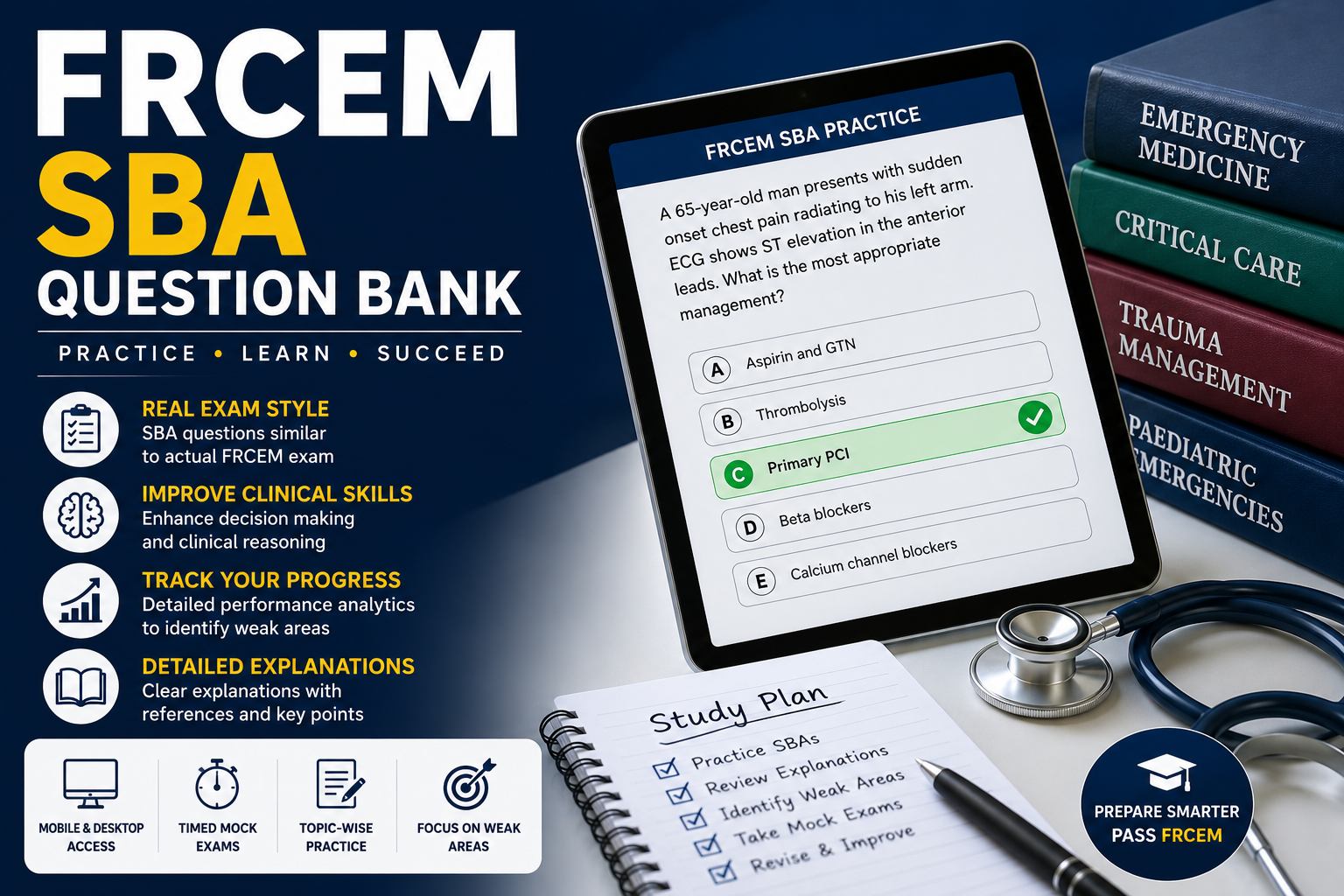
FRCEM SBA Practice Questions: A Complete Guide to Exam Success
Preparing for the Fellowship of the Royal College of Emergency Medicine (FRCEM) examination requires dedication, clinical knowledge, and consistent practice. Among the many revision resources available, FRCEM SBA practice questions remain one of the most effective ways to prepare for the exam. They help candidates develop clinical reasoning, improve decision-making, and become familiar with the format of the actual examination.
Whether you are preparing for the first time or revising before your exam date, practicing high-quality SBA (Single Best Answer) questions can significantly improve your confidence and overall performance.
What Are FRCEM SBA Practice Questions?
FRCEM SBA practice questions are exam-style multiple-choice questions specifically designed for doctors preparing for the FRCEM examination. Each question presents a realistic clinical scenario followed by several possible answers. Your task is to select the single best answer based on current emergency medicine guidelines and evidence-based practice.
Unlike simple recall questions, SBA questions test your ability to interpret clinical information, prioritize patient management, and make safe decisions under pressure.
Why Practice SBA Questions?
Many candidates spend months reading textbooks and clinical guidelines but struggle to apply their knowledge during the exam. Regular practice bridges this gap by allowing you to use your knowledge in realistic situations.
Key benefits include:
-
Understanding the FRCEM exam format
-
Improving clinical reasoning
-
Developing faster decision-making skills
-
Identifying weak subjects
-
Building confidence
-
Reducing exam stress
-
Improving time management
The more practice questions you complete, the more comfortable you become with the style and difficulty of the examination.
Topics Covered in FRCEM SBA Practice Questions
A comprehensive question bank usually covers every important area of emergency medicine.
Adult Emergency Medicine
Practice questions commonly include:
-
Chest pain
-
Acute coronary syndrome
-
Stroke
-
Sepsis
-
Respiratory emergencies
-
Abdominal pain
-
Cardiac arrest
Trauma Management
Candidates should expect questions involving:
-
Major trauma
-
Head injuries
-
Cervical spine injuries
-
Orthopedic emergencies
-
Burns
-
Hemorrhagic shock
Pediatric Emergencies
Children present unique challenges in emergency medicine. Practice questions often cover:
-
Febrile child
-
Asthma
-
Seizures
-
Dehydration
-
Pediatric trauma
-
Meningitis
Resuscitation and Critical Care
Questions test knowledge of:
-
Advanced Life Support (ALS)
-
Airway management
-
Cardiac rhythms
-
Shock
-
Mechanical ventilation
-
Emergency procedures
Toxicology
Common topics include:
-
Drug overdose
-
Poisoning
-
Alcohol intoxication
-
Carbon monoxide poisoning
-
Snake bites
Professional Practice
Modern FRCEM examinations also assess:
-
Medical ethics
-
Consent
-
Communication skills
-
Patient safety
-
Clinical governance
-
Safeguarding
Benefits of Regular SBA Practice
Improve Clinical Reasoning
SBA questions require candidates to evaluate symptoms, investigations, and treatment options before selecting the best answer. This strengthens real-world clinical thinking.
Learn from Detailed Explanations
High-quality practice questions provide explanations for both correct and incorrect answers. Reviewing these explanations reinforces important concepts and highlights common mistakes.
Track Your Progress
Many online question banks include performance reports that help you monitor:
-
Overall score
-
Topic performance
-
Weak areas
-
Improvement over time
These reports make revision more focused and efficient.
Build Exam Confidence
Confidence comes from preparation. Completing hundreds of realistic SBA questions helps reduce anxiety and prepares you for exam day.
How to Use FRCEM SBA Practice Questions Effectively
To get the best results, follow a structured approach.
Start with Topic-Based Revision
Study one subject at a time before attempting mixed-question exams.
For example:
-
Cardiology
-
Trauma
-
Pediatrics
-
Neurology
-
Critical Care
Read Every Explanation
Do not simply check whether your answer was correct. Read every explanation to understand the clinical reasoning behind each option.
Keep Revision Notes
Create a notebook for:
-
Frequently tested conditions
-
Important guidelines
-
Common mistakes
-
High-yield facts
Review these notes regularly.
Attempt Timed Mock Exams
Once you've covered the syllabus, complete full-length mock exams under timed conditions. This improves speed, concentration, and exam technique.
Common Mistakes to Avoid
Many candidates lose marks because of avoidable errors.
Avoid these habits:
-
Memorizing answers instead of understanding concepts
-
Ignoring weaker topics
-
Skipping answer explanations
-
Practicing inconsistently
-
Not reviewing incorrect questions
Learning from mistakes is one of the fastest ways to improve.
Features of a Good FRCEM SBA Practice Resource
Choose resources that include:
-
Updated clinical guidelines
-
Realistic exam-style questions
-
Detailed explanations
-
Topic-wise practice
-
Timed mock exams
-
Mobile compatibility
-
Progress tracking
-
Regular updates
These features provide a better learning experience and improve exam readiness.
Sample Weekly Study Plan
A balanced study schedule helps maintain consistency.
Monday: Cardiology
Tuesday: Trauma
Wednesday: Pediatrics
Thursday: Neurology
Friday: Critical Care
Saturday: Mixed SBA Questions
Sunday: Full Mock Exam and Review
Studying a little every day is far more effective than cramming at the last minute.
Final Thoughts
Using FRCEM SBA practice questions is one of the smartest ways to prepare for the Fellowship of the Royal College of Emergency Medicine examination. These questions simulate the real exam, strengthen clinical reasoning, and help candidates identify areas that require further revision.
Success in the FRCEM exam depends on consistent study, regular practice, and understanding the principles behind every clinical decision. By combining high-quality SBA practice questions with textbooks, clinical guidelines, and mock exams, you can improve your confidence and maximize your chances of passing the exam on your first attempt.
Kategorien
Mehr lesen
A bomber leather jacket solves one of fashion's most common problems: looking polished without appearing overdressed. Its clean shape, ribbed edges, and slightly sporty attitude make simple outfits feel intentional. The trick is not adding more. It is choosing balanced pieces, relaxed textures, and colors that let the jacket carry the look with quiet confidence. Start with the right fit Start...

Dubai has become one of the most attractive real estate destinations in the world. From luxury waterfront apartments to family villas, branded residences, and high-return investment units, the city offers something for every type of buyer. Whether someone is looking for a second home, a rental income opportunity, or a long-term lifestyle upgrade, Dubai provides a strong mix of modern...