Sarpagandha: Ayurvedic Herb for Blood Pressure, Stress Management, and Better Sleep
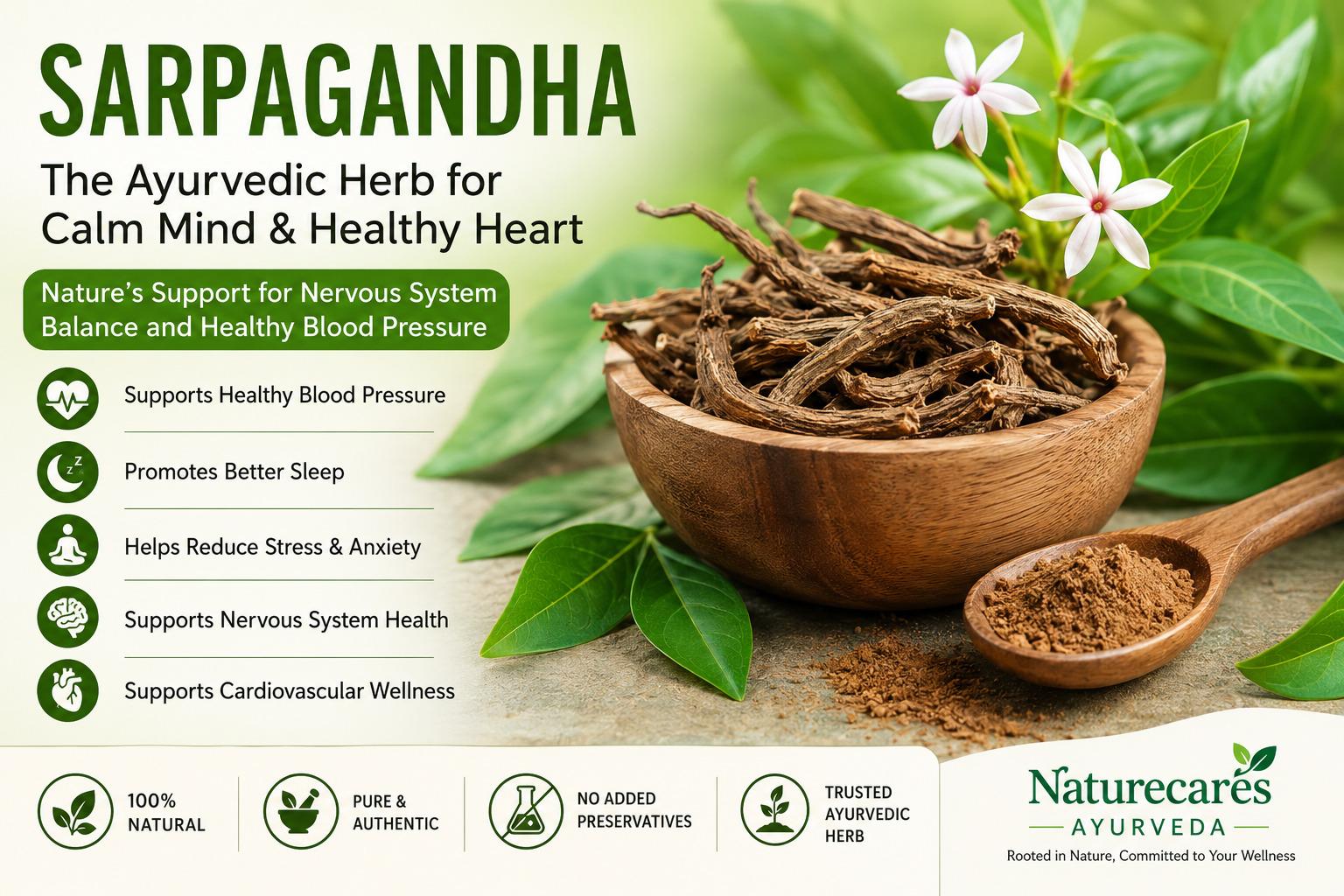
Sarpagandha is one of the oldest medicinal herbs used in Ayurveda for promoting mental calmness and supporting cardiovascular health. Scientifically known as Rauvolfia serpentina, this remarkable herb has been mentioned in traditional Ayurvedic texts for centuries due to its therapeutic properties. Its roots are rich in naturally occurring alkaloids that have made Sarpagandha an important ingredient in various classical Ayurvedic formulations.
Today, many people are exploring herbal wellness solutions to complement a healthy lifestyle. Among these herbs, Sarpagandha continues to be valued for its traditional use in maintaining healthy blood pressure, promoting restful sleep, and supporting nervous system balance. At Naturecares Ayurveda, we believe in sharing authentic Ayurvedic knowledge so individuals can make informed decisions about natural wellness.
What is Sarpagandha?
Sarpagandha is a medicinal shrub native to India and several Southeast Asian countries. The dried root of the plant is the most commonly used part in Ayurveda due to its medicinal properties.
The herb derives its Sanskrit name from its snake-like root structure. Historically, Ayurvedic practitioners have included Sarpagandha in formulations intended to support mental wellness, cardiovascular function, and healthy sleep patterns.
Botanical Profile of Sarpagandha
-
Botanical Name: Rauvolfia serpentina
-
Common Name: Indian Snakeroot
-
Hindi Name: Sarpagandha
-
Family: Apocynaceae
-
Part Used: Root
According to Ayurveda, Sarpagandha possesses bitter and astringent qualities that help maintain balance within the body's natural systems.
Active Compounds Present in Sarpagandha
The medicinal value of Sarpagandha comes from several naturally occurring alkaloids, including:
-
Reserpine
-
Ajmalicine
-
Ajmaline
-
Serpentine
-
Rauwolscine
These compounds have been widely studied for their influence on the cardiovascular and nervous systems.
Top Health Benefits of Sarpagandha
1. Helps Maintain Healthy Blood Pressure
One of the primary traditional uses of Sarpagandha is supporting normal blood pressure levels. The herb has long been included in Ayurvedic formulations intended to promote healthy circulation and vascular function.
People already taking blood pressure medication should only use Sarpagandha after consulting their healthcare provider.
2. Encourages Deep and Restful Sleep
Poor sleep can negatively affect overall health and quality of life. Sarpagandha has calming properties that may help relax the mind and support natural sleep cycles. Ayurveda traditionally recommends it for occasional sleeplessness related to stress or nervous imbalance.
3. Supports Emotional Well-Being
Modern lifestyles often involve high levels of mental stress. Sarpagandha is traditionally believed to calm the nervous system and promote emotional stability. It may help reduce nervous tension when used under professional guidance.
4. Promotes Nervous System Balance
Ayurvedic practitioners have long used Sarpagandha to help balance aggravated Vata dosha, which is often associated with nervous system disturbances. Its soothing nature may contribute to overall neurological wellness.
5. Supports Heart Health
Healthy blood circulation is essential for cardiovascular wellness. Traditional Ayurvedic medicine recognizes Sarpagandha as a supportive herb for maintaining proper heart function and vascular health.
6. Helps Relax the Mind
Sarpagandha has been valued for its calming influence on the mind. It is commonly included in Ayurvedic formulations intended to reduce mental overactivity and encourage relaxation.
7. Supports Overall Wellness
When combined with balanced nutrition, regular exercise, and a healthy lifestyle, Sarpagandha may contribute to overall physical and mental well-being.
Traditional Ayurvedic Perspective
According to Ayurveda, many health concerns arise due to imbalances in the body's doshas. Sarpagandha is traditionally believed to help pacify aggravated Vata and Pitta doshas while promoting mental tranquility.
Ayurvedic practitioners often recommend the herb as part of a personalized wellness approach rather than as a standalone remedy.
Common Uses of Sarpagandha
Traditionally, Sarpagandha has been used for:
-
Supporting healthy blood pressure
-
Promoting restful sleep
-
Maintaining mental calmness
-
Supporting nervous system function
-
Encouraging cardiovascular wellness
-
Managing occasional stress
-
Supporting overall relaxation
How to Consume Sarpagandha
Sarpagandha is available in several forms.
Powder (Churna)
The powdered root is one of the oldest forms used in Ayurveda. It is usually consumed with lukewarm water or honey under professional supervision.
Capsules
Capsules provide measured quantities of the herb and are convenient for daily use when recommended by a healthcare professional.
Tablets
Ayurvedic tablets containing Sarpagandha are widely available and are often used as part of comprehensive herbal formulations.
Classical Ayurvedic Medicines
Several traditional Ayurvedic preparations include Sarpagandha alongside complementary herbs to enhance therapeutic benefits.
Recommended Dosage
The correct dosage depends on factors such as age, health condition, body constitution, and formulation.
Typical Ayurvedic guidance includes:
-
Powder: 250 mg to 1 gram daily
-
Tablets or capsules: As directed by a qualified practitioner
Because the herb contains potent bioactive compounds, self-medication should be avoided.
Possible Side Effects
Like many medicinal herbs, Sarpagandha should be used responsibly.
Potential side effects may include:
-
Drowsiness
-
Fatigue
-
Low blood pressure
-
Dizziness
-
Slow heartbeat
-
Nasal congestion
-
Mild digestive discomfort
If any adverse reactions occur, discontinue use and seek medical advice.
Precautions
Before using Sarpagandha, consider the following precautions.
During Pregnancy
Pregnant women should avoid Sarpagandha unless specifically advised by a qualified healthcare professional.
While Breastfeeding
Safety during breastfeeding has not been firmly established, so professional guidance is recommended.
Existing Medical Conditions
Individuals with heart disease, low blood pressure, depression, or chronic illnesses should consult their physician before using this herb.
Before Surgery
Sarpagandha may affect blood pressure and certain medications. It is generally advisable to stop using it before scheduled surgical procedures after consulting a healthcare provider.
Drug Interactions
Sarpagandha may interact with medications such as:
-
Antihypertensive drugs
-
Sedatives
-
Antidepressants
-
Sleeping pills
-
Antipsychotic medications
Always inform your healthcare provider about any herbal supplements you are taking.
How to Store Sarpagandha
To maintain freshness and potency:
-
Keep the product in a dry place.
-
Store away from direct sunlight.
-
Close the container tightly after use.
-
Protect it from moisture.
-
Keep out of reach of children.
Why Choose Quality Ayurvedic Herbs?
The effectiveness of any herbal supplement depends largely on its quality and purity. Selecting products from trusted Ayurvedic brands ensures better sourcing, proper processing, and adherence to quality standards.
Conclusion
Sarpagandha has earned its reputation as one of Ayurveda's most valuable medicinal herbs due to its traditional role in supporting cardiovascular health, nervous system balance, and restful sleep. Its naturally occurring compounds have made it an important ingredient in classical Ayurvedic formulations for generations.
Although the herb offers promising wellness benefits, it should never be used casually or without professional advice. Since Sarpagandha can interact with medications and may not be suitable for everyone, guidance from an Ayurvedic practitioner or healthcare provider is essential.
With mindful use, quality herbal products, and a balanced lifestyle, Sarpagandha can become a valuable part of a holistic wellness routine. Naturecares Ayurveda remains committed to providing reliable Ayurvedic knowledge that helps individuals make informed choices for their long-term health.
Categories
Read More
In an era where the pace of life often outruns our physical capacity to keep up, the importance of internal maintenance has never been more critical. We are currently witnessing a massive shift in how individuals perceive self-care—moving away from reactive medicine and toward proactive, botanical-led lifestyles. At the heart of this movement is the understanding that our digestive system...

Rajabandot Macau merupakan salah satu istilah yang cukup populer di kalangan penggemar permainan angka online. Nama ini sering dikaitkan dengan berbagai informasi, prediksi, dan keluaran macau seputar pasaran Macau yang dikenal memiliki banyak peminat. Popularitasnya terus meningkat karena banyak pengguna internet yang mencari referensi dan informasi terkait hasil angka serta berbagai...
The success of any industrial project depends on expert planning, precise engineering, and efficient execution. Engineering consultancy services in India help businesses design, develop, and implement projects that meet technical, operational, and regulatory requirements. Shiva Engineering Services provides comprehensive engineering consultancy solutions that support industries in delivering...
In today's highly competitive digital landscape, businesses must continually innovate to remain efficient, productive, and profitable. Custom Software Development Services have emerged as a powerful solution for organizations seeking technology tailored to their unique processes and goals. Unlike off-the-shelf applications, custom-built software is designed specifically to address business...

Maintaining a property involves protecting every part of the building, and the roof is undoubtedly one of the most important areas to consider. Over time, exposure to wind, rain, frost, and changing temperatures can affect the condition of even the strongest roofing systems. For homeowners and businesses seeking Roofing Services in Slough, professional roofing solutions provide the expertise...