Pet Oncology Research & Development Projects Matter in Modern Drug Findings
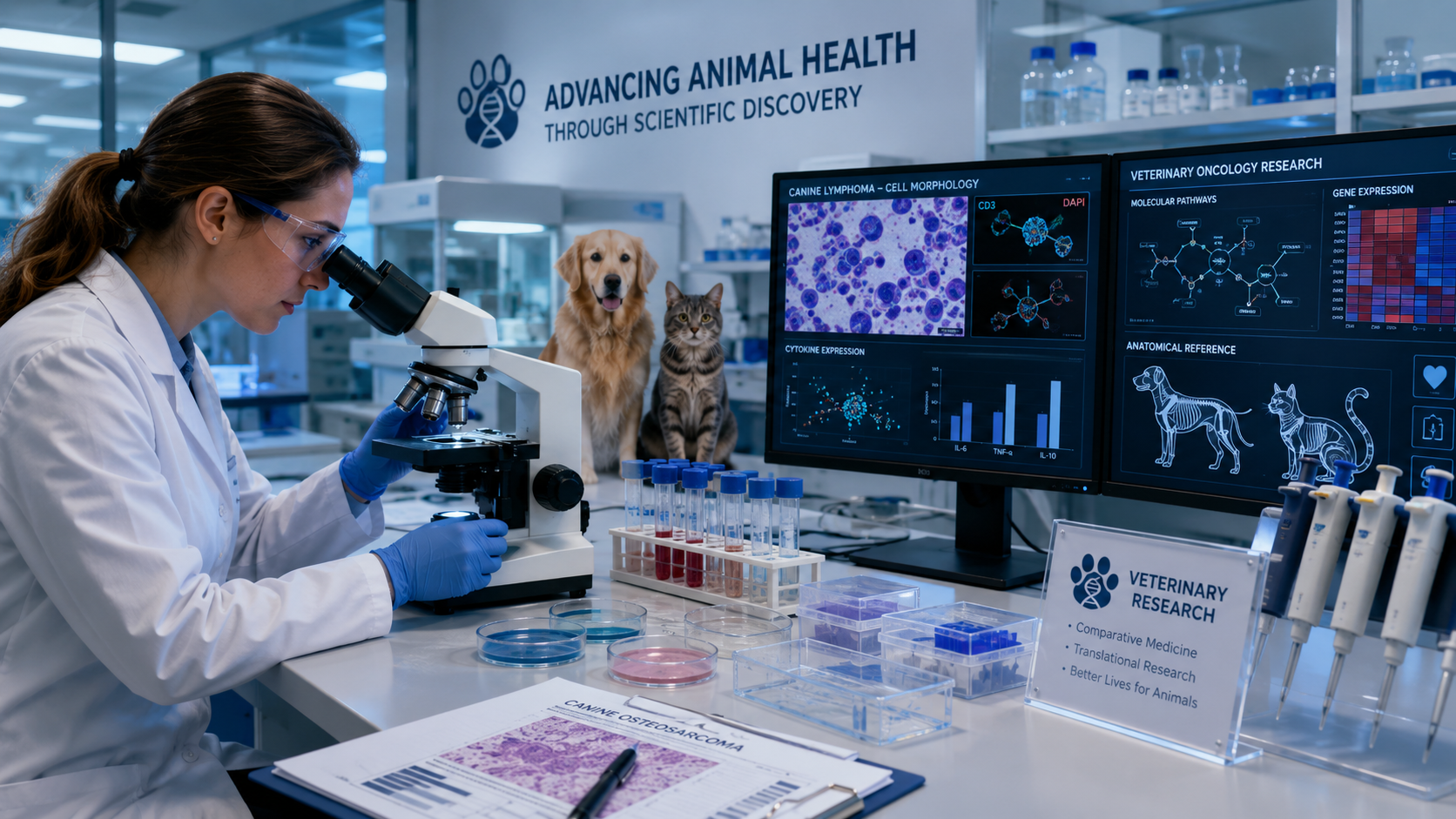
Cancer remains one of the most serious health challenges for companion animals, particularly dogs and cats. As the demand for innovative veterinary oncology treatments continues to grow, researchers and biotech companies need a trusted partner to help move discoveries forward with speed and precision.
Gene therapy is becoming an increasingly important area of biomedical and veterinary research. While much of the public discussion focuses on human medicine, companion animal health is also gaining attention, especially in diseases where dogs naturally develop conditions that resemble human disorders. Cancer, immune-mediated diseases, metabolic disorders, and inherited conditions are all examples of disease areas where canine-specific research can provide valuable translational insights.
For this reason, canine-specific gene therapy discovery is not simply a matter of applying human or rodent research systems to dogs. Instead, it requires research workflows that consider canine biology, disease presentation, immune response, tissue specificity, and preclinical model relevance. A well-designed discovery framework may include species-specific animal health research, customized in vitro models, animal model development, biomarker analysis, and broader biologics research support.
Why Dogs Are Important in Translational Research
Dogs share many naturally occurring diseases with humans, including certain cancers, genetic disorders, inflammatory conditions, and metabolic diseases. Unlike many experimentally induced rodent models, canine diseases often arise spontaneously in a real-world biological environment. This can make canine research especially valuable for understanding disease progression, therapeutic response, and safety considerations.
In veterinary medicine, this relevance is also practical. The goal is not only to generate knowledge for comparative medicine but also to support the development of better therapies for companion animals themselves. For canine gene therapy discovery, species-specific research models can help investigators evaluate whether a therapeutic concept is biologically meaningful before advancing into more complex preclinical studies.
The Role of Species-Specific Animal Health Research
A species-centered approach is essential in canine gene therapy research. Human and rodent systems can provide useful early information, but they may not fully reflect canine physiology, immune biology, or disease mechanisms. For example, a delivery strategy that performs well in a mouse model may behave differently in dogs because of differences in tissue distribution, immune recognition, vector response, or disease microenvironment.
Species-specific animal health research helps bridge this gap. By focusing on canine and feline biology when appropriate, researchers can better assess target relevance, tissue response, immune compatibility, and study design. This approach can also help identify potential limitations earlier in development, reducing the risk of relying on models that are not sufficiently predictive for companion animal applications.
Mapping Disease Areas for Canine Gene Therapy Discovery
Before selecting a model or testing system, researchers need to define the disease context clearly. Canine gene therapy discovery may involve inherited disorders, oncology-related indications, immune-mediated diseases, metabolic conditions, or other complex companion animal health challenges.
Target Identification & Validation
- Biomarker discovery and characterization
- Molecular profiling for canine and feline cancers
- In vitro functional assays for oncology targets
In Vitro Oncology Assays
- Cell viability, proliferation, and apoptosis studies
- Drug sensitivity and resistance assays
- Customized co-culture systems to mimic tumor microenvironments
Companion Animal Tumor Models
- Canine and feline xenograft models for translational relevance
- Spontaneous tumor models that reflect naturally occurring disease
- Immunocompetent and immunodeficient systems to evaluate diverse therapeutic strategies
Preclinical Efficacy & Safety Studies
- Dose–response analysis
- Pharmacokinetics (PK) and pharmacodynamics (PD) evaluations
- Comprehensive safety assessment for novel oncology candidates
Immuno-Oncology Services
- Evaluation of immune checkpoint inhibitors in dogs and cats
- Flow cytometry and cytokine profiling
- Development of in vitro and ex vivo immune assays to understand tumor–immune interactions
Categorieën
Read More
The Essential Hoodie with a Relaxed Fit and Modern Appeal has become a staple in contemporary wardrobes because it effortlessly blends comfort, functionality, and style. Designed for people who value versatility, this hoodie provides a loose yet structured fit that allows freedom of movement without sacrificing a polished appearance. Whether worn during a casual outing, a weekend gathering, or...

Economics is a fascinating field that involves studying how resources work in our society, but the mathematical models and graphs can be quite challenging for many students. When your weekly schedule is filled with various assignments and long lectures, finding the right time to master complex theories becomes very difficult. It is normal to feel some pressure when you have a big test coming up...

If you're looking to relax, relieve muscle tension or improve your overall wellbeing, visiting a massage parlour in Bradford can be a great option. Professional massage therapy offers a range of physical and mental health benefits, making it a popular choice for people with busy lifestyles, physically demanding jobs or those simply wanting time to unwind. Bradford is home to a variety of...

Introduction Some stories are too big to ignore. The ongoing conflict between the United States and Iran has reached a point where the entire Middle East is holding its breath — and the rest of the world is watching very closely. The US carried out strikes on Iranian radar and drone sites, while Iran launched what it called a retaliatory attack on a US base in Kuwait. These are not just...