Waterless Wash & Wax in Pakistan Clean and Protect Your Car Without a Hose
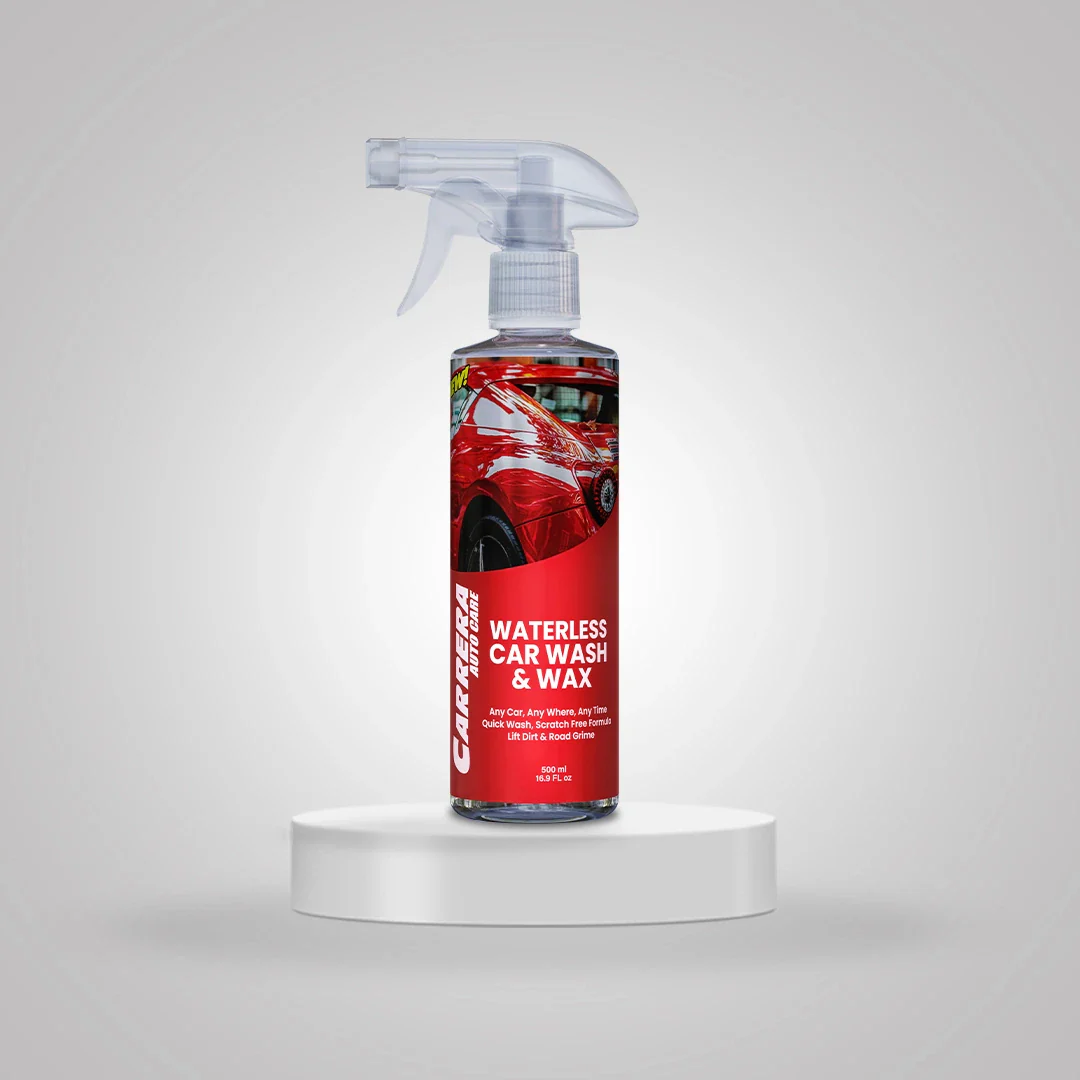
For Pakistan, the concept is attractive because many cities experience dusty conditions and water conservation is important. Yet dust can also make waterless washing risky if the vehicle is too dirty. The safe approach depends on lubrication, clean microfiber towels, gentle technique, and knowing when a conventional rinse is necessary.
Carrera Waterless Wash & Wax can simplify maintenance, but it should not be treated as a solution for caked mud, gritty contamination, flood residue, or heavy sand. Always follow the product label for surface compatibility, towel technique, and use in sun or heat.
How Waterless Wash & Wax Works
The cleaner surrounds or loosens light particles and provides lubrication so they can be lifted into a towel. The wax component leaves a layer that can improve gloss and water behaviour. It does not magically remove grit; the towel physically carries contamination away.
That is why technique matters more than speed. Reusing a dirty towel face, pressing hard, or working on a hot panel can create fine scratches or streaks. Dark paint shows these defects most clearly, but every colour deserves the same care.
When It Is Safe to Use
A waterless method is suitable when the car has light dust, fingerprints, small fresh bird-dropping residue after careful softening, or mild road film. You should still inspect the surface under good light and feel for gritty buildup without rubbing it.
Use another method when the vehicle has thick mud, sand deposits, salt crust, construction dust, heavy traffic film, or contamination packed into panel gaps. Rinsing first is also safer after driving through standing water. A pressure rinse or traditional wash allows large particles to leave the paint without being dragged across it.
Tools You Need
Prepare more microfiber towels than you expect to use. For a lightly dusty small car, several plush towels may be needed; larger or dirtier vehicles require more. Use clean, soft, edgeless or paint-safe towels with no debris trapped in the fibres.
You will also need Carrera Waterless Wash & Wax, shade, good lighting, and separate towels for paint, glass, wheels, and lower dirty sections. Optional nitrile gloves can keep hands clean. Do not use the same towel on wheels and bodywork.
Step-by-Step Waterless Washing Method
### 1. Cool the Vehicle
Park in shade and allow the paint to cool. Hot panels can make the liquid evaporate before it has lubricated the dirt, causing smears and reducing working time.
2. Inspect from Top to Bottom
The roof and upper panels are usually cleaner than bumpers, sills, and the rear of the vehicle. Identify any area that is too dirty for a waterless method. If grit is visible, stop and rinse.
3. Fold the Towel
Fold a clean microfiber into quarters to create multiple usable faces. Each face should handle only a small area before it is turned. Once every face is dirty, place the towel in a separate used-towel bag.
4. Spray Generously Enough for Lubrication
Apply Carrera Waterless Wash & Wax according to the label. Give dirt time to loosen, but do not let the product dry. On a dusty panel, an extra mist on the towel may improve lubrication.
5. Wipe in Straight, Light Passes
Glide the towel in one direction with minimal pressure. Avoid repeated circular scrubbing. A leading edge collects contamination, so roll or lift the towel slightly as you move rather than pushing the same dirty edge across the whole panel.
6. Turn to a Clean Face
After one or two short passes, inspect and rotate the towel. This habit is the core of scratch reduction. Saving towels is not worth marking paint.
7. Buff with a Second Towel
Use a separate clean microfiber to remove remaining product and reveal an even finish. Do not buff with the contaminated cleaning towel.
8. Work Panel by Panel
Complete one small section before moving on. Start with the roof and glass edges, then upper doors and bonnet, followed by lower sections. Treat the dirtiest acceptable areas last.
9. Handle Wheels Separately
Brake dust can be abrasive and may contain metallic particles. Use dedicated wheel products and towels. A bodywork towel that touches a wheel should never return to paint.
10. Inspect in Different Light
Walk around the car and check for streaks, missed dirt, and residue along badges or panel gaps. Use a fresh towel for final levelling.
Special Contamination
### Bird Droppings
Bird residue can damage paint, especially in heat. Saturate it with compatible cleaner and allow it to soften. Lift gently with a clean towel rather than scraping. If etching remains, polishing may be required.
Tree Sap
Fresh light residue may respond to a compatible cleaner, but hardened sap can need a dedicated remover. Test first and avoid aggressive rubbing.
Insect Marks
Soften before wiping. Repeated pressure on dried insects can mar paint. Use a dedicated product when the general wash does not release them safely.
Industrial Fallout
Tiny bonded particles may not wipe away. Clay, chemical decontamination, or professional detailing may be appropriate. Do not force a rough surface smooth with a towel.
Waterless Washing in Pakistan’s Climate
Dust varies in texture. Fine city dust may be manageable when light, while wind-blown sand can be highly abrasive. After a dust storm, rinse the vehicle rather than performing a dry or nearly dry wipe.
In summer, work early or late, even if the car is parked in shade. Metal panels can retain heat. During monsoon season, waterless wash can remove light spotting between washes, but muddy lower panels need a rinse.
In Karachi’s coastal environment, salt residue should be removed thoroughly, including from wheel arches and underbody areas that a waterless exterior wipe cannot reach. In northern winter conditions, road contamination may also call for a conventional wash.
Does the Wax Replace Long-Term Paint Protection?
The wax component can add gloss and short-term protection, but durability depends on formula, preparation, weather, washing, and storage. It should not automatically be considered equivalent to a separately applied hard wax, sealant, or coating.
Water behaviour is not the only measure of protection. Inspect slickness, gloss, contamination release, and the condition of the underlying paint. If the car already has a coating, confirm the wash-and-wax product is compatible and will not leave unwanted residue.
Avoiding Streaks and Smears
Streaks often come from too much product, hot paint, dirty towels, high humidity, or incomplete buffing. Reduce section size, use a fresh towel, and follow the stated dosage. On glass, wax residue can create haze, particularly at night, so use only where approved and finish with a dedicated glass towel if needed.
Black paint requires patient levelling. If smears remain, do not keep rubbing a dry towel. Lightly reapply the product to reactivate residue, then buff with a clean towel.
Microfiber Care
Wash paint towels separately from wheel, engine, and heavily soiled cloths. Use a microfiber-safe detergent without fabric softener, bleach, or fragrance residue. Fabric softener can coat fibres and reduce absorbency.
Dry according to the towel manufacturer’s guidance, generally with low heat, and store clean towels in a sealed container. Inspect each towel before use. A single seed, metal shaving, or hard particle can scratch paint.
Common Waterless-Wash Mistakes
The biggest error is using the method on a vehicle that is too dirty. Other mistakes include using one towel for the entire car, wiping in circles with pressure, working in direct sunlight, allowing product to dry, and cleaning wheels before paint.
Some users also mistake the product for a scratch remover. Wash-and-wax can hide very light marks temporarily through gloss, but it does not level paint like an abrasive polish. Deep scratches require assessment and possibly repair.
Why Choose Carrera Waterless Wash & Wax
Carrera provides a convenient car-care option for Pakistani motorists who need an efficient maintenance wash. Used correctly, it combines light cleaning and finishing in one process. It is especially helpful for a well-maintained car that is not allowed to become heavily contaminated.
Buy from a trusted source, read the label, and keep the bottle upright away from extreme heat. Build the product around a generous towel supply; the liquid and towels work as one system.
Frequently Asked Questions
### Will waterless wash scratch my car?
Any contact wash can scratch if grit is dragged across paint. Risk is reduced by limiting use to light dirt, providing lubrication, using many clean towels, and applying almost no pressure.
Can I use it every day?
Daily use is usually unnecessary and increases paint contact. Use it when light contamination justifies cleaning and switch to a rinse when dirt is heavier.
Can it be used on ceramic coating?
Only if the product label and coating guidance confirm compatibility. Some waxes may alter the coating’s surface behaviour or leave residue.
Is it safe for matte paint or wraps?
Do not assume so. Wax can change the sheen of matte finishes. Use only products approved for the particular wrap or paint.
Can I use it on glass?
Follow the label. Wax residue may haze on glass, so a dedicated glass cleaner may be preferable for the windscreen.
How many towels do I need?
Use enough that no visibly dirty towel face returns to paint. Vehicle size and dust level determine the number; having extra clean towels is always safer.
Conclusion
Waterless washing works best as careful maintenance, not as a shortcut for a filthy car. Assess the dirt, cool the panels, use generous lubrication, wipe lightly in straight passes, rotate towels constantly, and buff with clean cloths. With this method, Carrera Waterless Wash & Wax offers Pakistani drivers a water-conscious way to refresh lightly dusty paint and add a polished finish.
Categorias
Leia mais
What Is an Ethical Marketing Agency? An ethical marketing agency helps businesses grow using transparent, honest, and customer-focused marketing strategies. Rather than relying on misleading advertisements, clickbait, or manipulative tactics, ethical marketing is built on trust, accuracy, and long-term value. Today’s consumers are more informed than ever. They expect brands to communicate...

The demand for skilled IT professionals continues to grow across Ethiopia as businesses embrace digital transformation, cybersecurity, cloud computing, and modern networking technologies. CompTIA certifications are among the most recognized vendor-neutral credentials worldwide, helping professionals validate their technical skills and advance their careers. Whether you are starting your IT...