


How Cities Can Reduce Non-Revenue Water with Modern Ductile Iron Pipelines
India loses more treated water than most countries ever distribute. Non-revenue water (NRW) levels in Indian cities range between 35–40%, with metros like Delhi recording figures as high as 58%. For every litre treated, pumped, and pressurised into the network, nearly half disappears before it reaches a paying customer.
The financial consequences are direct. Lucknow alone loses an estimated ₹650 million per year to NRW. Across Indian cities, this compounds into losses that prevent utilities from funding the very repairs that would reduce them.
As of February 2026, AMRUT 2.0 had approved 408 NRW reduction projects and 1,153 district metered areas across Indian cities, a clear signal that infrastructure rehabilitation is the accepted long-term answer. The question is what that infrastructure should be made of.
Why Ageing Pipelines Are the Core Problem
NRW has three components: physical losses (leaks and bursts), commercial losses (illegal connections, metering errors), and administrative losses. Physical losses from pipeline failure are consistently the largest and hardest to control.
India's urban networks were largely built with cast-iron or unplasticised PVC pipes, now decades past their design life. These materials fail through:
-
Corrosion of pipe walls from aggressive soil and water chemistry
-
Joint failure at push-on connections that were never properly restrained
-
Fatigue cracking from repeated surge and pressure transient events
-
Structural failure under traffic loads and ground movement
Patch repairs don't solve this. They create new weak points while the underlying material continues to degrade.
How Modern DI Pipe Systems Address NRW at the Material Level
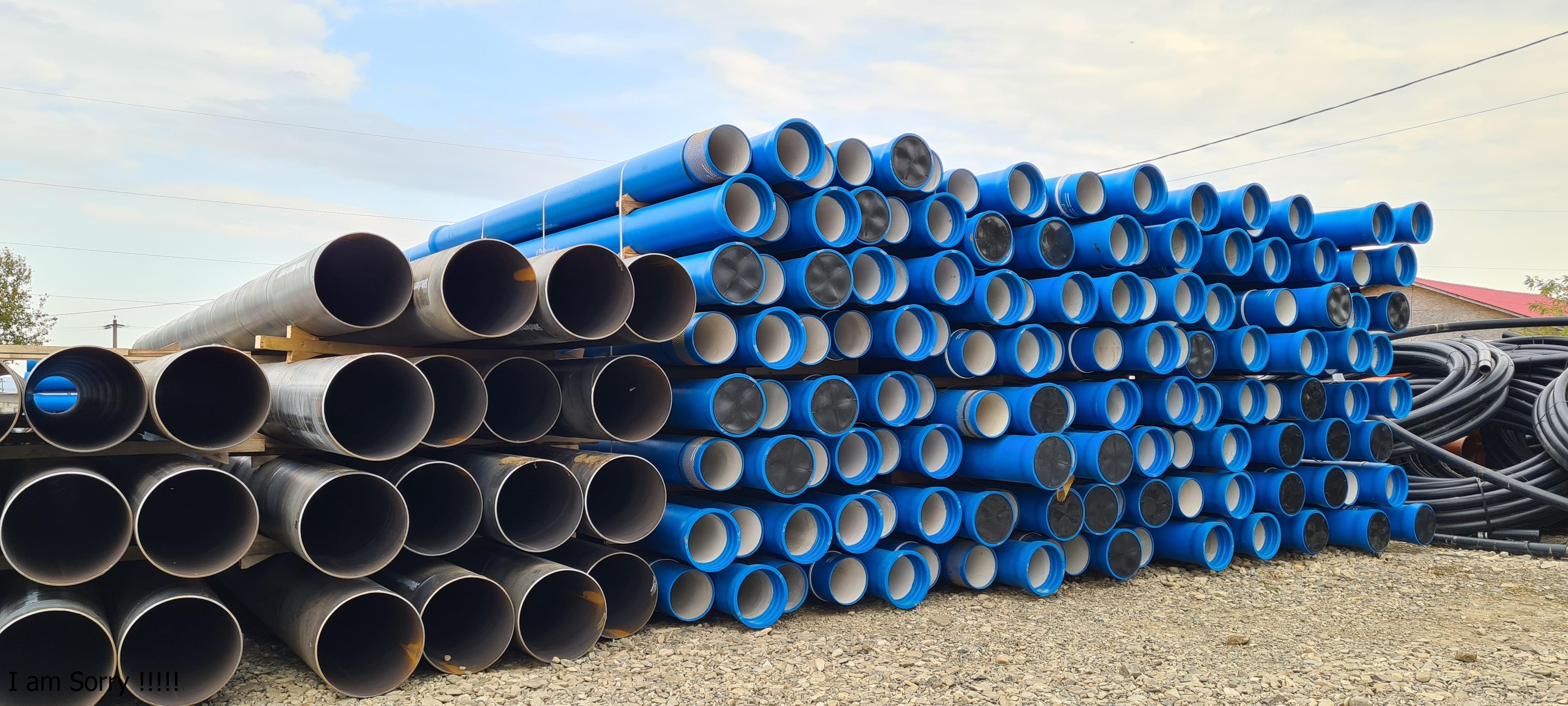
Replacing ageing pipelines with Ductile Iron Pipes conforming to ISO 2531 and EN 545 addresses physical NRW at its root, not symptom by symptom.
- Structural Integrity That Holds Under Pressure
The unique nodular graphite microstructure of Ductile Iron Pipes offers high tensile strength and flexibility not found in older pipe materials. Under surge events, ground movement, or traffic loading, a DI Pipe absorbs stress and holds. Cast iron fractures, and the PVC material deforms and loses joint integrity. DI Pipes, on the other hand, bends slightly and continues to perform.
-
Corrosion Protection Built Into the Standard
ISO 2531 and EN 545 certifications matter to prove the quality of the internal cement mortar lining and external zinc coating with bitumen finishing. The internal lining often creates a proper alkaline barrier that prevents direct pipe-wall contact with water, eliminating the slow-bleed internal corrosion responsible for a significant share of invisible physical losses in older networks.
-
Joint Systems That Don't Pull Apart
A major source of physical NRW is joint failure, particularly during the negative-pressure phase and surge event. In such cases, unrestrained joints separate, and it develops a pathway for groundwater to enter.
Restrained Joint DI Pipe systems help to lock joints against axial separation. At every bend, tee, reducer, and pump connection where joint failure concentrates, restrained joints maintain integrity through both high and low pressure phases of a transient event.
-
DI Fittings That Perform to the Same Standard
Physical losses concentrate at certain fittings such as bends, tees, reducers, and flanged connections where flow changes direction and pressure peaks. These fittings, manufactured to ISO 2531 and EN 545, carry the same pressure class and coating system as the pipe itself.
The rigid and bolted connection offered by Ductile Iron Flange Pipes ensures zero-leakage performance for pump discharge connections, valve chambers, and above-ground portions.
Moreover, sourcing from credible and established DI Fittings manufacturers in India with certified and traceable production means the entire system holds, not only the straight runs.
- The Manufacturer Quality Variable
The NRW benefit of switching to DI Pipe depends entirely on whether it was manufactured consistently to meet the overall standard. FroCoatingickness, lining uniformity, and joint tolerances, tlp to determine real-world performance, not just delivery compliance.
Among the experienced Ductile Iron pipe manufacturers in India, those certified to ISO 2531 with documented processes can supply the best material. Similarly, a cheaper and uncertified pipe developing coating failures at year 10 often recreates the exact NRW problem the project was meant to solve.
NRW Reduction Is an Infrastructure Problem First
Digital monitoring and AI leak detection tools now help to identify where water is lost. Modern Ductile Iron systems, specified correctly and sourced from certified DI pipe manufacturers, and installed to meet certain standards, are the physical foundation that every other NRW reduction strategy depends on.
Without it, cities are measuring the losses without actually reducing them.
FAQs
Q1. What is the main cause of high NRW in Indian cities?
Ageing, corroded pipelines with failing joints are the primary cause of leaking treated water and simultaneously drawing in contaminants.
Q2. How do DI Pipes specifically reduce physical water losses?
It prevents visible bursts and slow, invisible leaks through corrosion-resistant linings, high-strength joints, and the best Restrained Joint systems.
Q3. Does fitting quality affect NRW outcomes in a DI Pipe network?
Yes, undersized or even non-certified fittings fail first at bends and tees. These create leak issues at certain join points to remove them fully.
الأقسام
إقرأ المزيد
Buying property is not only about location anymore. People now pay close attention to planning because a well planned society gives better living standards, smoother roads, organized construction, and stronger future value. That is why many buyers are searching for the Faisal hills prime block master plan before making any investment decision. In recent years, buyers in Islamabad have...

If you're looking for performance marketing in Noida, Digital Works Solution delivers data-driven campaigns designed to maximize leads, sales, and ROI. Our team leverages PPC, social media advertising, and conversion optimization to help businesses achieve measurable growth. With customized strategies and continuous performance tracking, Digital Works Solution ensures every marketing...

