Air Cooler vs Water Cooler: Which Cooling Solution Makes More Sense for Pakistani Homes?
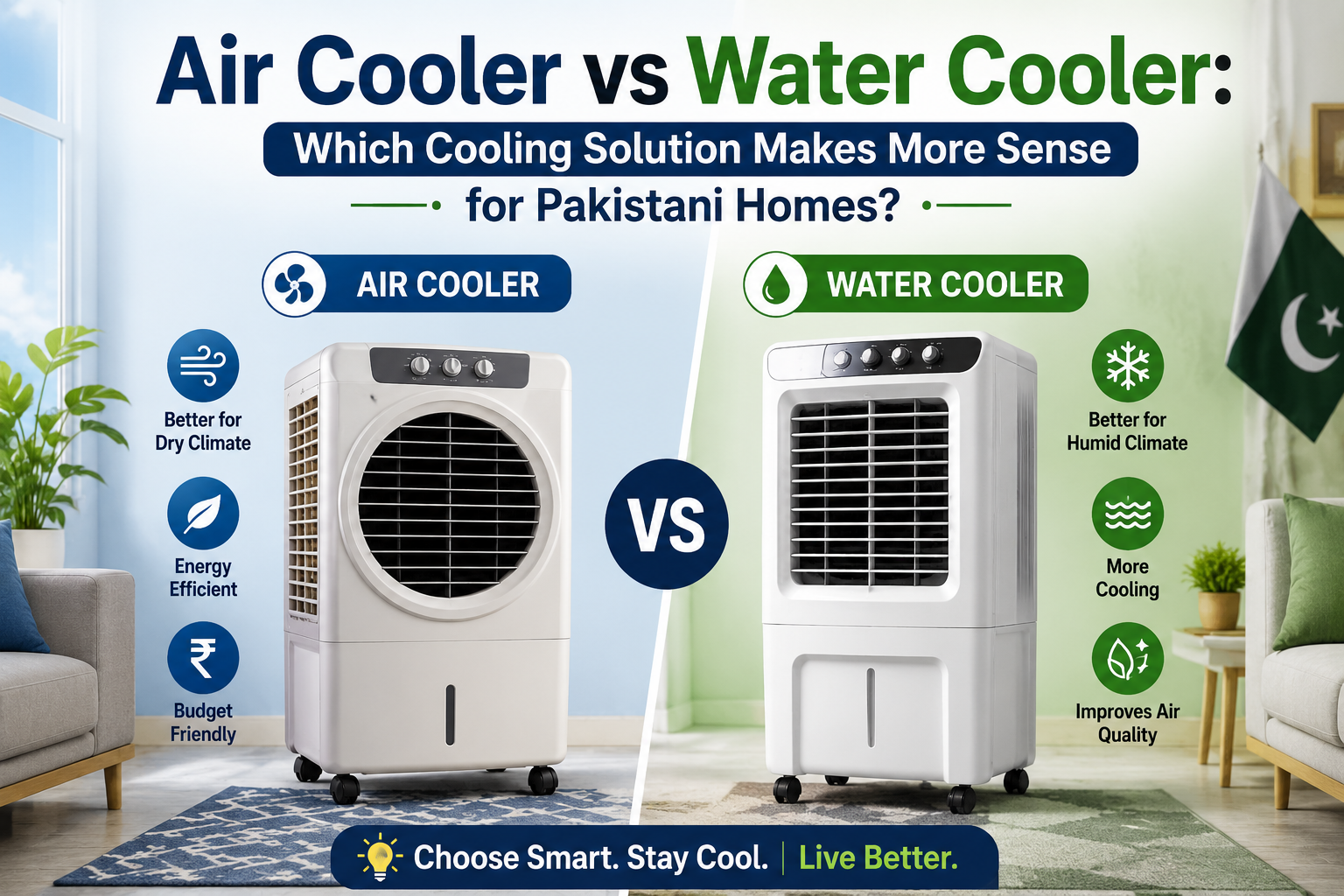
As temperatures continue to rise across Pakistan, keeping indoor spaces comfortable during the summer months has become a priority for many households. While air conditioners are often viewed as the most powerful cooling option, they are not the only solution available. Many consumers look for alternatives that are practical, cost-conscious, and suitable for local weather conditions.
Among the most common options are the Best Air Cooler and the Water Cooler. Although these terms are sometimes used interchangeably in everyday conversation, they often refer to different cooling solutions and serve different purposes. Understanding how these systems work, their advantages, limitations, and ideal use cases can help consumers make informed decisions based on their specific needs.
Rather than focusing solely on purchase price, it is important to consider factors such as climate conditions, energy consumption, maintenance requirements, cooling effectiveness, and household usage patterns.
This guide explores the differences between air coolers and water coolers while examining which option may make more sense for Pakistani homes.
Understanding Cooling Needs in Pakistan
Pakistan experiences a wide range of climate conditions.
Some regions experience:
· Extremely hot summers
· Dry weather
· Dusty environments
· Long periods of heat exposure
Other regions may experience:
· Higher humidity
· Coastal influences
· Moderate summer temperatures
Because climate conditions vary, the effectiveness of different cooling systems can also vary.
Choosing the right cooling solution often depends on understanding the local environment and household requirements.
What Is an Air Cooler?
An air cooler is a device that cools indoor air through the process of evaporation.
The system typically consists of:
· Water tank
· Cooling pads
· Fan
· Water circulation mechanism
The process works by drawing warm air through water-saturated pads.
As the water evaporates, the air temperature decreases before being circulated into the room.
This method is often called evaporative cooling.
Unlike traditional air conditioning systems, air coolers do not rely on compressors or refrigerants.
What Is a Water Cooler?
In many households, the term water cooler commonly refers to a device designed to cool drinking water rather than indoor air.
These appliances are used to:
· Store water
· Maintain cool temperatures
· Provide easy access to chilled drinking water
Water coolers are particularly useful during hot weather when households require a continuous supply of cool drinking water.
Although both products involve cooling, their primary functions are very different.
One cools air while the other cools water.
Why Air Coolers Are Popular in Pakistan
The popularity of Cooling Solutions such as air coolers has increased significantly in recent years.
Several factors contribute to this trend.
Lower Energy Consumption
Air coolers generally use less electricity than many other cooling systems.
Simple Operation
Most units are easy to use and maintain.
Portable Design
Many models can be moved between rooms.
Suitable for Dry Climates
Evaporative cooling often performs well in areas with low humidity.
These characteristics make air coolers a common choice for many households.
How Air Coolers Create Comfort
Air coolers do not lower room temperature in the same way as air conditioners.
Instead, they create a cooling effect through evaporation.
This process can:
· Improve comfort
· Increase airflow
· Reduce perceived heat
· Create a fresher indoor environment
The effectiveness of evaporative cooling depends heavily on environmental conditions.
The Importance of Humidity Levels
Humidity plays a major role in determining how well an air cooler performs.
Dry Conditions
Air coolers generally perform most effectively in dry environments.
Humid Conditions
Cooling efficiency may decrease as humidity rises.
This is because evaporation becomes less effective when the air already contains significant moisture.
Understanding local climate conditions is important when evaluating cooling options.
Comparing Energy Consumption
Energy usage is one of the most important factors influencing appliance purchases.
Air Coolers
Typically consume relatively modest amounts of electricity.
Water Coolers
Energy requirements vary depending on design and usage patterns.
Because air coolers rely primarily on fans and water circulation systems, they often require less energy than compressor-based cooling technologies.
This characteristic appeals to consumers who are concerned about electricity costs.
Installation Requirements
Another difference involves installation complexity.
Air Coolers
Most units require minimal setup.
Users typically need only:
· Water supply
· Electrical connection
· Appropriate ventilation
Water Coolers
Installation requirements are generally straightforward as well.
Most models simply require:
· Placement location
· Electrical connection
· Water source
The simplicity of these systems contributes to their widespread use.
Maintenance Considerations
Maintenance plays an important role in long-term performance.
Air Cooler Maintenance
Regular tasks may include:
· Cleaning cooling pads
· Refilling water tanks
· Removing dust buildup
· Inspecting water circulation systems
Water Cooler Maintenance
Typical maintenance may involve:
· Cleaning storage areas
· Sanitizing water systems
· Checking cooling components
Proper maintenance supports hygiene, efficiency, and product longevity.
Air Quality and Ventilation
One advantage often associated with air coolers is airflow.
Because these systems continuously circulate air, they may help create a more ventilated indoor environment.
However, proper ventilation remains important.
Closed spaces may reduce effectiveness and overall comfort.
Good airflow helps support the evaporative cooling process.
Common Misconceptions About Air Coolers
Several misconceptions often influence consumer decisions.
Misconception 1: Air Coolers Work Exactly Like Air Conditioners
The cooling mechanisms are fundamentally different.
Misconception 2: Bigger Units Always Provide Better Results
Room size and ventilation are important considerations.
Misconception 3: Air Coolers Require No Maintenance
Regular cleaning remains essential for proper operation.
Understanding these differences helps consumers set realistic expectations.
Choosing the Right Cooling Option
Selecting an appropriate cooling solution depends on several factors.
Climate Conditions
Dry climates often favor evaporative cooling.
Household Budget
Operating costs should be considered alongside purchase costs.
Room Size
Cooling requirements vary according to space dimensions.
Usage Patterns
Frequency and duration of use influence suitability.
Maintenance Preferences
Different products require different levels of upkeep.
Evaluating these factors can help consumers identify the most practical solution.
The Role of Cooling Appliances in Modern Homes
Cooling appliances have become increasingly important as temperatures rise.
Consumers today seek products that offer:
· Comfort
· Efficiency
· Practicality
· Long-term value
As technology continues to evolve, cooling systems are expected to become even more efficient and adaptable to varying household needs.
Future Trends in Cooling Technology
Several developments are shaping the future of residential cooling.
Improved Energy Efficiency
Manufacturers continue working to reduce electricity consumption.
Smarter Controls
Advanced monitoring systems are becoming more common.
Better Airflow Designs
Innovations focus on improving comfort and circulation.
Enhanced Durability
Consumers increasingly value products designed for long-term use.
These trends are likely to influence future purchasing decisions.
Practical Tips Before Buying a Cooling Appliance
Before selecting a cooling system, consumers should consider:
· Local climate conditions
· Available space
· Energy requirements
· Maintenance expectations
· Intended use
· Household comfort needs
Taking time to evaluate these factors can help avoid purchasing mistakes.
Frequently Asked Questions
1. What is the main difference between an air cooler and a water cooler?
An air cooler is designed to cool indoor air, while a water cooler is designed to cool drinking water.
2. Do air coolers consume a lot of electricity?
Generally, air coolers use less electricity than many compressor-based cooling systems.
3. Are air coolers effective in humid weather?
Their effectiveness may decrease as humidity levels increase.
4. Do air coolers require ventilation?
Yes. Proper airflow helps improve cooling performance.
5. How often should air coolers be cleaned?
Cleaning frequency depends on usage and environmental conditions.
6. Are water coolers useful during summer?
Yes. They help provide a consistent supply of chilled drinking water.
7. What factors should be considered before purchasing a cooling appliance?
Climate, energy consumption, maintenance requirements, and intended use are all important considerations.
Final Thoughts
Choosing the right cooling system involves more than comparing prices or features. Understanding how different technologies work, where they perform best, and what maintenance they require can help consumers make informed decisions. Whether the goal is improving indoor comfort or ensuring access to chilled drinking water, selecting the appropriate appliance depends on household needs, climate conditions, and long-term expectations. Careful evaluation of available Summer Appliances can help families stay comfortable and prepared throughout the hottest months of the year.
الأقسام
إقرأ المزيد
A gap between teeth, medically known as a diastema, is a common dental concern that affects many people. These spaces can appear between any teeth, but they are most noticeable when they occur between the front teeth. Many individuals feel uncomfortable with visible gaps because they may affect the appearance of their smile and confidence. One of the most effective treatments for...

Maintaining good health starts with regular medical checkups, and diagnostic testing plays a vital role in identifying health concerns before they become serious. In recent years, Lab Test at Home in Dubai services have transformed the healthcare experience by making professional diagnostic testing more convenient, accessible, and patient-friendly. Instead of visiting a diagnostic center,...

If you’ve searched “How Much Does a Family Photoshoot Cost in Canada?”, you’re probably planning to capture memories that will last a lifetime. Whether it’s your baby’s first birthday, a holiday portrait, an anniversary, or simply updating your family photos, understanding the pricing helps you choose the right photographer without overpaying. This guide...

Well known Lookups- No Facts Out there - Go through BYSPORTS ; TEAMSBuilt upon Gold CupsharefacebookxredditlinkStars of the United Says and Mexico gained't comprise toward tension regarding lost out upon the to start with match of the 2026 FIFA Global Cup at the time they get the marketplace for the Concacaf Gold Cup very last upon Sunday.That's simply because any long run suspension towards...