Introduction
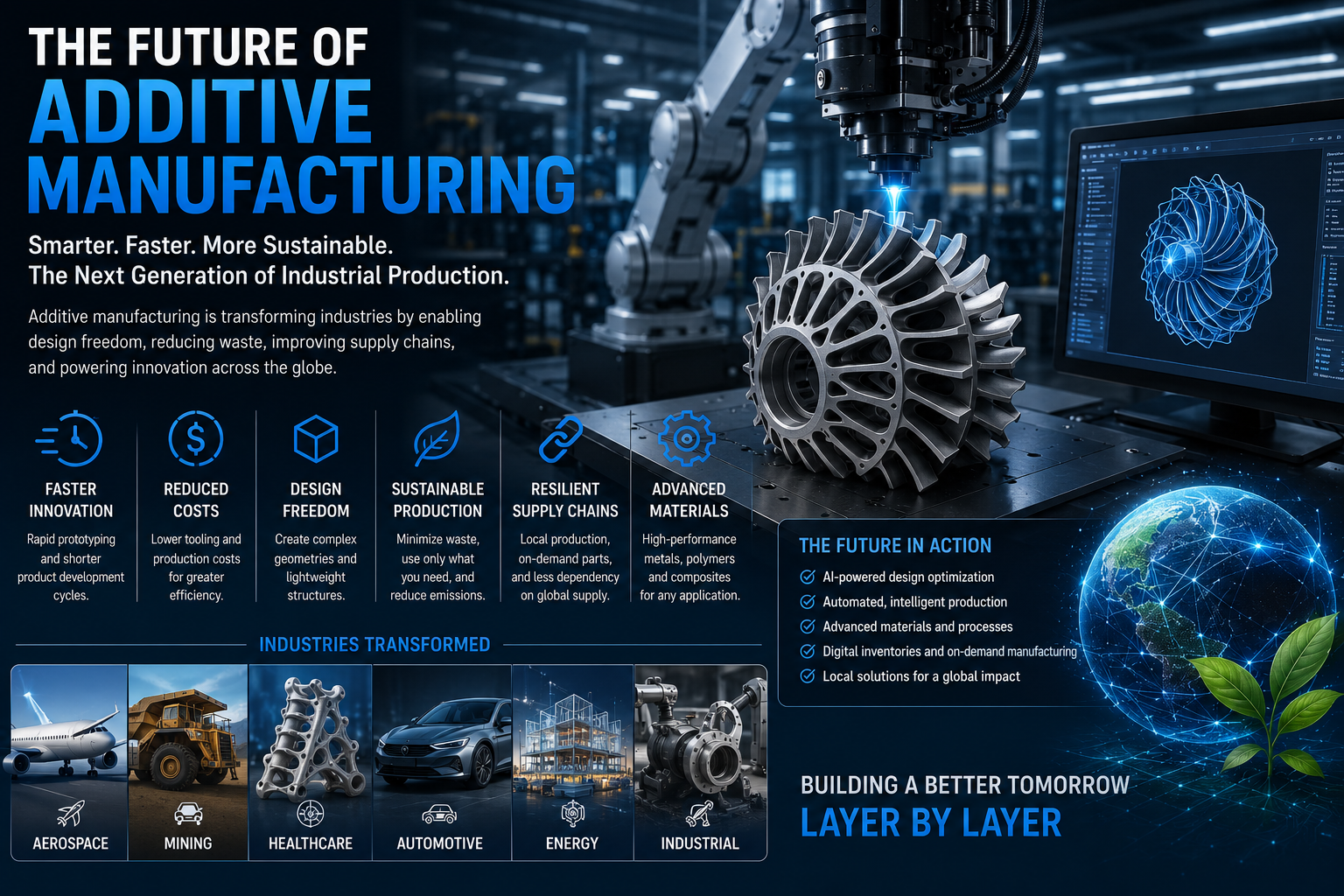
Every industrial revolution has been driven by technologies that fundamentally change how products are made. Steam power transformed manufacturing in the 18th century, automation reshaped production in the 20th century, and today, additive manufacturing is emerging as one of the defining technologies of the next industrial revolution.
Commonly known as 3D printing, additive manufacturing is helping businesses move beyond the limitations of traditional production methods. By enabling faster product development, greater design freedom, localised manufacturing, and more sustainable production practices, the technology is creating new opportunities for manufacturers across Australia and around the world.
As industries continue to embrace digital transformation, additive manufacturing is expected to become a key driver of industrial growth and innovation.
A New Era of Manufacturing
Manufacturing is no longer solely about producing large volumes of identical products. Modern businesses require production systems that are flexible, responsive, and capable of adapting to rapidly changing customer demands.
Additive manufacturing supports this shift by allowing manufacturers to create products directly from digital designs without the need for extensive tooling or complex production setups.
This approach enables companies to:
- Reduce development timelines
- Improve production flexibility
- Minimise upfront investment
- Respond quickly to market changes
- Produce highly customised products
These advantages are helping redefine what is possible in modern manufacturing.
Digital Transformation Is Driving Adoption
The future of manufacturing is increasingly digital.
Businesses are investing heavily in technologies that connect design, production, and supply chain operations into a seamless digital workflow.
Additive manufacturing is naturally aligned with this transformation because every product begins as a digital model.
This digital foundation enables:
- Cloud-based manufacturing
- Remote collaboration
- Automated production workflows
- Real-time design modifications
- Faster engineering approvals
As digital manufacturing ecosystems continue to evolve, additive manufacturing will play an increasingly important role within them.
Reducing Time from Concept to Market
Speed has become one of the most important competitive advantages in manufacturing.
Companies that can bring products to market faster often gain significant advantages over competitors.
Additive manufacturing accelerates product development by enabling rapid prototyping and faster design validation.
Engineers can quickly:
- Create prototypes
- Test product performance
- Refine designs
- Validate concepts
- Begin production
This ability to shorten development cycles allows businesses to innovate more efficiently while reducing project costs.
The Future of Custom Manufacturing
Consumers and businesses increasingly demand products tailored to their specific needs.
Traditional manufacturing often struggles with customisation because producing unique products usually requires expensive tooling modifications.
Additive manufacturing eliminates many of these barriers.
Manufacturers can economically produce:
- Personalised medical devices
- Custom industrial components
- Unique automotive parts
- Tailored consumer products
- Application-specific engineering solutions
As demand for customisation continues to grow, additive manufacturing will become a key enabler of personalised production.
Building More Resilient Supply Chains
Recent global events have highlighted the importance of supply chain resilience.
Manufacturers are looking for ways to reduce dependence on international suppliers while improving production reliability.
Additive manufacturing offers a practical solution through localised and on-demand production.
Instead of waiting weeks for parts to arrive from overseas, businesses can manufacture components when and where they are needed.
This approach helps organisations:
- Reduce lead times
- Lower shipping costs
- Improve spare parts availability
- Minimise inventory requirements
- Increase operational flexibility
Supply chain resilience will remain one of the strongest drivers of additive manufacturing adoption in the coming years.
The Role of Advanced Materials
Material innovation is expanding the capabilities of additive manufacturing at a rapid pace.
Modern industrial systems can now process a diverse range of materials including:
- High-performance polymers
- Carbon fibre composites
- Nylon engineering plastics
- Stainless steel
- Aluminium
- Titanium alloys
Future material developments will deliver even greater strength, durability, heat resistance, and performance.
These advancements will allow additive manufacturing to support increasingly demanding industrial applications.
Sustainability Will Shape the Future
Environmental responsibility is becoming a major priority for manufacturers worldwide.
Additive manufacturing supports sustainability by reducing waste and improving resource efficiency.
Key environmental benefits include:
- Reduced material consumption
- Lower transportation emissions
- Less excess inventory
- Improved product efficiency
- Support for local manufacturing
As organisations focus on achieving sustainability targets, additive manufacturing will continue gaining importance as a greener production technology.
Artificial Intelligence and Smart Production
Artificial intelligence is expected to transform additive manufacturing over the next decade.
AI-powered systems can assist manufacturers with:
- Design optimisation
- Predictive maintenance
- Process monitoring
- Quality assurance
- Production planning
By combining AI with additive manufacturing, businesses can create smarter production systems capable of continuously improving performance and efficiency.
This integration will help unlock new levels of productivity across manufacturing operations.
Industries Leading the Future
Several industries are expected to drive future growth in additive manufacturing.
Aerospace
Lightweight, high-performance components will continue making additive manufacturing valuable for aerospace applications.
Mining
Mining companies will increasingly use 3D printing to produce maintenance components and critical spare parts.
Healthcare
The healthcare sector will expand the use of customised implants, prosthetics, and patient-specific medical solutions.
Automotive
Automotive manufacturers will continue leveraging additive manufacturing for rapid development and specialised production.
Construction
Large-scale additive manufacturing technologies will create new opportunities for building and infrastructure projects.
The Manufacturing Workforce of Tomorrow
As additive manufacturing becomes more widespread, workforce requirements will continue evolving.
Future manufacturing professionals will require expertise in:
- CAD and digital design
- Additive manufacturing technologies
- Automation systems
- Material science
- Data-driven production processes
Organisations that invest in workforce development today will be better prepared for the future of advanced manufacturing.
Conclusion
The future of additive manufacturing is about much more than 3D printing. It represents a shift toward smarter, faster, and more connected manufacturing systems capable of meeting the demands of modern industry.
Driven by digital transformation, advanced materials, artificial intelligence, and sustainable production practices, additive manufacturing is helping businesses unlock new levels of innovation and efficiency.
As adoption continues to grow across Australia and globally, additive manufacturing will play a central role in shaping the next industrial revolution, transforming how products are designed, manufactured, and delivered for decades to come.