How Accurate Is an Ancestry DNA Test?
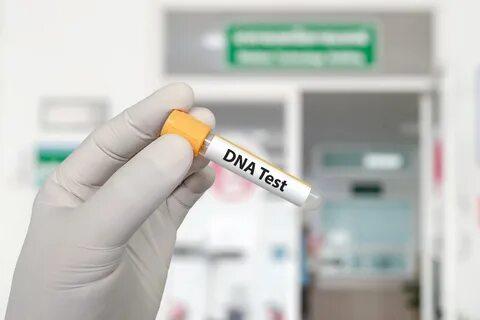
One of the first questions people ask before exploring their family history through genetics is, "How accurate is an ancestry DNA test?" The answer is more nuanced than a simple yes or no. While modern DNA testing technology is highly reliable for analyzing genetic information, the interpretation of ancestry results depends on several scientific factors, including reference databases, population genetics, inherited DNA patterns, and ongoing research.
An Ancestry DNA Test in UAE has become an important tool for genealogy enthusiasts, adoptees, historians, and anyone curious about their ancestral origins. By examining inherited genetic markers, these tests can estimate ethnicity, identify DNA matches, and reveal migration patterns that span thousands of years. However, understanding what is scientifically accurate—and what remains an estimate—is essential before interpreting your results.
This guide explains how ancestry DNA testing works, what influences accuracy, and why results may change over time.
Defining Accuracy in DNA Testing:
Before evaluating an ancestry DNA test, it's important to understand what "accuracy" actually means.
There are two separate aspects of DNA testing:
-
Laboratory accuracy, which refers to how precisely your DNA is analyzed.
-
Interpretation accuracy, which refers to how scientists estimate your ancestry based on available genetic data.
Laboratory technology is extremely precise. Modern genetic testing can correctly identify hundreds of thousands of genetic markers from a DNA sample with an exceptionally high level of reliability when proper collection and processing procedures are followed.
The greater uncertainty lies in interpreting those markers to estimate ancestral origins, because those estimates depend on constantly evolving population databases and statistical models.
How Scientists Analyze Your DNA?
Every person inherits DNA from both biological parents, creating a unique genetic blueprint.
During an ancestry DNA test, laboratories examine hundreds of thousands of Single Nucleotide Polymorphisms (SNPs), which are small genetic variations found throughout the human genome. These variations are compared with reference populations whose ancestry has been extensively documented.
The computer algorithms then calculate how closely your genetic profile resembles people from different regions around the world.
Rather than identifying specific ancestors, the analysis estimates the probability that portions of your DNA originated from particular populations.
This scientific comparison forms the basis of your ethnicity estimate.
Why Ethnicity Estimates Are Not Exact Percentages?
Many people expect ethnicity estimates to function like precise measurements. In reality, they represent probabilities based on available scientific evidence.
Imagine placing thousands of puzzle pieces into a large picture that is still being completed. As researchers collect more DNA samples from different populations, the image becomes clearer.
Because reference databases continue expanding, your ancestry report may change over time even though your DNA remains exactly the same.
Small adjustments in ethnicity percentages are completely normal and usually indicate improvements in scientific understanding rather than errors.
Viewing ethnicity estimates as evolving scientific models leads to more realistic expectations.
The Role of Reference Databases:
One of the biggest factors affecting ancestry DNA accuracy is the quality of the reference database.
Scientists compare your genetic markers with DNA collected from individuals whose family histories are well established within specific geographic regions.
The larger and more diverse the database becomes, the better researchers can distinguish between neighboring populations with similar genetic backgrounds.
For example, regions with centuries of migration and intermarriage often share overlapping genetic signatures, making it more difficult to assign DNA to one precise location.
As additional populations are added to reference panels, ancestry reports become increasingly refined.
How Accurate Are DNA Matches?
When identifying biological relatives, ancestry DNA tests are generally considered highly accurate.
Shared DNA segments provide strong biological evidence that two individuals inherited genetic material from common ancestors.
Close relationships such as parents, children, and siblings are identified with a very high degree of confidence.
More distant relationships, including second, third, or fourth cousins, remain scientifically reliable but may involve a broader range of possible family connections because inherited DNA becomes smaller with each generation.
In genealogy research, DNA matching has become one of the most valuable tools for confirming documented family relationships.
Why Family Members Receive Different Results?
Many beginners are surprised when siblings receive different ancestry reports.
This does not indicate inaccurate testing.
Each child inherits a unique combination of DNA from both parents. Although siblings share approximately half of their DNA, the specific genetic segments inherited vary naturally.
As a result, one sibling may inherit more DNA associated with one ancestral population while another inherits more from a different branch of the family.
The same principle explains why cousins often display different ethnicity percentages despite sharing common ancestors.
What Can Reduce the Accuracy of Results?
Although laboratory analysis is highly dependable, several factors may influence the interpretation of ancestry reports.
Limited Reference Populations:
Some geographic regions remain underrepresented in genetic databases. Individuals with ancestry from these areas may receive broader regional estimates until more research becomes available.
Historical Population Mixing:
Human populations have migrated and intermarried for thousands of years. Neighboring regions often share similar genetic characteristics, making precise geographic assignment challenging.
Inherited DNA Variation:
Every generation receives only a portion of ancestral DNA. Over many generations, some genetic contributions disappear entirely while others become more prominent.
Database Updates:
As scientists collect more DNA samples worldwide, reference populations improve, leading to periodic updates in ancestry estimates.
These updates generally increase rather than decrease scientific accuracy.
Why Results Change Even Though Your DNA Does Not?
One of the most common questions is why ancestry reports sometimes change months or years after testing.
The answer is straightforward: your DNA remains constant, but scientific interpretation evolves.
Researchers continually improve population genetics by studying additional DNA samples, refining statistical algorithms, and identifying new regional genetic patterns.
When your report is updated, it reflects improved scientific knowledge rather than changes in your genetic makeup.
These refinements are a normal part of ongoing research and often provide greater detail than earlier reports.
Accuracy Compared with Traditional Genealogy:
DNA testing and traditional genealogy each provide valuable—but different—forms of evidence.
Historical records document names, relationships, occupations, and life events.
DNA provides biological evidence of inherited relationships.
When used together, these approaches strengthen one another.
For example, a census record may suggest a family connection, while shared DNA confirms the biological relationship.
Likewise, unexpected DNA matches may encourage researchers to investigate historical documents that reveal previously unknown family branches.
Combining genetics with genealogy produces the most reliable understanding of family history.
Common Myths About DNA Accuracy:
Several misconceptions continue to circulate regarding ancestry DNA testing.
One myth is that DNA testing can identify every ancestor by name. In reality, DNA estimates inherited ancestry rather than individual identities.
Another misconception is that two people from the same country should receive identical ethnicity reports. Countries are political boundaries, while genetics reflects thousands of years of migration and population mixing.
Some people also believe that changing ethnicity percentages indicate laboratory mistakes. Most updates simply reflect improved databases and more sophisticated statistical analysis.
Understanding these differences helps users interpret reports with greater confidence.
How to Get the Most Reliable Results?
Although you cannot change your inherited DNA, you can improve the overall quality of your genealogy research.
Provide your DNA sample carefully according to collection instructions to ensure optimal laboratory analysis.
Study your ethnicity estimates alongside migration reports rather than focusing only on percentages.
Build a detailed family tree using birth certificates, census records, immigration documents, and historical archives.
Review new DNA matches as databases expand.
Most importantly, treat your ancestry report as one source of evidence within a broader genealogy project.
This balanced approach produces the most meaningful discoveries.
Should You Trust an Ancestry DNA Test?
Yes—but with informed expectations.
Modern ancestry DNA testing is highly accurate for identifying genetic markers and biological relationships. Ethnicity estimates are also scientifically grounded, although they represent probabilities rather than exact historical facts.
The field of population genetics continues advancing rapidly, making ancestry reports increasingly detailed with each database update.
Rather than expecting perfect certainty, users should appreciate DNA testing as one of the most powerful tools available for exploring family history.
Final Thoughts:
So, how accurate is an ancestry DNA test? The science behind DNA analysis is exceptionally reliable, particularly when identifying genetic markers and biological relatives. Where uncertainty exists is in interpreting ancestral origins, because those estimates depend on continually expanding reference databases and evolving population genetics research.
The most valuable way to use an ancestry DNA Lab tests is alongside traditional genealogy, historical documents, and family stories. Together, these sources provide a richer and more accurate understanding of your heritage than any single method alone. By approaching your results with curiosity, realistic expectations, and a willingness to continue researching, you can gain meaningful insights into your ancestry while appreciating the remarkable science that makes genetic genealogy possible.
Categories
Read More
Modern businesses do not run on generic tools anymore. They run on systems shaped around their goals, users, and growth plans. This shift has made full stack development a strategic need, not a luxury. Companies that invest in the right talent gain speed, control, and confidence in execution. Understanding Full Stack Expertise Frontend and Backend Balance A full stack expert realizes how...

Photo Booth Software What It Is And Why Does It Matter? Picture running a photo booth gig. Or maybe just dreaming of one. The real game changer? Not the lights, not the props – it's the software pulling strings under the hood. Think of it like this: every snap, edit, effect, print, share - all flow through that core system. Skip on quality here, and fancy gear won’t save you. A...

In Diablo 4, upgrading your gear is one of the most important parts of becoming stronger and progressing through tougher content. However, upgrading, enchanting, and optimizing equipment can quickly become expensive in terms of in-game resources. That’s why many players turn to U4GM to obtain affordable Diablo 4 Gold and speed up their progression. By the way, U4GM is also a great place...